


When planning a getaway to the “Spice Island,” the most common question we hear at Tanzania Safari Experience is: “How much do I actually need to bring?” After years of guiding travelers through the labyrinthine alleys of Stone Town and the turquoise waters of Nungwi, our team has seen that Zanzibar is a rare destination that truly scales to your wallet.
In 2026, a 5-day trip to Zanzibar typically costs between $450 for a savvy budget traveler and $2,500+ for a high-end luxury escape, excluding international flights. This range covers your accommodation, island transport, daily meals, and the “must-do” excursions like Mnemba Atoll or a traditional spice farm.
The 5-Day Cost Breakdown by Travel Style
A 5-day stay in Zanzibar requires a balance of relaxation and exploration; a mid-range traveler should budget approximately $1,100, while luxury seekers can easily spend $2,500 on all-inclusive private villas.
| Expense Category | Budget (Backpacker) | Mid-Range (Boutique) | Luxury (All-Inclusive) |
| Accommodation | $125 ($25/night) | $600 ($120/night) | $1,500 ($300/night) |
| Meals & Drinks | $100 ($20/day) | $250 ($50/day) | Included in Resort |
| Local Transport | $40 (Dala-dala/Shared) | $150 (Private Taxis) | $250 (Private Chauffeur) |
| Activities | $80 (2 Tours) | $150 (3-4 Tours) | $400 (Private Charters) |
| Mandatory Fees | $105 (Visa + Insurance) | $105 (Visa + Insurance) | $105 (Visa + Insurance) |
| Total per Person | $450 | $1,255 | $2,355+ |
Pro-Tip from our Guides: Always carry a mix of US Dollars (post-2013 bills) and Tanzanian Shillings (TZS). While hotels and large tour operators prefer USD, you’ll get a much better “local” price at the Forodhani Night Market or in small village shops if you pay in Shillings.
Mandatory Entry Costs: The “Hidden” 2026 Requirements
Before you even step foot on the sand, there are fixed government fees that apply to every international visitor, regardless of whether you are staying in a hostel or a 5-star suite.
For most travelers in 2026, the mandatory entry cost is $144 per person, covering the standard $50 tourist visa, the new $44 mandatory inbound travel insurance, and daily infrastructure taxes.
-
Tourist Visa: $50 for most nationalities ($100 for US citizens). We recommend applying via the official e-visa portal at least 3 weeks before departure.
-
Mandatory Inbound Insurance: As of late 2024/2025, the Zanzibar government requires a specific insurance policy purchased through the Zanzibar Insurance Corporation (ZIC) for $44. Even if you have global travel insurance, this is currently a mandatory entry requirement.
-
Infrastructure Tax: Expect to pay between $2 and $5 per person, per night, directly to your hotel. In 2026, many high-end resorts have seen this fee move toward $10 for 5-star properties.
RELATED ARTICLE: THE 15 BEST Things to Do in Zanzibar Island
Where Your Money Goes: Accommodation and Vibes
Where you choose to sleep will be the largest variable in your 5-day budget. Zanzibar’s coastline is diverse, and each area carries a different price tag.
You can spend as little as $20 per night in a Stone Town guesthouse or over $1,000 per night for a private villa on Mnemba Island; most travelers find the best value in $100-$150 boutique hotels.
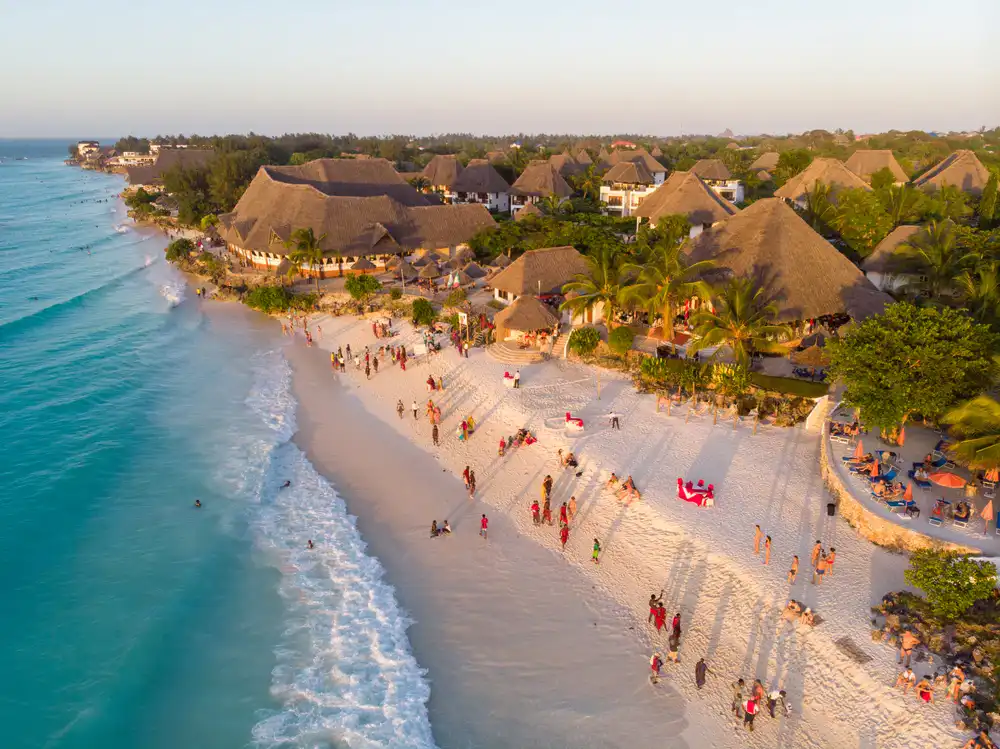
North Coast: Nungwi & Kendwa
This is the “classic” Zanzibar experience with wide beaches and swimmable tides.
-
Budget: $30–$50/night for guesthouses like Green’s Nungwi.
-
Mid-Range: $120–$200/night for places like Z Hotel.
-
Why here? You save on transport because everything is walkable.
RELATED ARTICLE: Tips for a Great Zanzibar Experience
East Coast: Paje & Jambiani
The hub for kitesurfing and “chilled” vibes.
-
Budget: $20–$40/night in vibrant hostels.
-
Mid-Range: $100–$150/night for eco-chic bungalows.
-
Expert Insight: The tides here go out for miles. If you want to swim all day, you’ll need a hotel with a great pool, which might add $30/night to your budget compared to the North.
Eating Your Way Through the Island
Food in Zanzibar is an adventure. You can eat like a king for the price of a coffee in London, or you can splurge on world-class seafood at “The Rock.”
A daily food budget of $30 is plenty for local dining and street food, while $80 per day allows for mid-range sit-down dinners and sunset cocktails at beachfront lounges.
The Budget Route: Local Flavors
If you eat where the locals eat (like Lukman Restaurant in Stone Town), a massive plate of pilau rice or biryani with octopus curry will cost you about $5–$7.
-
Forodhani Gardens: A 5-day trip isn’t complete without a night here. Budget $10 for a “Zanzibar Pizza,” some urajo (Zanzibar mix), and a fresh sugarcane juice.
The Splurge: Iconic Dining
-
The Rock Restaurant: Expect to spend at least $70–$100 per person including drinks. It is iconic, but our team suggests going for a midday drink rather than a full dinner if you want the view without the steep bill.
-
Resort Dining: A standard dinner at a 4-star resort usually runs $25–$40 per person.
RELATED ARTICLE: What Souvenirs Should I Buy in Zanzibar?
Island Transport: Navigating the “Spice Island”
Transport is where many travelers overspend. Zanzibar does not have Uber, and private taxis can be surprisingly expensive if you don’t negotiate or book ahead.
Private taxi transfers across the island generally cost $40–$60 per trip, whereas adventurous travelers can use the local Dala-dala buses for less than $2 per journey.
-
Airport Transfers: Most hotels in Nungwi or Paje charge $50 each way.
-
Car Rental: You can rent a small Suzuki Escudo for about $30–$40 per day. This is often the best value for a 5-day trip if you want to see multiple beaches. Note: You will need a $10 temporary Zanzibar driving permit.
-
Scooter Rental: At $25/day, this is the ultimate “freedom” choice for couples, though we only recommend it for the quieter East Coast roads.
Must-Do Excursions and Their 2026 Prices
While you could spend 5 days just lying on the beach, most visitors want to see the “Big Three” attractions.
Budget approximately $150 per person for activities, which should cover a Stone Town walking tour, a spice farm visit, and a half-day snorkeling trip to Mnemba Atoll.
-
Mnemba Atoll Snorkeling: $45–$70 per person. Our tip: Boat captains in Nungwi will offer this for $30, but these “budget” boats often lack safety gear and lunch. Pay the extra $20 for a reputable operator.
-
Stone Town & Prison Island: $40–$60 for a combined half-day tour.
-
Jozani Forest (Red Colobus Monkeys): $30–$45 including the entry fee and a guide.
-
The “Safari Blue” Full Day: $70–$100. This is the gold standard of Zanzibar tours—includes dhow sailing, snorkeling, and a massive seafood BBQ on a sandbank.
Sample 5-Day Budget Itineraries
The “Comfort & Culture” Plan (Mid-Range)
-
Day 1: Arrival & Stone Town Boutique Hotel ($120). Dinner at Emerson Spice ($50).
-
Day 2: Morning Stone Town Tour ($30), afternoon transfer to Nungwi ($50).
-
Day 3: Mnemba Atoll Snorkeling ($50). Relax on beach.
-
Day 4: Spice Farm Tour on the way to Paje ($40). Dinner at a beachfront lounge ($30).
-
Day 5: Morning walk on Paje beach, transfer to Airport ($50).
-
Total: ~$1,200 (including miscellaneous snacks and drinks).
The “Backpacker Adventure” Plan (Budget)
-
Day 1: Arrive, stay in a Stone Town Hostel ($20). Street food dinner ($6).
-
Day 2: Dala-dala to Nungwi ($2). Stay in a beach hut ($30).
-
Day 3: Beach day (Free) & sunset swimming. Dinner at a local cafe ($8).
-
Day 4: Shared boat snorkeling trip ($30).
-
Day 5: Dala-dala back to Stone Town/Airport ($5).
-
Total: ~$400 (plus Visa/Insurance).
People Also Ask
Is Zanzibar expensive compared to the Maldives?
Zanzibar is significantly more affordable than the Maldives for mid-range and budget travelers. While both offer luxury, Zanzibar provides a rich cultural experience and local dining options that are often unavailable in the “one island, one resort” setup of the Maldives.
Can I use my credit card in Zanzibar?
Credit cards are accepted at major resorts and high-end restaurants, usually with a 3% to 5% surcharge. However, for local markets, small cafes, and taxis, cash is the only way to pay. ATMs are available in Stone Town and Nungwi, but they frequently run out of cash.
What is the cheapest month to visit Zanzibar?
The “Long Rainy Season” from March to May offers the lowest prices, with hotel rates dropping by as much as 50%. However, many activities may be limited by weather. For the best balance of price and sunshine, we recommend late June or October.
Should I tip in Zanzibar?
Tipping is not mandatory but highly appreciated. A good rule of thumb is $5–$10 per day for tour guides and $2–$5 for hotel staff. This small gesture goes a long way in supporting the local community.
Is it safe to walk around with cash?
Generally, yes, but use common sense. Zanzibar is safe for tourists, but we recommend using a hotel safe for your passport and large amounts of cash. Only carry what you need for the day in a secure bag.
Final Verdict
Zanzibar is a rare gem where your dollar can stretch remarkably far without sacrificing the “paradise” feel. Whether you are counting every shilling or looking to indulge in the finest Indian Ocean luxury, the key to a successful trip is local knowledge.
At Tanzania Safari Experience, we specialize in bridging that gap—connecting you with the most authentic villas, the most ethical tour operators, and the hidden spots that don’t appear in the brochures. We ensure your 5 days are spent making memories, not worrying about the bill.