


When planning the journey of a lifetime, the question isn’t just where to go, but exactly when to stand on the edge of the Ngorongoro Crater or wait by the banks of the Mara River. At Tanzania Safari Experience, we’ve spent decades tracking the rhythm of the savannah, and we know that “perfection” changes with the moon and the rain.
Whether you are dreaming of the dust-kicking drama of the Great Migration or the quiet, emerald beauty of the “Green Season,” timing is the secret ingredient to a transformational trip.
The Golden Window: June to October
The best time for a Tanzania safari is from June to October during the long dry season. During these months, thin vegetation and receding water sources make wildlife exceptionally easy to spot.
This is the quintessential “National Geographic” window. As the land dries, the lush greens of the Serengeti turn to a shimmering gold. For travelers, this means the animals can no longer hide in tall grass. They are forced to congregate around the remaining waterholes, creating high-density viewing areas where lions, leopards, and elephants are often seen within the same square mile.
Our Insider Pro-Tip: Most travelers flock to the Seronera Valley in Central Serengeti. If you want the same incredible predator action without the “mini-bus marathon,” head to the Western Corridor in June. You’ll catch the Grumeti River crossings, which are just as dramatic as the Mara River but far less crowded.
Dry Season Comparison
| Feature | June – August | September – October |
| Wildlife Focus | Large herds, river crossings | Predator action, elephant gathering |
| Crowd Level | Very High (Peak) | Moderate to High |
| Temperature | Cool mornings, mild days | Warmer, dustier landscapes |
| Best For | First-timers & Photographers | Seasoned safari-goers |
The Great Migration: Timing the Greatest Show on Earth
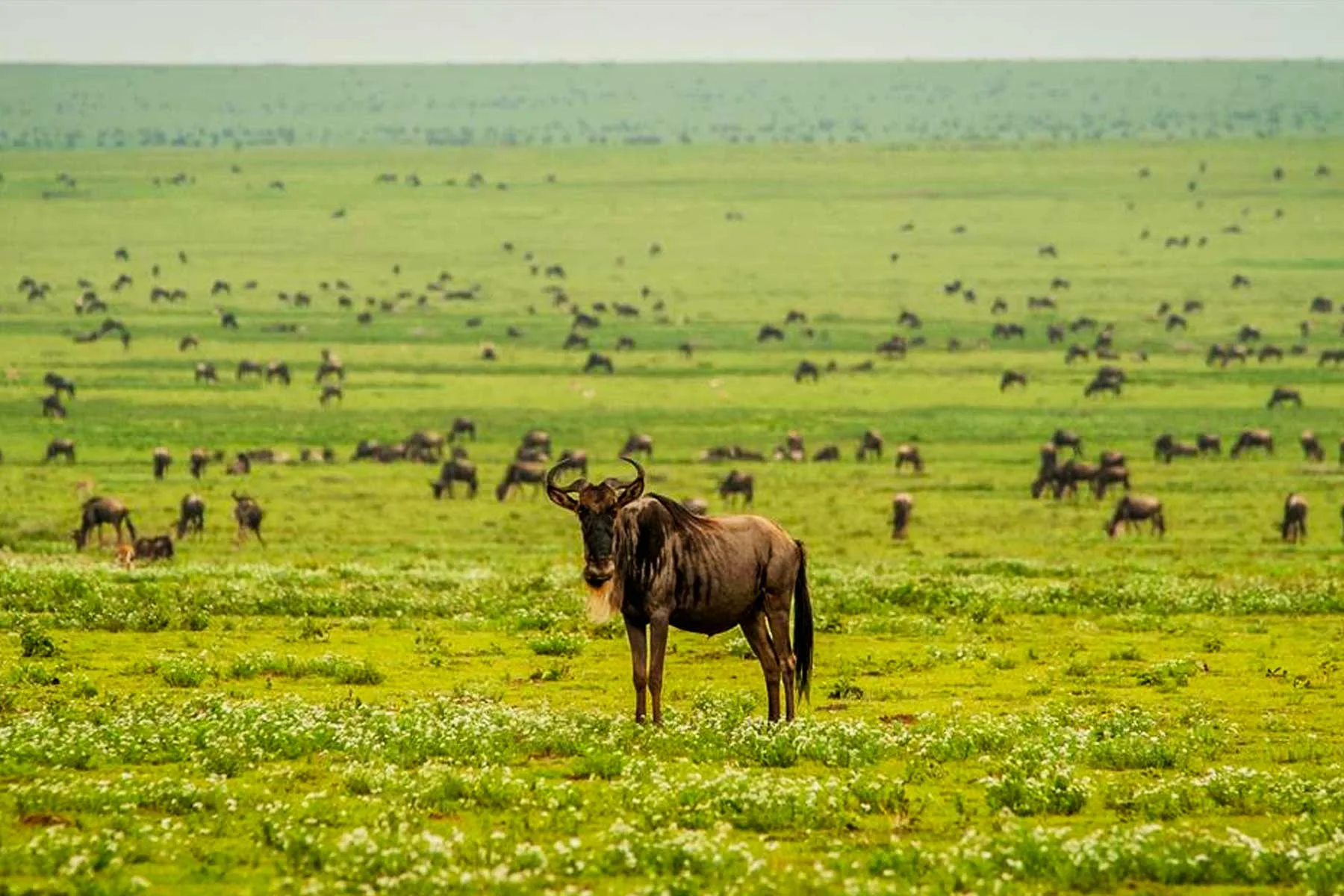
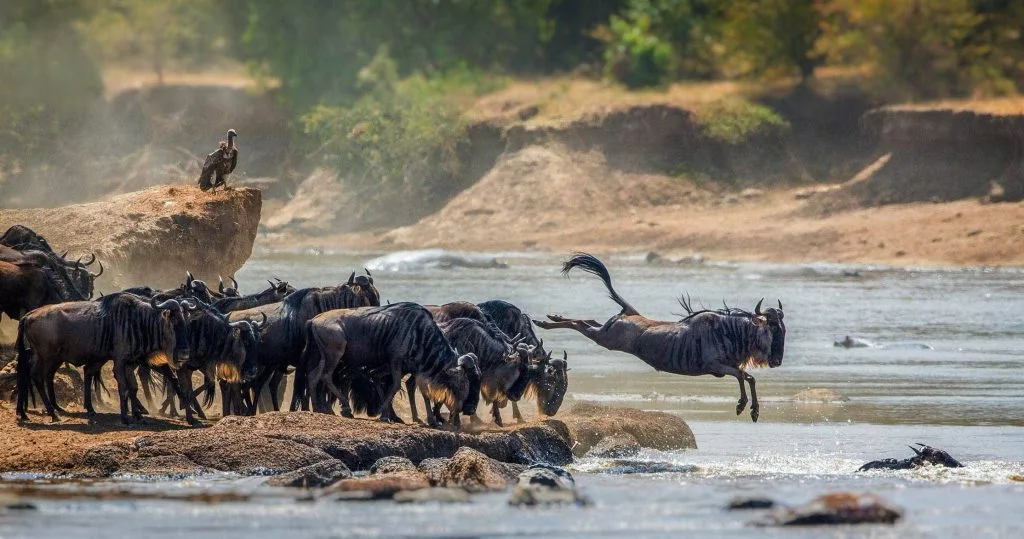
To witness the Great Migration river crossings, visit Northern Serengeti between July and September. For the calving season, head to the Ndutu plains between late January and February.
The Great Migration is not a single event but a year-round circular journey. We often tell our guests that the “best” time depends on which chapter of the story you want to see.
-
The Calving (Jan–Feb): In the southern plains of Ndutu, half a million wildebeest calves are born in a three-week window. This is “predator paradise.” We’ve watched cheetahs and lions capitalize on the vulnerability of the newborns—it is raw, emotional, and visually stunning.
-
The Trek (May–June): The herds move North. This is a great time for “Information Gain” travelers—those seeking the path less traveled. The Central Serengeti becomes a moving carpet of black and silver.
-
The River Crossings (July–Sept): This is the high-stakes drama. The Mara River becomes the ultimate hurdle. Watching thousands of animals plunge into crocodile-infested waters is a sight that stays with you forever.
Local Knowledge: In 2026, we are seeing a shift in rain patterns. Don’t just book a fixed lodge; at Tanzania Safari Experience, we recommend “mobile” tented camps that move with the herds to ensure you are always in the heart of the action.
The Green Season: Tanzania’s Best-Kept Secret
The Green Season (November to May) offers lush landscapes, lower prices, and incredible birdwatching. While there are “short rains” in November, they rarely disrupt the daily safari schedule.
Many guidebooks tell you to avoid the rainy season. We respectfully disagree. If you are a photographer or a budget-conscious traveler, this is your prime time.
After the short rains in November, the dust settles, and the air becomes crystal clear—perfect for long-distance photography. The landscape erupts into a vibrant emerald green that provides a stunning contrast against the coat of a leopard or the orange of a lion’s mane.
Why We Love the “Quiet Months”
-
Birthing Season: Beyond the wildebeest, many other species have their young now.
-
Migratory Birds: From November to April, Tanzania hosts species from Europe and North Africa.
-
Exclusivity: You’ll often find yourself as the only vehicle at a major sighting.
-
Value: Luxury lodges often drop their rates by 30-40%.
My Favourite Month: Why We Choose October
October is the best month to visit Tanzania for travelers seeking high-octane predator action and the last remnants of the Great Migration without the peak crowds of July. As the very end of the dry season, it offers unparalleled visibility and dramatic, dust-filled golden sunsets.
While most guidebooks point you toward July, we at Tanzania Safari Experience always circle October on our personal calendars. It is the “golden hour” of the Tanzanian year. The land is at its thirstiest, which sounds harsh, but for a safari-goer, it is a gift. Because water is so scarce, every remaining pool becomes a stage for intense wildlife drama.
The October Advantage
-
The Predator Peak: By October, the grass is non-existent. There is nowhere for a pride of lions or a camouflaged leopard to hide. We often see more big cat hunts in October than in any other month.
-
The Migration’s Final Act: While the herds are beginning to move south from Kenya, you can still catch late river crossings in Northern Serengeti. It’s the same drama, but with about 30% fewer vehicles than in August.
-
Walking Safari Weather: The mornings are crisp and the humidity is low, making this the absolute best time for a walking safari in places like Ruaha or the Serengeti.
-
Chimpanzee Trekking: In the west, at Mahale Mountains or Gombe, the chimps stay on the lower slopes near the lake shore in October, meaning your trek to find them is much shorter and easier than in the rainy months.
October Comparison: High Season vs. The Sweet Spot
| Feature | July/August (Peak) | October (The Sweet Spot) |
| Visibility | Excellent | Absolute Best (Minimal grass) |
| Crowd Density | 10/10 | 6/10 |
| Water Clarity (Zanzibar) | Good | Crystal Clear (End of dry season) |
| Price | Premium | Occasional Shoulder Rates |
Our Insider Pro-Tip: If you visit in late October, you might witness the “arrival of the clouds.” The buildup of massive, purple thunderheads against the parched earth is a photographer’s dream. When the first few drops of the short rains finally hit the dust, the smell—known as petrichor—is the true scent of Africa.
Weather and Packing: What to Expect
Tanzania’s climate is tropical but varies by altitude. Expect warm days (25°C–30°C) and surprisingly chilly nights, especially in the Ngorongoro Highlands where temperatures can drop to 10°C.
One of the biggest mistakes our guests make is packing only for the heat. If you are visiting the Ngorongoro Crater, you are at an altitude of over 2,300 meters. Early morning game drives can be freezing.
Seasonal Packing Essentials
-
The “Bush Jacket”: A windbreaker for those 6:00 AM starts.
-
Neutral Colors: Stick to khaki, olive, and tan. Avoid Blue and Black, as they attract Tsetse flies (a tip every local guide will swear by).
-
Dust Protection: A simple buff or scarf is essential during the dry months of August and September.
Choosing Your Circuit: North vs. South
The Northern Circuit is best for first-time visitors seeking the Big Five. The Southern Circuit (Ruaha and Nyerere) is ideal for return visitors seeking remote, rugged wilderness.
Tanzania is huge—roughly the size of France and Germany combined. You cannot “do it all” in one week.
-
The North (Serengeti, Ngorongoro, Tarangire): High wildlife density but higher tourist volume. Best visited in the dry season.
-
The South (Ruaha, Nyerere/Selous): These are the “Hidden Gems.” Ruaha has a massive lion population, and Nyerere offers boat safaris. The best time for the South is strictly June to October, as many camps close during the heavy rains of April and May.
Trekking and Beaches: Timing the Full Experience
For Mount Kilimanjaro, January–March and June–October offer the clearest skies. For Zanzibar, the dry months of June–October provide the best turquoise water clarity for snorkeling.
Most of our guests at Tanzania Safari Experience want to “Bush and Beach.” If you are planning to end your safari on the white sands of Zanzibar, try to avoid April and May. This is the “Masika” (long rains) season, and while the rain is warm, it can be persistent.
Expert Insight: If you find yourself in Tanzania in January, the water is at its calmest and warmest—perfect for swimming with whale sharks off the coast of Mafia Island.
Frequently Asked Questions
When is the cheapest time to go on safari in Tanzania?
The cheapest time is during the “Long Rains” in April and May. Many luxury lodges offer significant discounts, though some smaller camps in remote areas may close due to muddy roads.
Is it safe to visit during the rainy season?
Yes, it is perfectly safe. The “rains” are typically short, heavy afternoon thundershowers followed by sunshine. Main safari tracks are well-maintained, though 4×4 vehicles are a non-negotiable requirement.
Can I see the Big Five year-round?
Yes. Animals like lions, leopards, elephants, and buffalo are resident and do not migrate. The Black Rhino is best spotted in the Ngorongoro Crater, which offers world-class viewing 365 days a year.
What is the best month for photography?
January and February offer the best light and “baby animal” action, while June and July provide the iconic golden-hour glow over the savannah.
Do I need to book a year in advance?
For the peak months of July, August, and the festive season in December, we recommend booking 9–12 months in advance to secure the best boutique lodges.
Final Verdict: Why Tanzania Safari Experience?
Choosing the right time for your safari is the difference between a good trip and a legendary one. At Tanzania Safari Experience, we don’t just book hotels; we interpret the land. Our guides are locals who live and breathe these ecosystems, ensuring that no matter when you land at Kilimanjaro International Airport, we put you in the right place at the right moment.
Ready to see the real Tanzania? Let our team craft an itinerary that aligns perfectly with the rhythm of the wild.