


Tanzania is a land where the call to prayer from a minaret often mingles with the melodic harmonies of a gospel choir. This spiritual symphony is not a coincidence; it is the heartbeat of a nation that has mastered the art of religious coexistence over centuries. At Tanzania Safari Experience, we believe that understanding this cultural fabric is just as essential as spotting the Big Five, as it opens doors to the true soul of the people you will meet on your journey.
The Pulse of Faith: Religious Statistics in 2026
Religion in Tanzania is characterized by a unique “triple heritage” of Christianity, Islam, and Indigenous Traditional Beliefs, all existing in a state of remarkable social harmony.
Direct Insight: Tanzania is a secular state where approximately 63% of the population identifies as Christian and 34% as Muslim. The remaining 3% practice traditional faiths or are unaffiliated, though syncretism is common.
While the government has not collected official religious data in the census since 1967 to maintain national unity, our team’s daily interactions across the country confirm these general proportions. However, the geography of faith is distinct. On the mainland, you will find a vibrant mix, whereas the Zanzibar Archipelago is nearly 99% Muslim, a fact that deeply shapes the coastal “Swahili” lifestyle.

Faith by Region: A Geographic Comparison
| Region | Primary Religion | Cultural Influence | Pro-Tip for Travelers |
| Zanzibar | Islam (Sunni) | Swahili architecture, Arabic script | Dress modestly (shoulders to knees covered). |
| Arusha/Moshi | Christianity (Lutheran/Catholic) | Gospel music, coffee culture | Attend a Sunday service for incredible music. |
| Lake Victoria | Mixed / Traditional | Ancestral veneration, fishing rites | Respect local “sacred” rocks or trees. |
| Coastal Tanga | Islam | Historic mosques, Shiraz heritage | Friday afternoons are quiet; plan tours early. |
The Christian Landscape: From Missionaries to Melodies
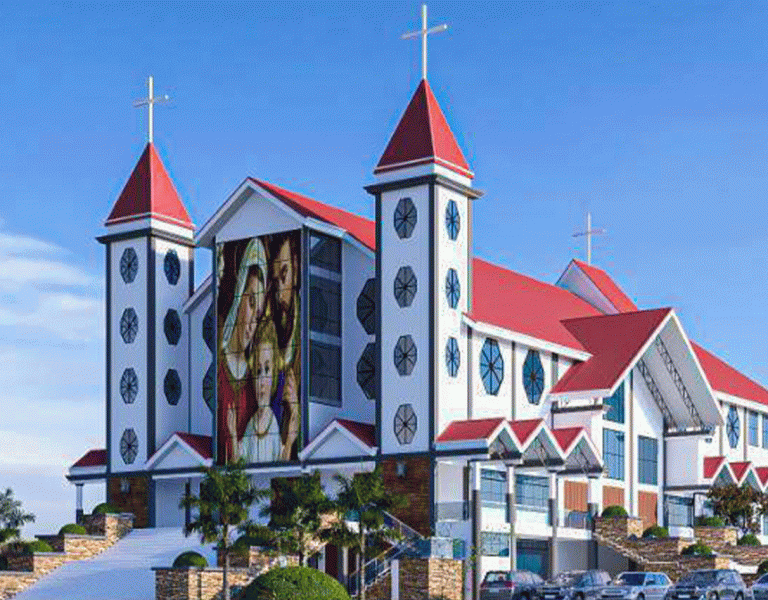
Christianity took root in Tanzania during the 19th century, brought by European missionaries, and has since evolved into a powerhouse of community life and social service.
Direct Insight: Christianity in Tanzania is diverse, led by Roman Catholics and Lutherans, with growing Pentecostal movements. It drives the nation’s education and healthcare sectors through extensive church-run networks and mission hospitals.
In the northern highlands near Kilimanjaro, the Lutheran influence is palpable. You will see beautiful stone churches that look like they were plucked from the German countryside. I often tell our guests that if you are in Moshi on a Sunday, the most “Information Gain” you can get is to simply stand outside a church. The energy of the singing is world-class. It isn’t just a religious service; it is a community gathering where the finest clothes are worn, and news is shared.
Islam and the Swahili Coast: A Thousand-Year Legacy
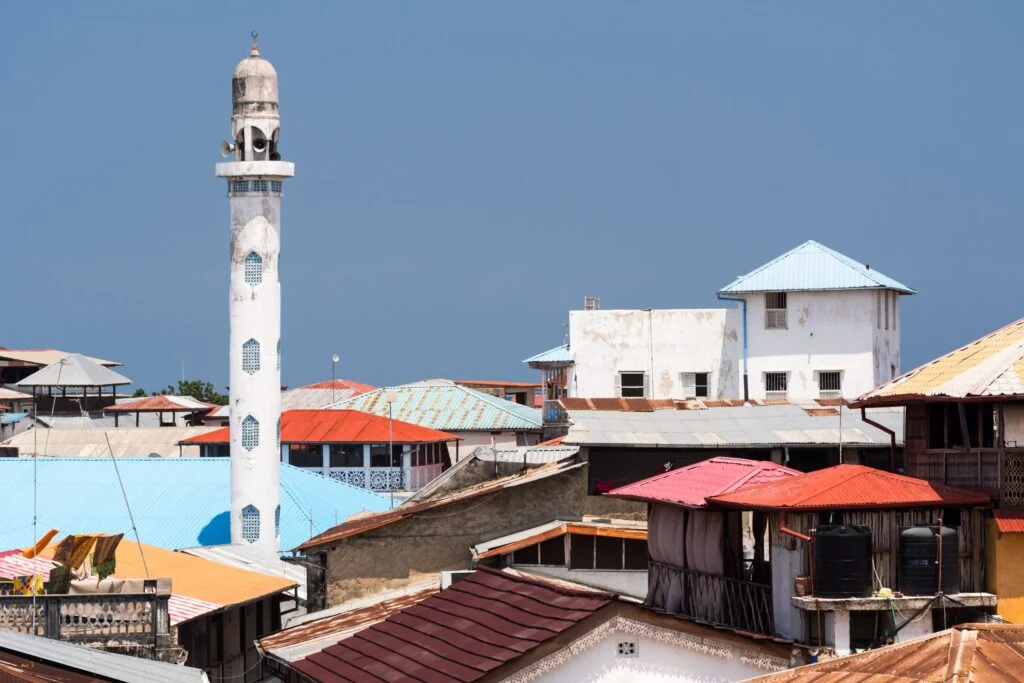
Islam arrived on the shores of East Africa over a thousand years ago through trade, creating a sophisticated maritime culture that remains the cornerstone of the Tanzanian coast.
Direct Insight: Tanzanian Islam is predominantly Sunni, with significant Shia and Ahmadiyya communities in urban centers. It dictates the rhythm of coastal life, from the five daily prayers to the lunar-based calendar.
When our team takes clients through the winding alleys of Stone Town, the “Call to Prayer” (Adhan) acts as our clock. In 2026, the intersection of modern technology and ancient faith is fascinating—many locals now use smartphone apps to track prayer times, yet the architecture of the mosques remains untouched by time.
Personal Expert Insight: During the holy month of Ramadan, the coast undergoes a transformation. While many restaurants close during the day, the evening Iftar (breaking of the fast) is a culinary explosion. If you visit during this time, we recommend joining a local family for Iftar—it is the ultimate expression of Swahili hospitality.
The Unseen Foundation: Traditional African Beliefs
Beneath the surface of the major world religions lies a deep, ancient layer of indigenous spirituality that continues to influence modern Tanzanians of all faiths.
Direct Insight: Indigenous beliefs focus on ancestral veneration and the sanctity of nature. Many Tanzanians practice “dual-faith,” attending church or mosque while still honoring traditional rituals for rain, harvests, or protection.
I recently sat with a Maasai elder near the Ngorongoro Highlands who explained that for his people, Engai (God) resides on the peaks of the mountains. To the Maasai, the land isn’t just a resource; it is a living sanctuary. This “hidden” religion is why you will see certain trees wrapped in cloth or small offerings left at the base of ancient Baobabs.
Traditional vs. Modern Practice
-
Traditional: Reliance on healers (Barguyi) and nature-based rituals.
-
Modern: Utilization of Western medicine and formal religious doctrine.
-
The Reality: Most Tanzanians comfortably navigate both worlds, seeking spiritual balance.
Important Dates: The 2026 Religious Calendar
Tanzania officially recognizes both Christian and Islamic holidays. If your safari falls on these dates (2026), expect festive atmospheres and occasional business closures.
-
Eid el-Fitr (Estimated March 31 – April 1, oceanwp_date]): Marks the end of Ramadan. Expect massive feasts and celebrations in Zanzibar.
-
Good Friday & Easter (April 3 – 6, 2026): Major church services and family gatherings across the mainland.
-
Eid al-Adha (Estimated June 7, 2026): The Festival of Sacrifice.
-
Christmas Day (December 25, 2026): A national holiday filled with joy, music, and travel as city-dwellers return to their home villages.

Cultural Etiquette: A Safari Expert’s Checklist
Navigating a multi-religious society requires a “Human Touch” and a bit of local knowledge. Here is what our guides at Tanzania Safari Experience teach every guest:
-
Dress for the Location: In Zanzibar and coastal towns, keep shoulders and knees covered. In safari camps, “bush wear” is fine, but if you visit a village church, put on your best clean shirt.
-
Photography Rules: Never take photos of people praying inside a mosque or church without explicit permission. It is a private moment of devotion.
-
Friday/Sunday Awareness: Friday at noon is the main prayer time for Muslims; Sunday morning is for Christians. Banks and some shops may close for 2-3 hours during these windows.
-
Greetings Matter: Using “Assalam Alaykum” (Peace be upon you) in Zanzibar or a respectful “Shikamoo” to an elder in a Christian village goes a long way.
RELATED ARTICLE: Tanzania Spiritual Safari
Religious Harmony: Why Tanzania is Unique
In a world where religious differences often lead to conflict, Tanzania stands as a beacon of peace. This is largely credited to the nation-building efforts of the first president, Julius Nyerere, who promoted a national identity over religious or tribal ones.
Interfaith Cooperation in 2026: It is common for a Christian family and a Muslim family to live as neighbors, celebrate each other’s holidays, and even intermarry. When you travel with us, you will see our guides—who come from various backgrounds—joking and working together in a way that feels completely natural because, in Tanzania, it is.
Frequently Asked Questions
Is it safe to travel to Zanzibar during Ramadan?
Yes, it is entirely safe and culturally fascinating. While some local restaurants close during the day, hotels and tourist-focused spots remain open. We simply ask guests to be discreet when eating or drinking in public.
What is the most beautiful mosque to visit in Tanzania?
The Great Mosque of Kilwa (ruins) is a UNESCO World Heritage site and a must-see for history buffs. For active worship, the Gaddafi Mosque in Dodoma is one of the largest and most impressive in East Africa.
Do I need to wear a headscarf as a female traveler?
In general, no. However, if you enter an active mosque, you will be required to cover your head. Carrying a light pashmina in your daypack is a pro-tip for any coastal excursion.
Are there many Hindus or Buddhists in Tanzania?
Yes, primarily in Dar es Salaam and Arusha. Tanzania has a vibrant Indian diaspora that has contributed significantly to the country’s religious diversity with beautiful temples like the Shree Sanatan Dharma Sabha in Dar.
Can I attend a local church service while on safari?
Absolutely! Most congregations are very welcoming. Let your guide at Tanzania Safari Experience know in advance, and they can find a local service that fits your schedule.
The Local Authority’s Final Verdict
Religion in Tanzania is not a point of division; it is a shared language of respect and community. Whether it is the serene silence of a coastal mosque or the thunderous joy of a village church, these spiritual expressions are the threads that bind the nation together.
When you book your trip with Tanzania Safari Experience, we don’t just show you the animals—we introduce you to the people. By understanding the “why” behind the greetings and the “how” of the holidays, your safari becomes a deep, multi-dimensional adventure that stays with you long after you’ve left our shores.
For more information on planning your cultural journey, visit the Tanzania Tourist Board or explore our Cultural Safari Packages.