


Risk Or Adventure? $550 Balloon Safari Experience In Serengeti National Park, Tanzania
Risk Or Adventure? $550 Balloon Safari Experience In Serengeti National Park, Tanzania 2026
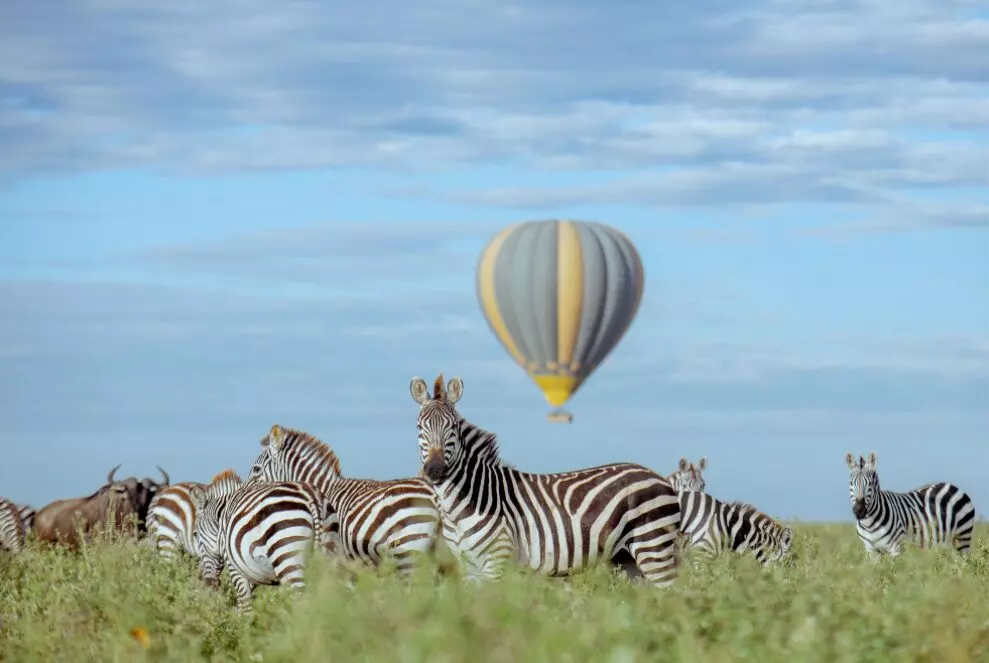
Floating silently over thousands of wildebeest and a pride of lions is not something you will easily forget. Many travelers in our years guiding Serengeti safaris ask: “Is the $550 Serengeti balloon safari worth the risk, or is it the ultimate adventure?” We have experienced this multiple times and the short answer is: for most, it’s an unbeatable, incredibly safe adventure, offering perspective that no land safari can.
This guide leverages our first-hand knowledge as Serengeti safari experts to break down the entire ballooning experience—the cost, the safety record, the unique viewpoint, and a side-by-side comparison of risk versus reward. Our mission is to provide the “real story” on Serengeti ballooning so you can make an informed decision for your 2026 trip.
The Direct Verdict: Risk Or Adventure?
A Serengeti balloon safari is an exceptional adventure with minimal risk. Our team has vetted these operators and they hold the highest safety certifications globally. While the $550 price is steep, the perspective it offers on the Great Migration is utterly unique. It is not an adrenaline-junkie risk; it is a peaceful, unparalleled wildlife experience.
What Exactly Is a Serengeti Balloon Safari? (The Experience)
A Serengeti balloon safari is a premium, sunrise hot air balloon flight over the Serengeti ecosystem. It typically lasts one hour and is followed by a traditional champagne breakfast in the bush and a commemorative certificate, creating a full three-to-four-hour morning excursion.
Our typical balloon morning follows a precise, exciting sequence:
-
Early Start (3:30 AM – 5:00 AM): Your specific operator (we often work with reliable companies like Miracle Experience or Serengeti Balloon Safaris) picks you up at your lodge while it’s still dark. This early pick-up is essential.
-
The Launch Site: You arrive at the designated launch pad, usually a flat area within central, northern, or western Serengeti, depending on the season and where the Great Migration is. There’s a palpable anticipation. Watching the massive balloons being inflated by powerful burners is a spectacle in itself. The roar of the burners echoing in the pre-dawn stillness is a unique Serengeti sound.
-
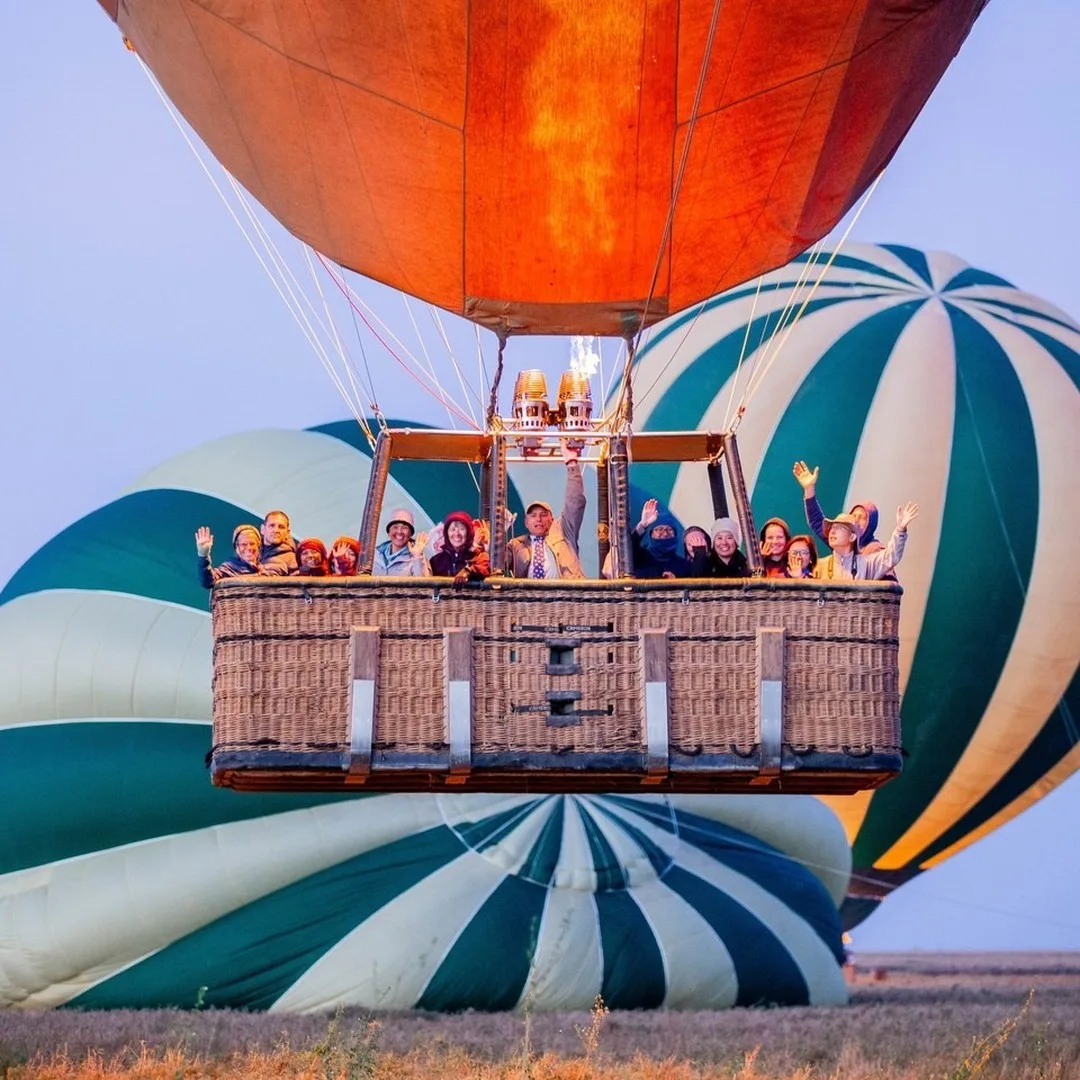
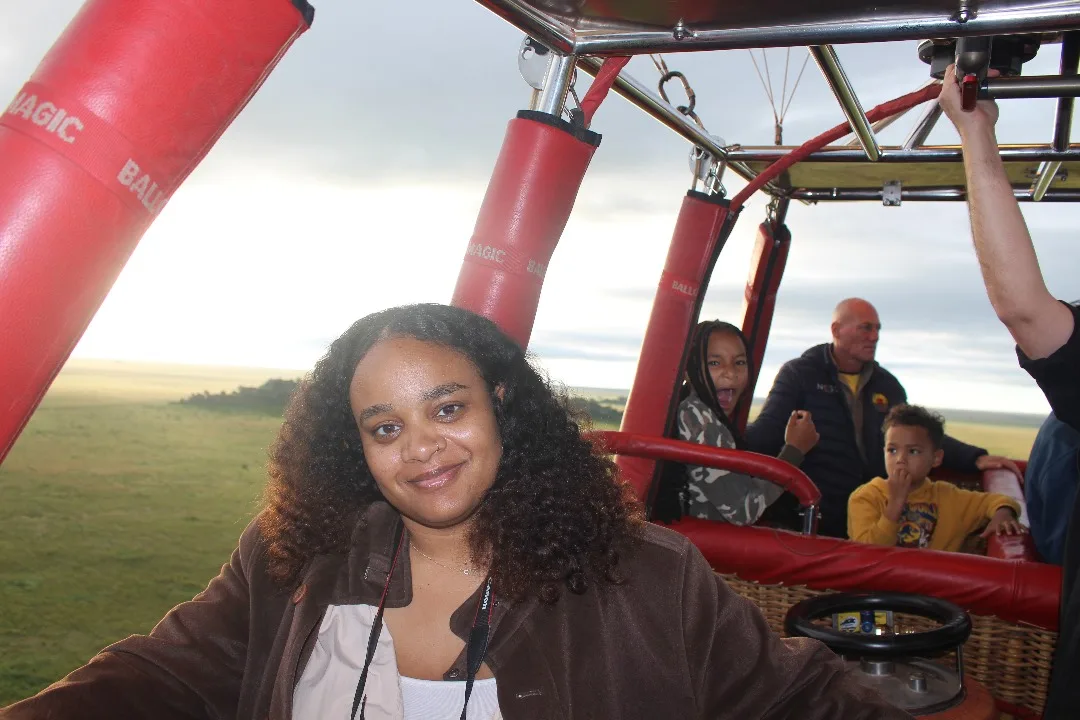
The Ascent & Silent Flight: Just before sunrise, you climb into the sturdy wicker basket. The pilot gives a safety briefing and with a powerful blast from the burner, you gently lift off. The main sensation is peace. Since the balloon floats with the wind, you do not feel any breeze—just silence, punctuated by the occasional blast of the burner.
-
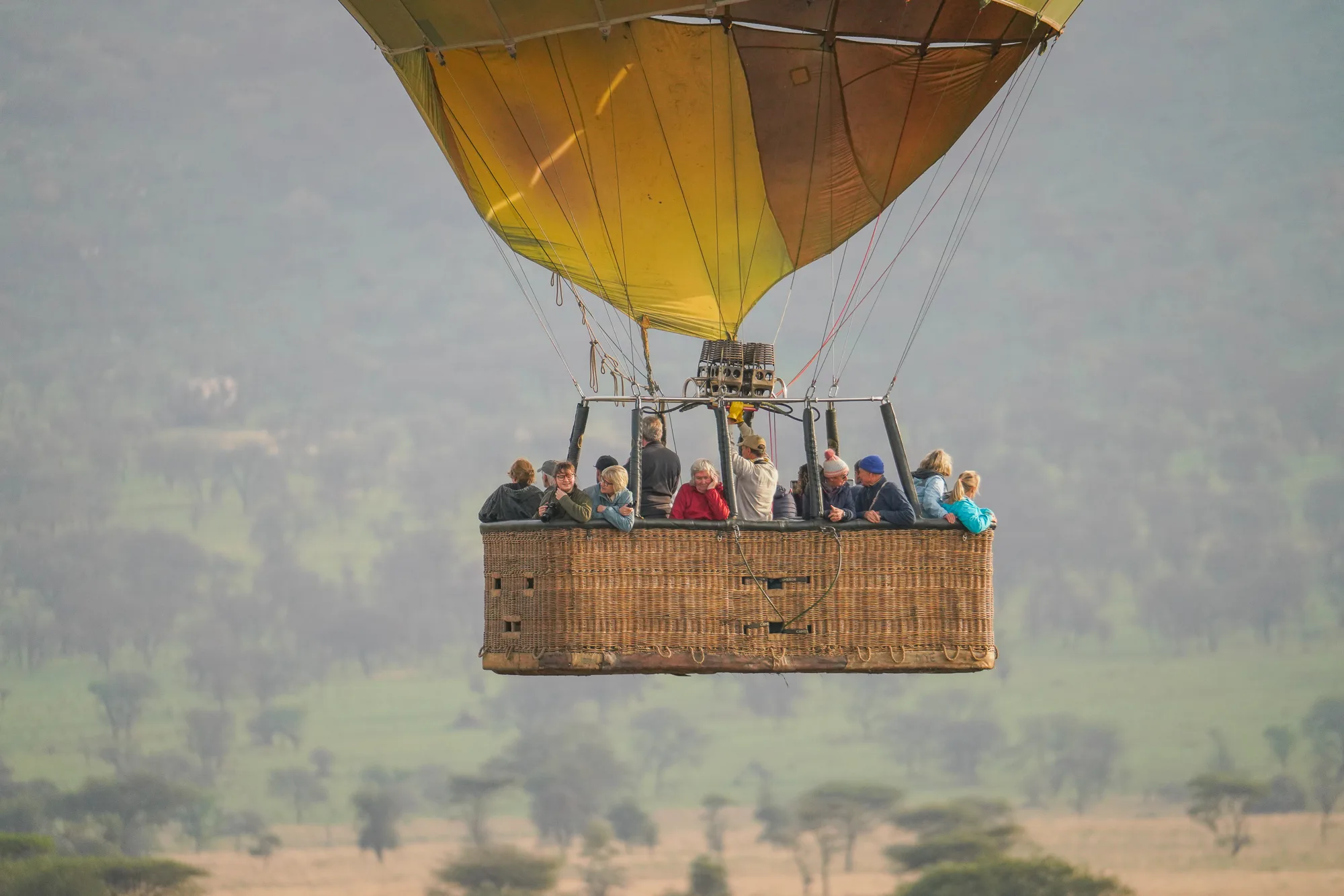
Floating with the Winds: This is the magic. The standard duration in the air is one hour. The pilot has limited control over direction but complete control over height. This is key: they will drop low, sometimes just above the tree line, to watch a hyena or a herd of buffalo, and then ascend to 1,000 feet for a breathtaking panoramic view of the vast, endless plains. Our team can confirm that the low-level perspective—looking down on a massive herd of elephants—is something a land vehicle simply cannot replicate.
-
The Traditional Landing & Bush Breakfast: Landing is an adventure itself. Sometimes it’s a “straight-down” landing; other times, the balloon might tip slightly (this is a fun, normal occurrence—not a crash!). After disembarking, you are driven to a pre-arranged site in the bush for a full-service, plated champagne breakfast—complete with linen tablecloths and waiters!
Is It a Safe Risk? The Truth about Balloon Safety in Tanzania
A Serengeti balloon safari is not a significant risk in the standard travel sense; statistically, it is exceptionally safe. Operators are subject to stringent regulations from the Tanzania Civil Aviation Authority (TCAA), often matching or exceeding international aviation standards for commercial aircraft.
This is the number one question our guests ask, and we give them the facts. Let’s break down why this is an incredibly controlled environment.
Highly Certified Pilots and Vetted Operators
The pilots are not just “hobbyists”; they are commercial pilots with hundreds, often thousands, of hours of flight time specific to hot air balloons. Many are recruited internationally and must meet strict TCAA licensing requirements. We only recommend operators who have an spotless long-term safety record and full, transparent public liability insurance. We trust these companies with our own family and friends.
Optimal Flight Conditions and Weather Monitoring
This is non-negotiable. Balloon flights only happen in the early morning because that is when the atmospheric conditions are most stable—cool air and light, predictable winds.
If there is any question about weather—high winds, a chance of a thunderstorm, or fog—the flight is cancelled. Period. The risk is minimized by this extreme caution. Your safety, and the company’s multi-million dollar equipment, is never jeopardized for a flight. We see operators cancel flights for weather about 5% of the time, and they always provide a full refund.
Daily Rigorous Equipment Checks
The balloons are not just fabrics; they are high-tech, reinforced aircraft made of incredibly durable materials. Each balloon undergoes a full maintenance check by a certified engineer before every single flight. The burners, fuel lines, baskets, and envelopes are all scrutinized. Every balloon must have a formal “certificate of airworthiness.”
| Safety Element | The “SME” Fact Check | Your Peace of Mind |
| Pilots | Must hold commercial balloon licenses with thousands of flight hours. Many trained in Europe or North America. | You are flying with a highly trained professional aviation specialist, not a guide. |
| Aircraft | Each balloon must have a valid Certificate of Airworthiness from the TCAA, renewed annually. | The equipment must meet strict aviation standards, similar to a commercial plane. |
| Weather | Flights are canceled by the pilot in command if conditions (wind, visibility) are not optimal. Zero compromises are made. | Your flight is only proceeding because the weather has been professionally declared safe. |
| Accidents | In two decades of operation across all licensed companies, major incidents are extremely rare. (Minor issues are usually “bumpy” landings). | This activity has a safety record that is rivaled by few adventure experiences globally. |
RELATED ARTICLE: Can I Get a Free Safari Quote Without Booking?
Is It Worth the $550 Price Tag? (The “High Value” Adventure)
Yes, for most, a Serengeti balloon safari is worth the $550 because it provides an utterly unique, high-value adventure that cannot be duplicated. The cost is justified by the massive operations, high safety standards, and the exclusive access it provides to parts of the ecosystem and wildlife behavior unreachable on land.
It is a significant amount of money. Why is it so expensive? Let’s be transparent.
-
Massive Infrastructure: Launching a hot air balloon isn’t simple. It requires a dedicated recovery vehicle (a large 4×4), a team of ground crew (often 10-15 people), and a separate vehicle to set up the bush breakfast.
-
Fuel Costs: Hot air balloons require significant amounts of specialized liquid propane fuel.
-
Aviation Compliance: High licensing fees, insurance, and aircraft certification are built into the price.
-
Conservation Fees: A portion of the fee goes directly back to Tanzania National Parks (TANAPA) as a conservation fee.
-
Expertise: You are paying for a world-class, multi-lingual pilot.
The value isn’t just the one hour in the air. We break it down into four key components:
RELATED ARTICLE: Come on a Tanzania safari with us
1. The Exclusive “Birds-Eye” Perspective on the Great Migration
This is the biggest value driver. When we are guiding on the ground during the Great Migration, we can only see what’s immediately around our vehicle. From 500 feet, you can see the patterns of the entire migration. You see thousands of wildebeest funneling into a massive, living river of life. You can see how they navigate, where the core of the herd is, and where they have left their trails across the savanna. This perspective is priceless and impossible to get on a 4×4 safari.
2. Spotting Wildlife Behaviors Invisible from a Vehicle
From a low-altitude balloon flight (like our pilots are expert at maneuvering), you can see animal behaviors that you’d miss on the ground. You might watch a cheetah stalk a gazelle from its perspective, see how a pride of lions fan out in a hunting formation, or even spot a rare animal like a serval or caracal that would vanish into the tall grass at the sound of a vehicle engine. Pro-Tip: Balloon pilots are excellent at spotting large predators, as they are looking for a break in the texture of the savanna.
3. Unmatched, Ethereal Sunrise Photography
Forget about the best sunset you’ve ever seen. The Serengeti sunrise from 1,000 feet is a masterpiece of light and shadow. The colors shift in minutes, bathing the entire plain in golden-orange light. It is an artist’s dream. We recommend bringing a good camera with a wide-angle lens, though some of our best photos have been taken with a simple smartphone.
4. The “Bush Champagne” Celebration and Grand Finalé
After a smooth landing, being greeted with glasses of chilled champagne (or sparkling juice) is a brilliant touch. It’s a tradition from the very first balloon flights in France. You raise a glass with your fellow passengers and the pilot to celebrate a safe flight. This is followed by a hot breakfast cooked right there in the bush, on a table set for a feast. The whole three-hour experience feels exclusive and curated.
To help you decide, here is our comparison chart:
| Serengeti Balloon Safari | The Standard Land Safari |
| Duration | One hour (flight), plus breakfast and transport. Total 3-4 hours. |
| Cost | $500 – $600 per person. |
| Perspective | Unrivaled, 360-degree aerial view. See huge migration patterns. |
| Focus | Photography, landscape, migration scale, ethereal beauty. |
| Vibe | Exclusive, peaceful, luxurious, celebratory. |
| Verdict | An unmatched “once-in-a-lifetime” experience. |
When to Go: Aligning Your Balloon Safari with the Migration
To maximize your $550 investment, timing is critical. You want to align your balloon flight with the movement of the Great Migration.
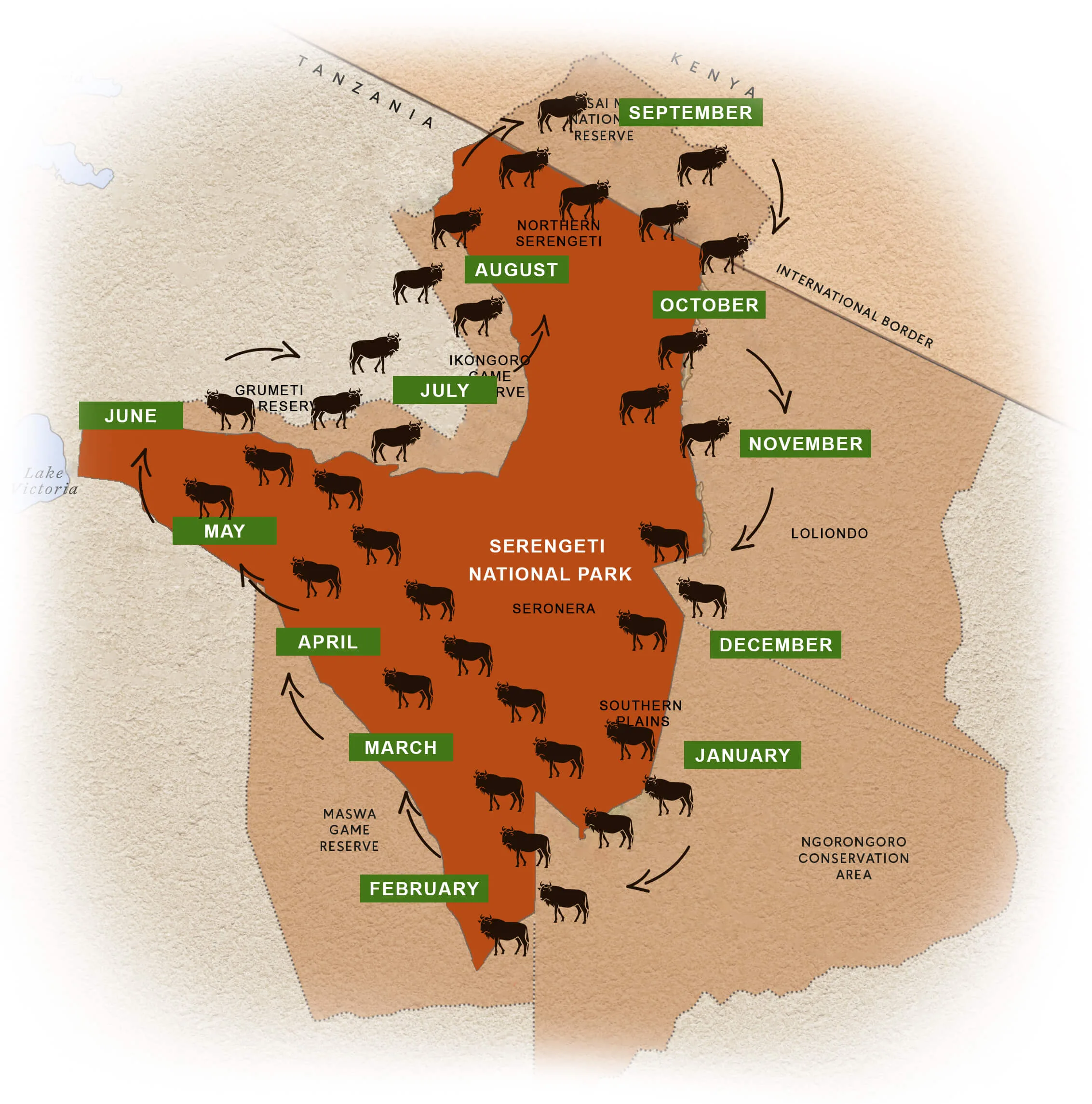
For example:
-
January – March: Focus on a balloon safari in the Southern Serengeti (Ndutu/Seronera) for the calving season. Seeing 500,000 calves on the open plains from above is breathtaking.
-
May – July: Focus on the Western Corridor (near the Grumeti River). We will guide you to book with an operator that launches near here to catch the migration’s dangerous river crossings.
-
August – October: Focus on the Northern Serengeti (Kogatende) for the world-famous Mara River crossings. A balloon safari here can offer a completely new angle on one of nature’s greatest spectacles.
Pro-Tip from Our Guides: Don’t just book a “Serengeti Balloon Safari.” Work with your tour operator to ensure the balloon company operates from a camp or site that is near the core of the migration at the specific time of your trip.
Final Verdict: The Authentic Tanzania Safari Experience
After over a decade of guiding, our final verdict is that the risk is minimal and the adventure is monumental. For almost everyone who can fit it into their budget, the Serengeti balloon safari is a “must-do.”
As the Tanzania Safari Experience team, we advocate for authentic, well-curated experiences. While $550 is a lot of money, we never hear a client say, “I wish I hadn’t done that.” What we do hear, consistently, is “That was the single greatest experience of my life.”
By choosing a balloon safari, you are not just getting an aerial view; you are getting a moment of profound connection with the scale and beauty of the natural world. This is not a manufactured attraction; it is a true, authentic Serengeti experience from the only angle that can capture its full majesty.
A Soft Recommendation from Our Local Experts
We can help you seamlessly integrate this balloon adventure into your custom Tanzania Safari Experience itinerary. Because we operate locally and have personal relationships with the top balloon companies, we can:
-
Vouch for the current safety record and pilot standards of each operator.
-
Recommend the absolute best launch site based on the very latest migration data (data we get from our guides on the ground daily).
-
Ensure flawless logistics, making sure you are picked up, launched, and returned for your morning game drive without stress.
If you are already spending the time and money to visit the Serengeti, we strongly recommend dedicating one morning to this perspective. It will be the single most unforgettable hour of your journey. Book with an expert to ensure your balloon safari is not a risk, but the defining adventure of your lifetime.
Frequently Asked Questions (People Also Ask)
1. How safe are balloon safaris in the Serengeti?
They are exceptionally safe, with safety standards and pilot requirements that meet or exceed international aviation benchmarks. The industry has a long-term excellent safety record, with major incidents being extremely rare. Flights are immediately grounded by the pilot-in-command if weather conditions are anything less than optimal.
2. What happens if the weather is bad for my balloon safari?
If the pilot determines that wind speed, visibility, or the chance of severe weather is unsuitable, the flight will be canceled for your safety. Most reputable companies will offer a full refund if a flight is canceled by the operator. Some may allow you to reschedule for the next day, subject to availability.
3. Why are Serengeti balloon safaris so expensive ($550+)?
The cost reflects the massive logistics required: high aviation certification and insurance, specialized and imported equipment, a large ground crew and recovery vehicles, a qualified pilot, a full-service plated champagne bush breakfast, and a conservation fee paid to the national park. You are paying for safety and a high-end, all-inclusive luxury experience.
4. Can children go on a Serengeti balloon safari?
Yes, children can generally go, but they must meet a minimum age (typically around 7 years old) and a minimum height requirement (to see safely over the basket rim without help). There may be child pricing available. Pregnant women and anyone with significant back or neck problems are usually advised not to fly due to the possibility of a bumpy landing.
5. When is the best time of day to do a balloon safari in the Serengeti?
The best (and only) time is at dawn, just before sunrise. This is when the air is coolest and the winds are most stable, ensuring a smooth and predictable flight. The early light is also perfect for both landscape photography and for spotting wildlife before they take cover in the midday sun.
