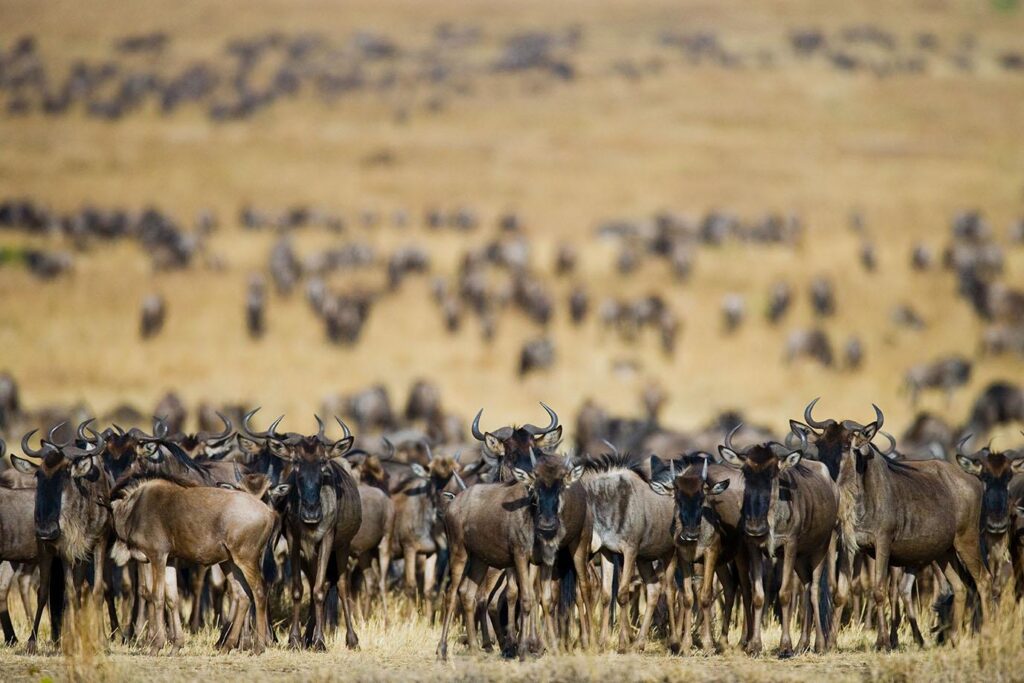
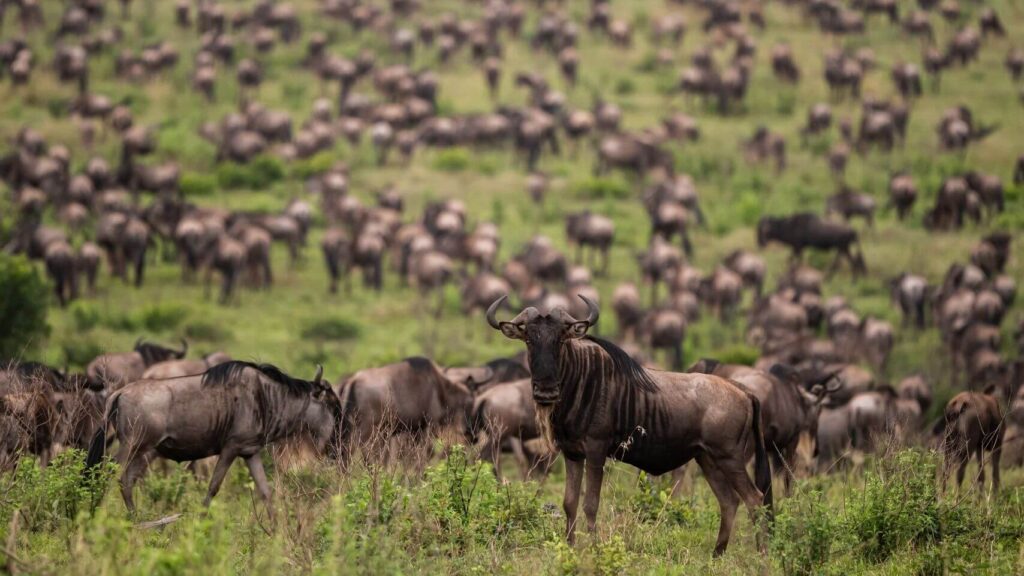
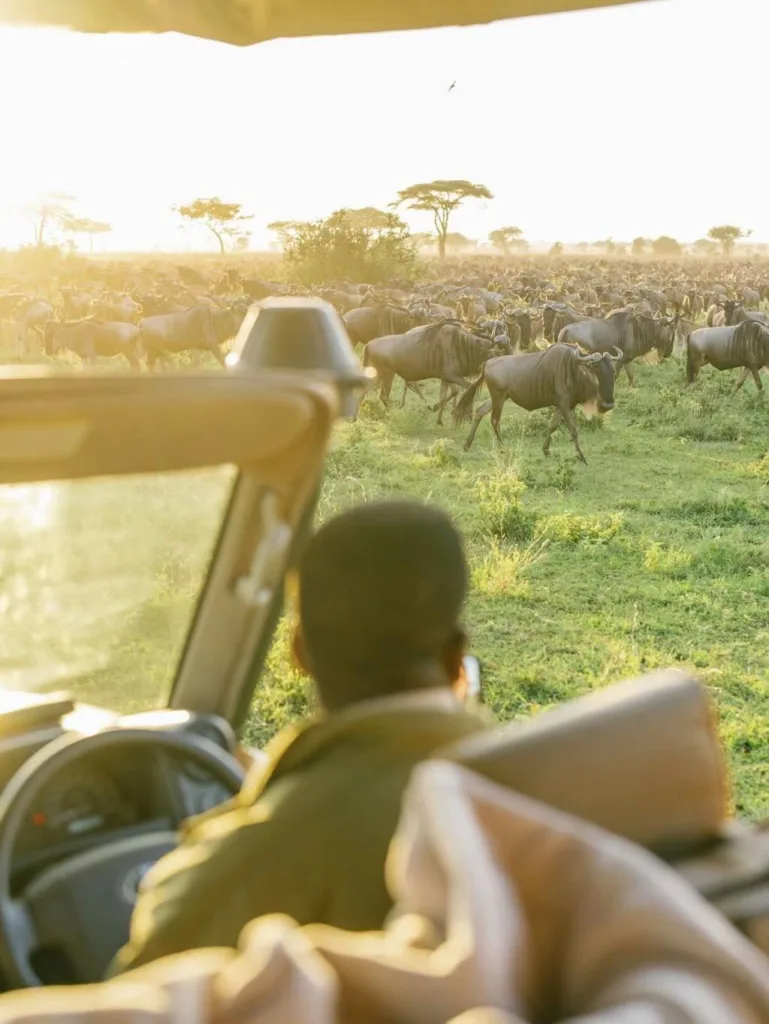
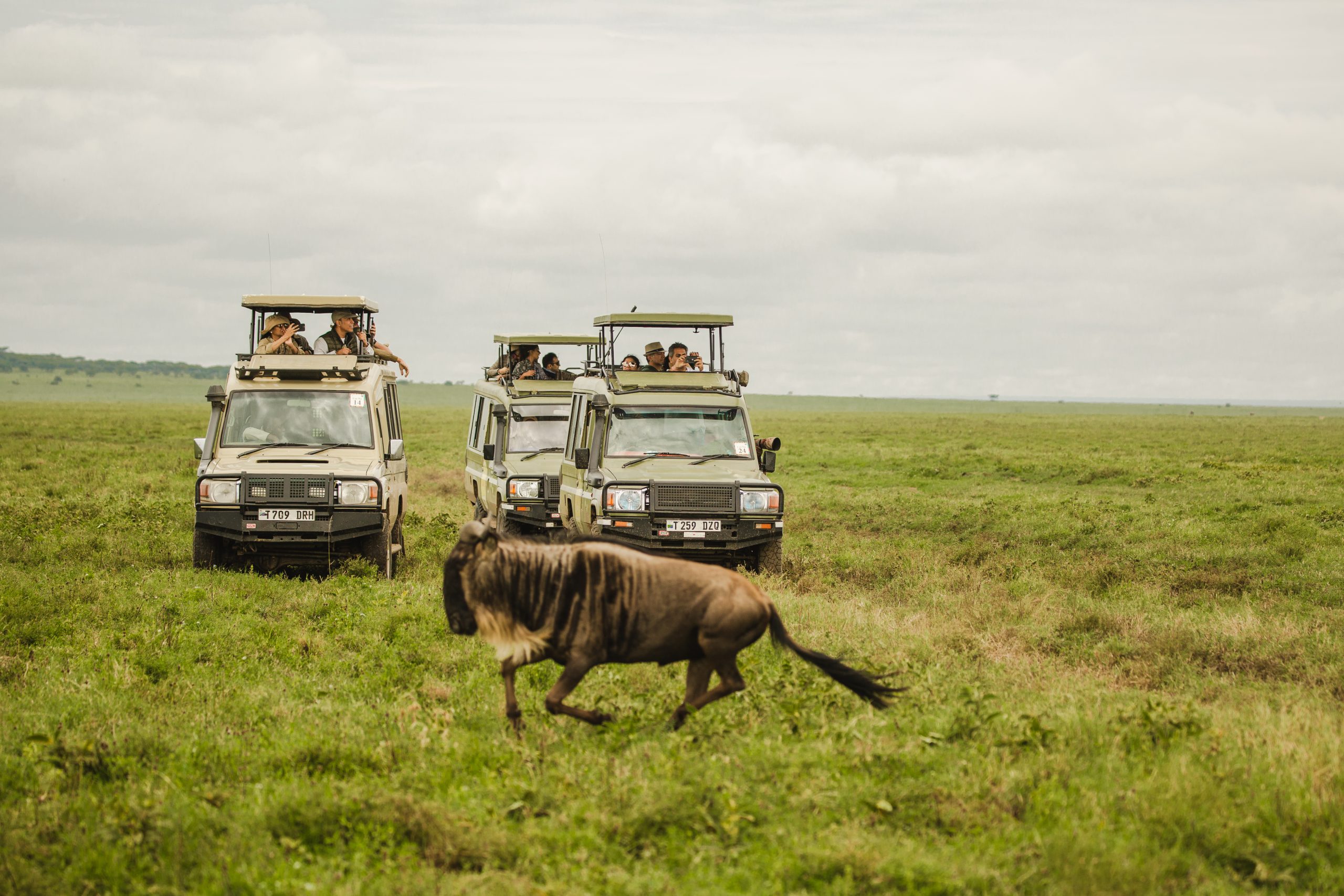
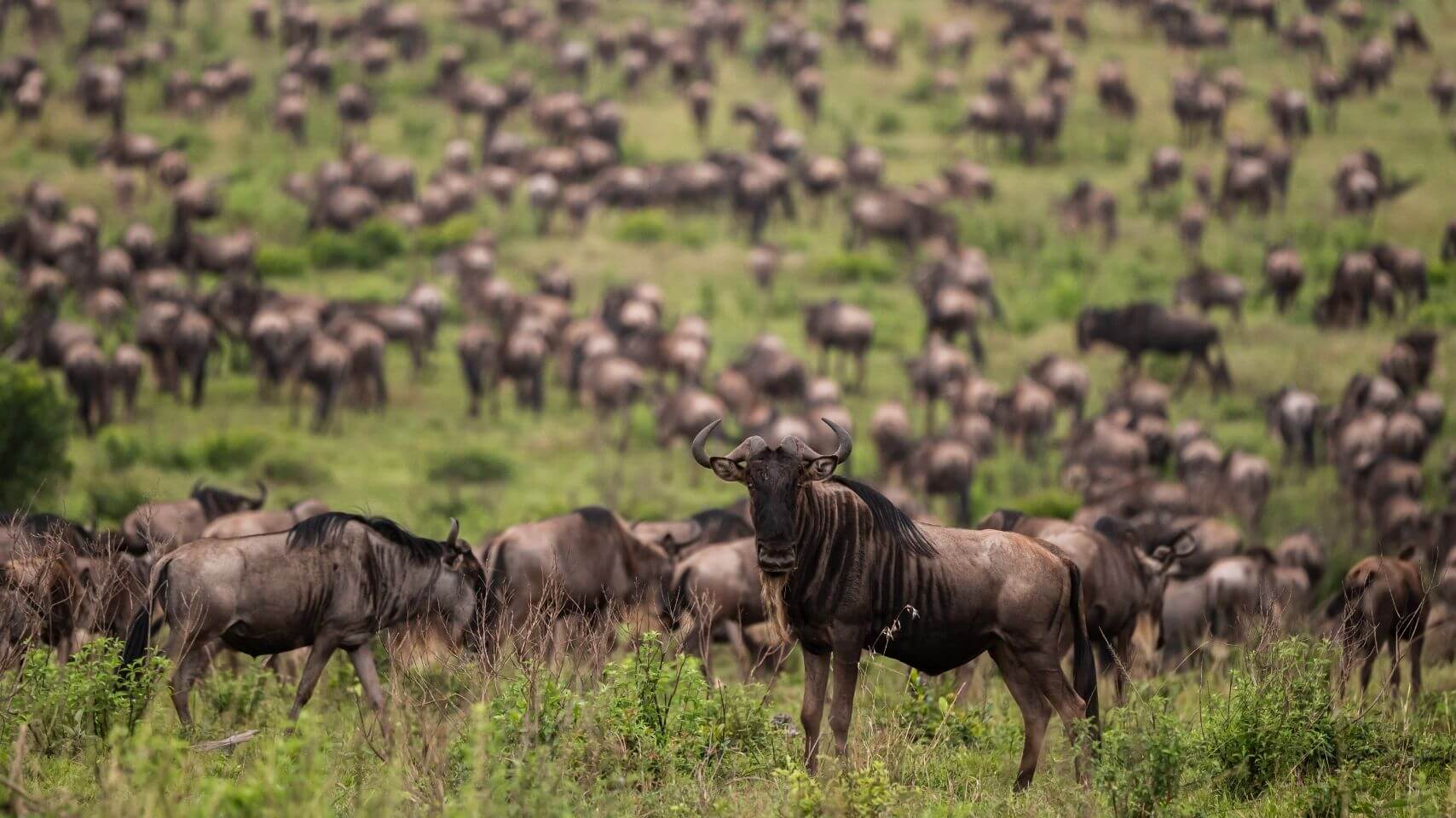
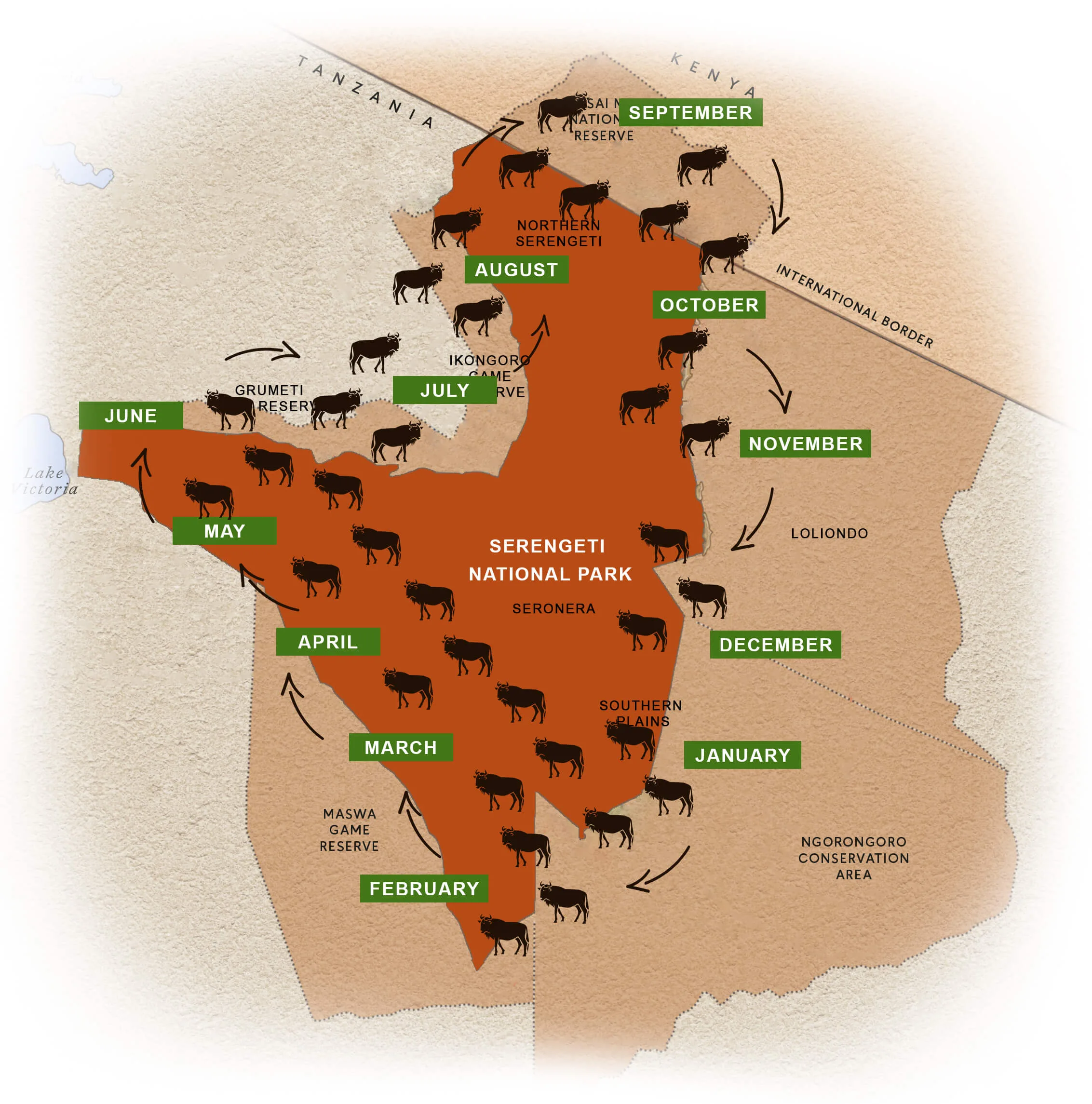
The Great Wildebeest Migration is not a single event or a journey that happens on fixed dates. It is a year round cycle, with more than two million wildebeest, zebras, and gazelles constantly moving across the Serengeti ecosystem in search of fresh grazing and water. Every stage of the migration offers a unique wildlife experience.
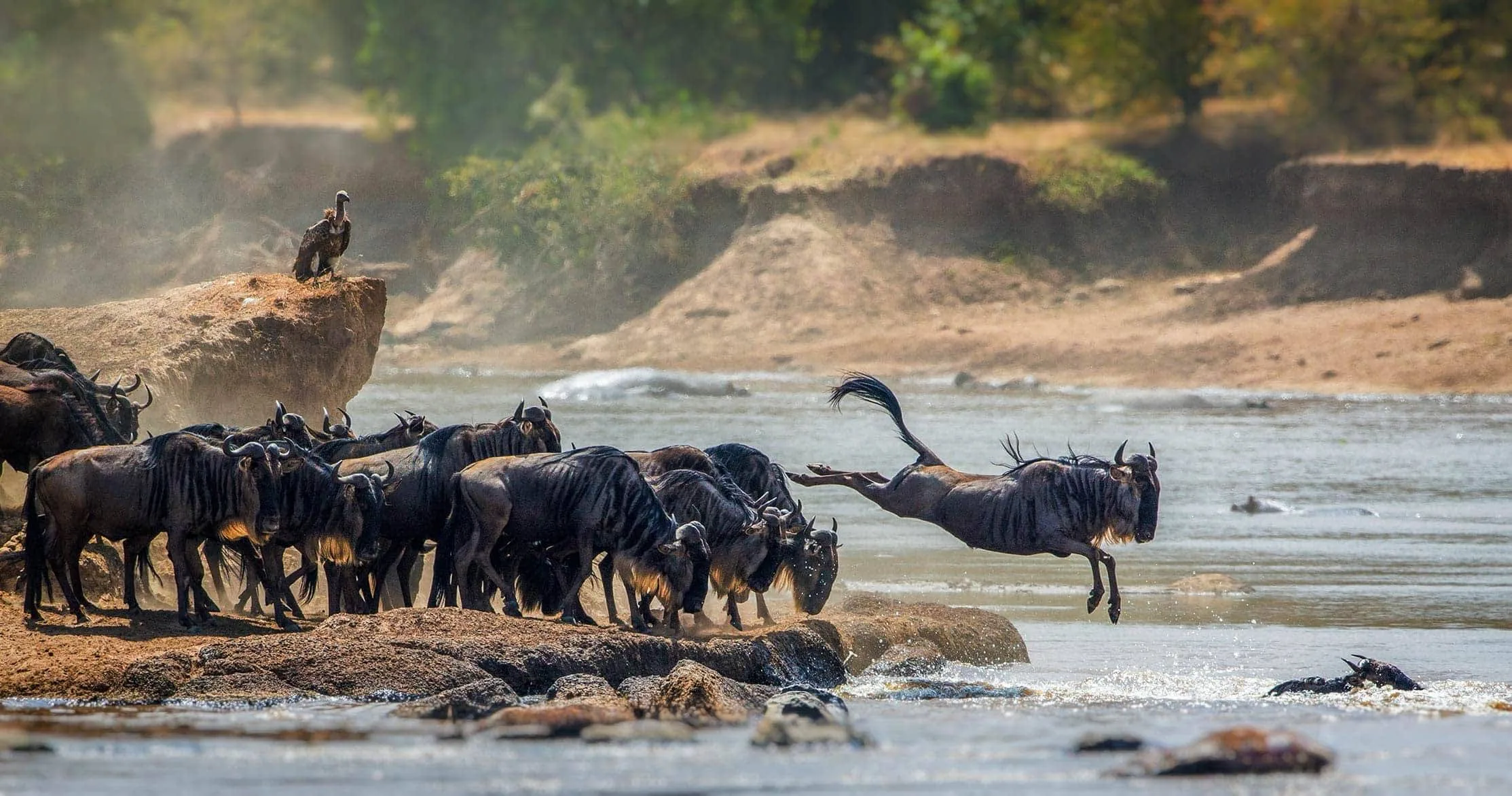
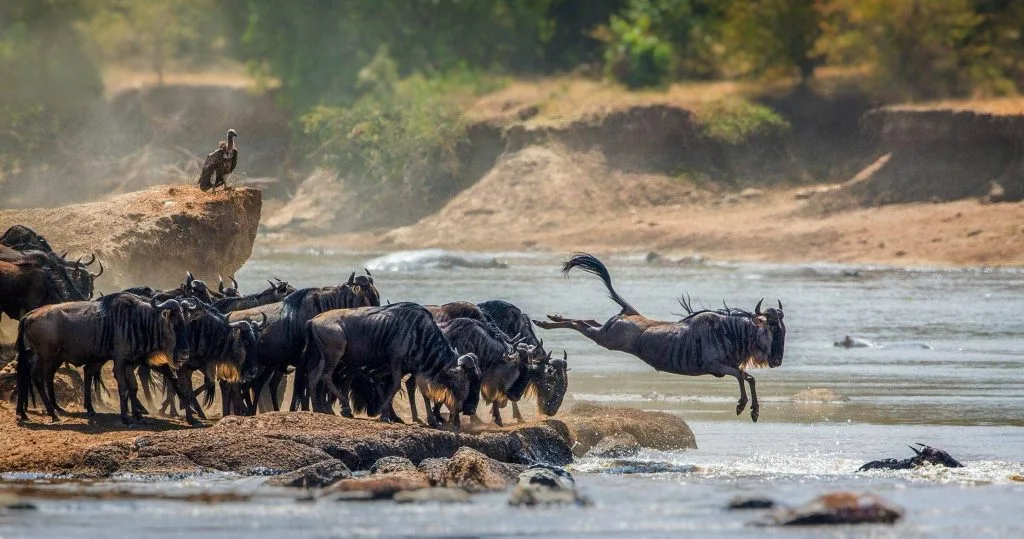
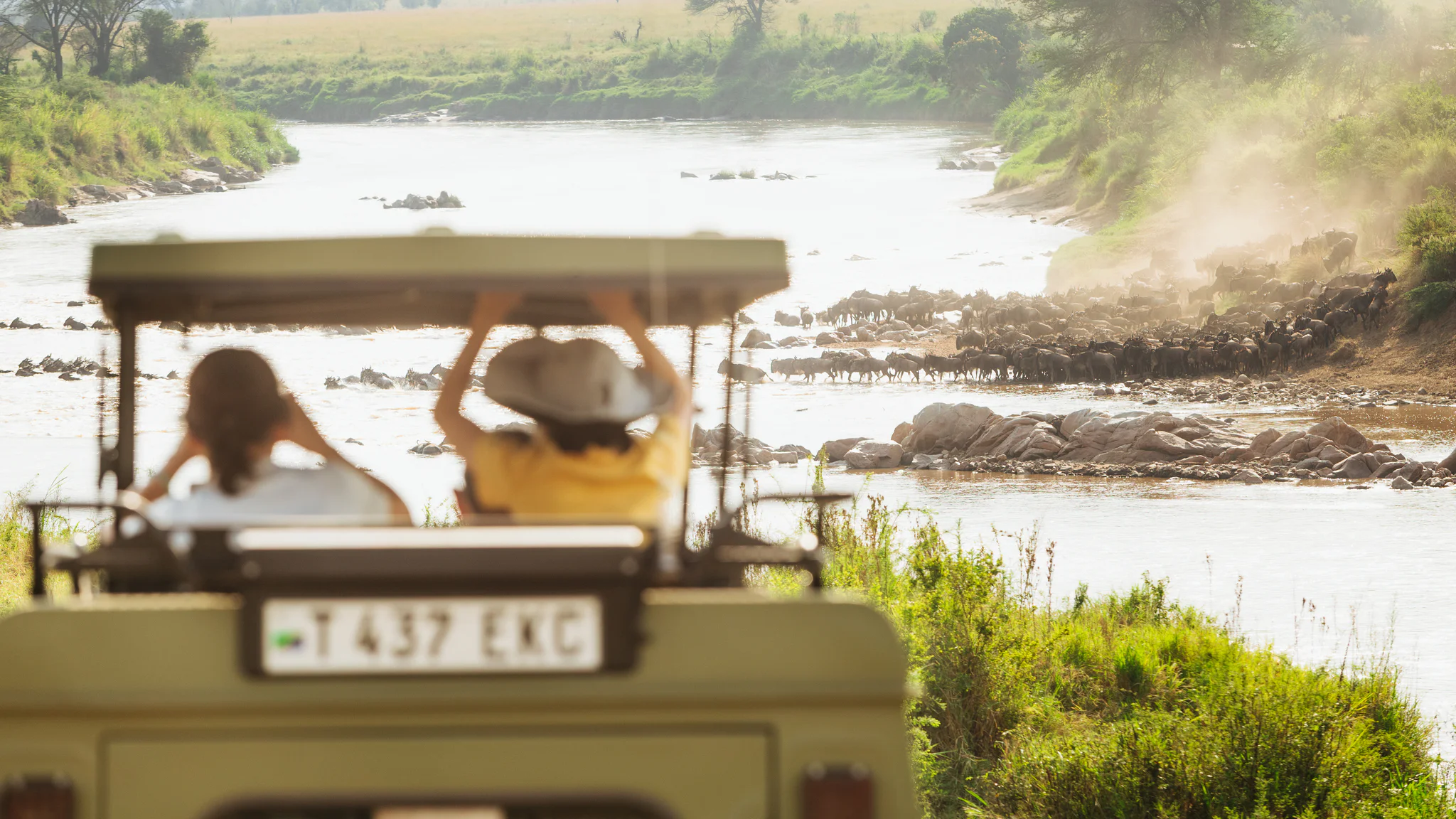
Many travelers focus on July and August because of the famous Mara River crossings in the northern Serengeti. While these dramatic crossings are extraordinary, they represent only one part of a much larger natural cycle. The migration delivers remarkable experiences throughout the year, each shaped by changing weather, grazing conditions, and animal behavior.
From our experience at Tanzania Safari Experience, the best time to witness the migration depends on the experience you want. If seeing river crossings is your priority, we recommend visiting the northern Serengeti during the crossing season. If you are fascinated by predator activity and the spectacle of thousands of wildebeest calves being born each day, the Ndutu calving season from January to March is equally unforgettable and often provides some of the most rewarding game viewing of the entire migration.
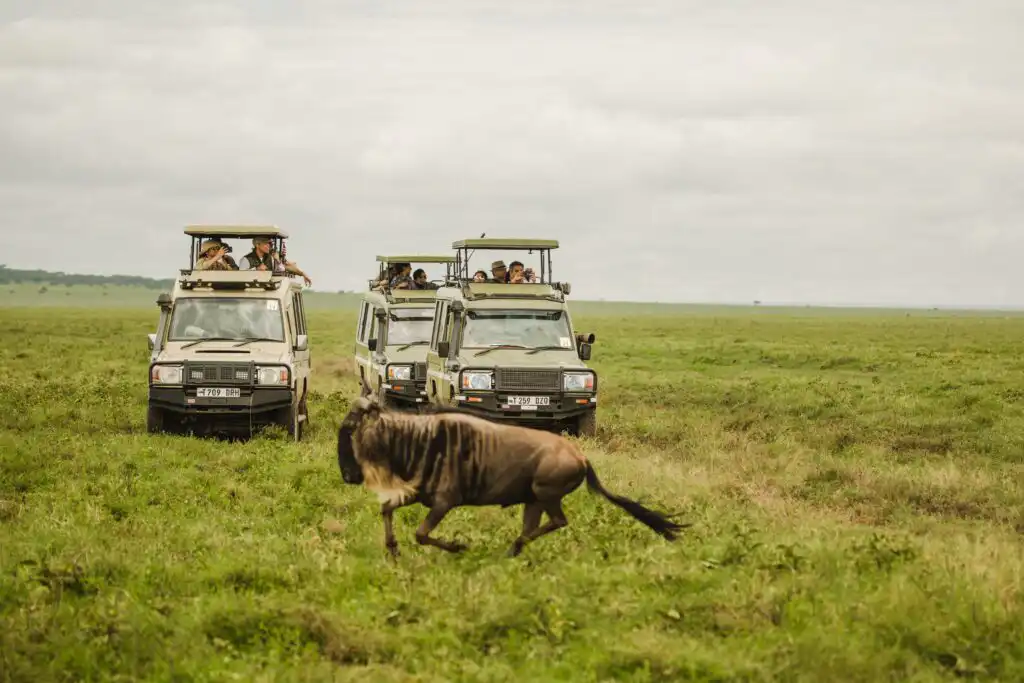
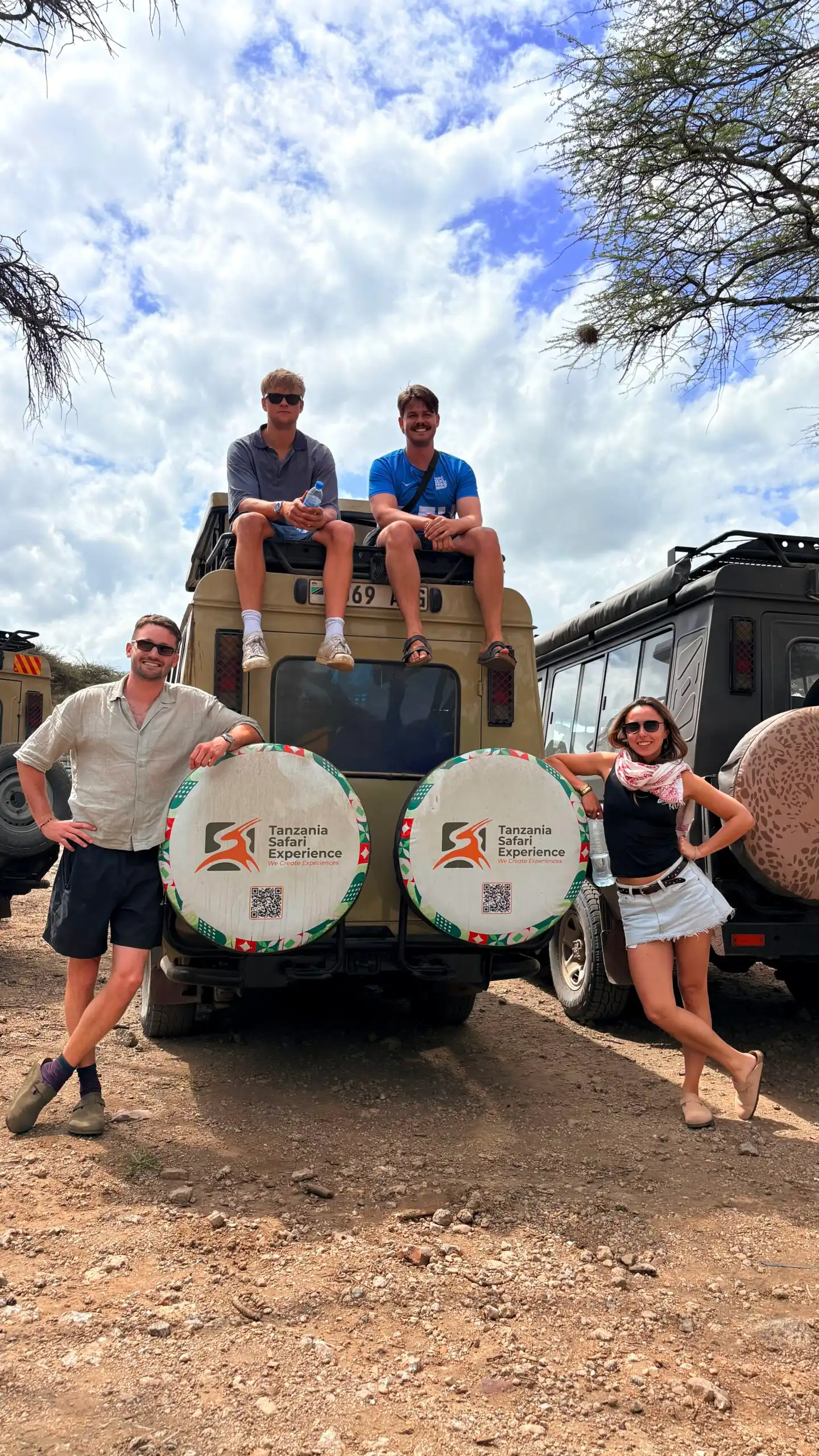
The most important factor is not simply choosing the right month. It is staying in the right location at the right time. Because the migration follows rainfall and grazing conditions rather than a fixed schedule, careful planning and local knowledge are essential. At Tanzania Safari Experience, we design each itinerary around the migration's expected movements to maximize your chances of witnessing the wildlife moments that matter most.