

Serengeti National Park – The Ultimate Safaris Guide
Serengeti National Park Tours & Safari Packages
The Serengeti is not a place you simply visit, photograph, and leave. It is a vast living ecosystem where every game drive feels different, even when you follow the same road twice.
At Tanzania Safari Experience, we plan Serengeti tours for travelers arriving through Arusha, Kilimanjaro, Zanzibar, Dar es Salaam, and neighboring Kenya. Our local knowledge helps us match the right Serengeti area, season, accommodation, and transport style to each traveler.
The biggest mistake is thinking every Serengeti safari package offers the same experience. The park covers a huge area, wildlife movements change throughout the year, and driving distances matter more than many visitors expect.
A well-planned Serengeti safari is not only about how many days you book. It is about spending those days in the right place.
The name Serengeti comes from the Maasai word for ‘endless plain’ and is a pretty accurate description of this jaw-dropping ecosystem.
Quick Direct Guide to Serengeti Safari Tours
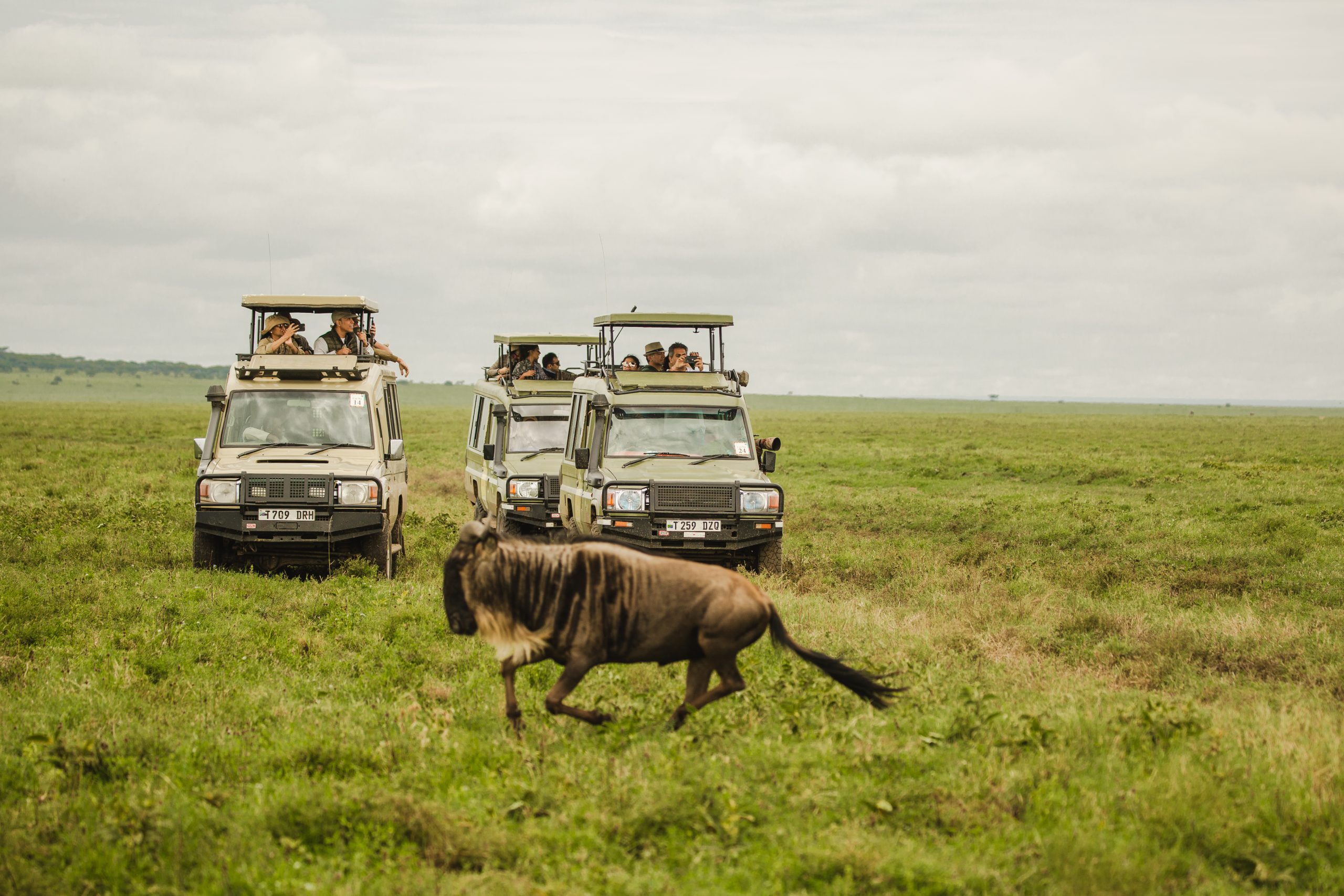
A Serengeti safari should ideally last at least three days, with four to six days offering better wildlife viewing, less rushing, and more flexibility to follow seasonal animal movements.
| Planning question | Our recommendation |
|---|---|
| Minimum Serengeti stay | 3 days |
| Best balanced stay | 4 to 6 days |
| Best for the Great Migration | Follow the seasonal location of the herds |
| Best for first-time visitors | Central Serengeti and Ngorongoro |
| Best for river crossings | Northern Serengeti from July to October |
| Best for calving season | Southern Serengeti and Ndutu from December to March |
| Best transport option | Road safari for a wider circuit; fly-in safari for limited time |
| Best safari style | Private safari for flexibility |
| Best time for quieter travel | Green season and shoulder months |
| Best add-on | Ngorongoro Crater, Tarangire, Zanzibar, or a balloon safari |
For most first-time visitors, we recommend combining the Serengeti with Ngorongoro Crater. Travelers with more time can also include Tarangire, Lake Manyara, or a Zanzibar beach holiday.
Why the Serengeti Matters in Tanzania Safari Planning
The Serengeti gives travelers Tanzania’s most complete big-game safari experience, combining open landscapes, resident predators, seasonal migration herds, varied habitats, and enough space for several distinct safari regions.
The Serengeti is often treated as one destination, but it functions more like several parks connected within one ecosystem.
Central Serengeti, known as Seronera, has reliable wildlife throughout the year. Its river valleys, rocky kopjes, grasslands, and permanent water attract lions, leopards, elephants, buffaloes, giraffes, and many other animals.
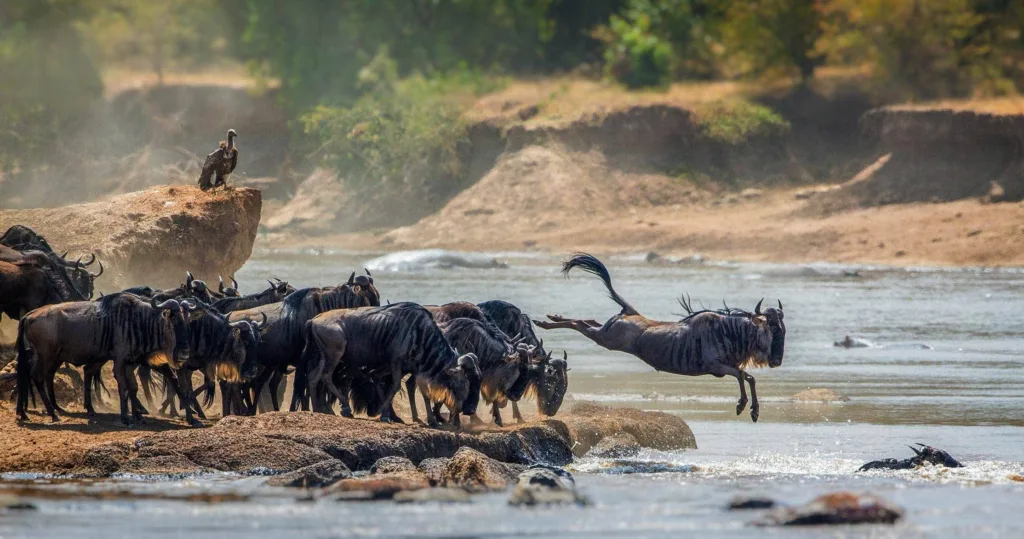
Northern Serengeti feels more remote. Between July and October, many travelers visit the Kogatende area hoping to see wildebeest crossing the Mara River. Crossings cannot be scheduled like a performance, but staying close to the river improves your chances.
Southern Serengeti and the neighboring Ndutu plains are especially important during the calving season. Large herds arrive on the short-grass plains, where thousands of wildebeest calves are born during the main birthing period.
Western Serengeti becomes important when the migration moves through the Western Corridor and toward the Grumeti area. This region is greener and more wooded than the open southern plains.
Your Serengeti package should therefore be designed around where you need to sleep, not simply around the name of the park.
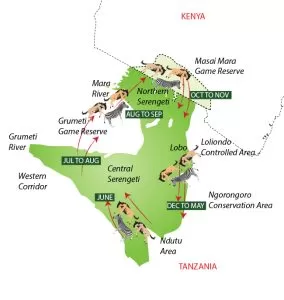
Serengeti National Park Map
Our Local Experience and Honest Opinion
In our experience, travelers enjoy the Serengeti most when they spend fewer hours changing camps, stay close to their main wildlife target, and allow time for patient game viewing.
A safari can look excellent on paper while performing poorly on the ground.
One common example is an itinerary that changes accommodation every night. It may appear to cover more places, but guests spend too much of their best wildlife-viewing time packing, checking out, driving long distances, and checking in again.
We usually recommend staying at least two nights in an important Serengeti area. This allows your guide to explore different directions without worrying about reaching another distant camp before dark.
What many travelers do not realize is that the Serengeti changes dramatically during the day.
RELATED ARTICLE: My Personal Guide to Organizing the Perfect Tanzania Safari
Early morning is cool, quiet, and often productive for predators. Lions may still be active, hyenas may be returning to their resting areas, and the low sunlight is excellent for photography.
By late morning, animals often settle near shade or water. This can be a good time to look for leopards resting in trees, elephants moving between feeding areas, and hippos gathered in pools.
Late afternoon brings softer light and renewed activity. The plains become warmer in color, animals begin moving again, and the park feels calmer as some vehicles return to camp.
If I were planning a first Serengeti safari for my own family, I would choose four to five days, use Central Serengeti as the main base, add Ngorongoro Crater, and avoid changing lodges unnecessarily.
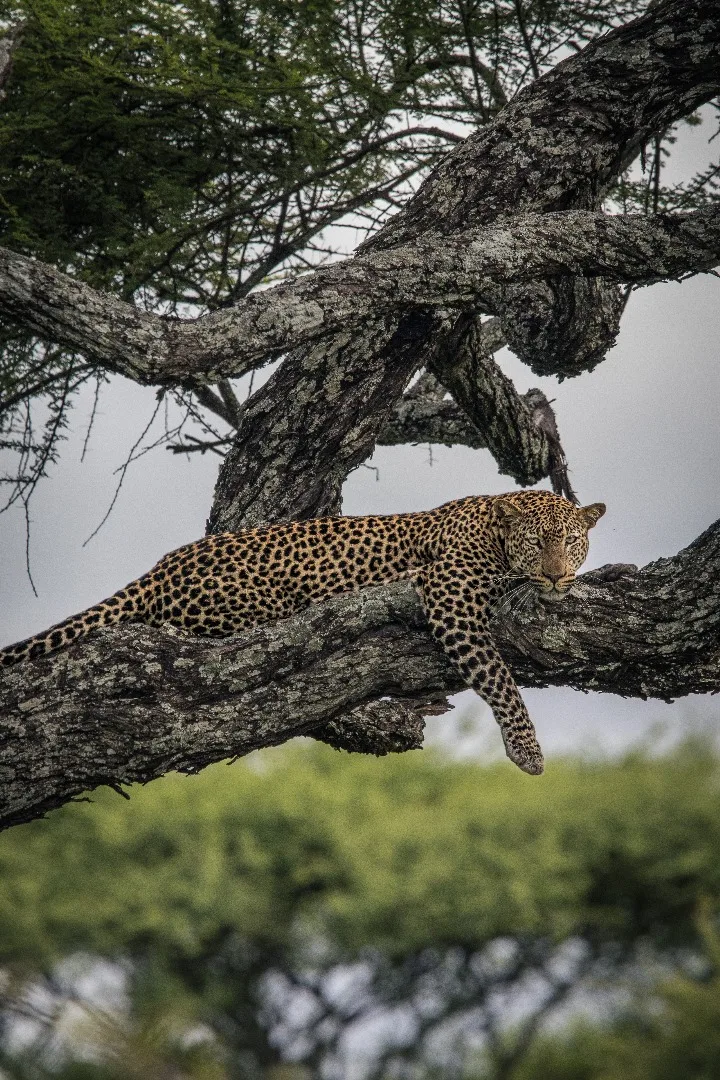
In What Country is the Serengeti?
The Serengeti is located mainly in northern Tanzania, in East Africa. Most of the famous grasslands, wildlife areas, and safari routes are found inside Serengeti National Park, one of Tanzania’s most important protected areas. The park is known for large populations of lions, elephants, giraffes, cheetahs, zebras, and wildebeest.
The wider Serengeti ecosystem also extends north into Kenya, where it continues as the Maasai Mara National Reserve. Although the two areas form one connected wildlife ecosystem, the Serengeti itself is primarily in Tanzania. This is why most travelers planning a Serengeti safari arrive through Tanzania, often combining it with Ngorongoro Crater, Tarangire National Park, or Zanzibar.
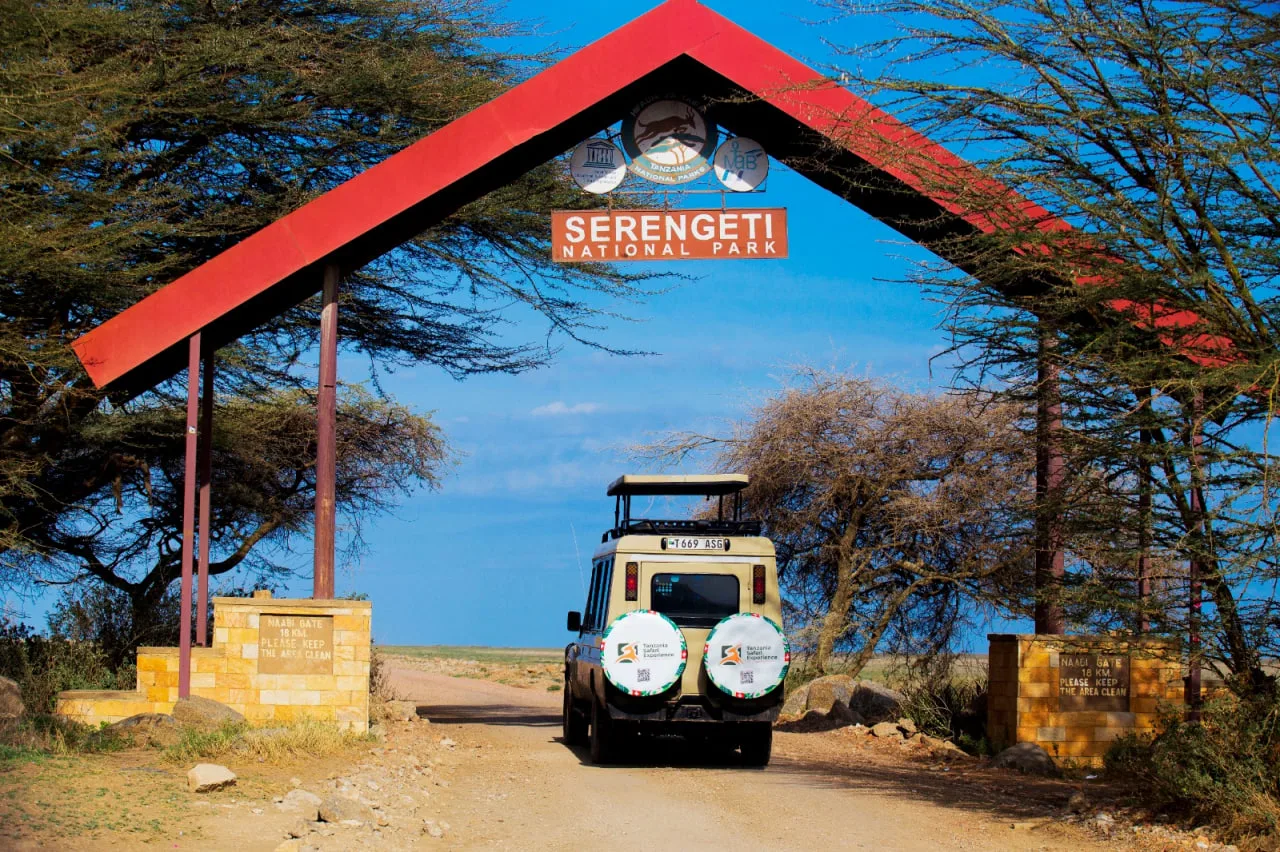
Why Is the Serengeti So Famous?
The Serengeti is famous because it is home to one of the largest and most important wildlife ecosystems in the world. It supports huge numbers of wildebeest, zebras, gazelles, lions, cheetahs, leopards, elephants, giraffes, hyenas, and many other animals. Its open plains make wildlife easier to see, while its rivers, woodlands, and rocky kopjes create different habitats across the park.
The Serengeti is also known for the Great Migration. Every year, more than a million wildebeest move through the Serengeti ecosystem in search of fresh grass and water, joined by hundreds of thousands of zebras and gazelles. Along the way, they give birth on the southern plains, cross rivers in the north, and face constant pressure from predators.
Another reason the Serengeti stands out is its size and natural freedom. Animals move across a vast landscape rather than staying in a small viewing area. Visitors can spend several days exploring different regions and still experience new scenery, wildlife behavior, and game drive routes each day. This combination of scale, animal numbers, predator activity, and seasonal movement is what makes the Serengeti one of Africa’s most respected safari destinations.
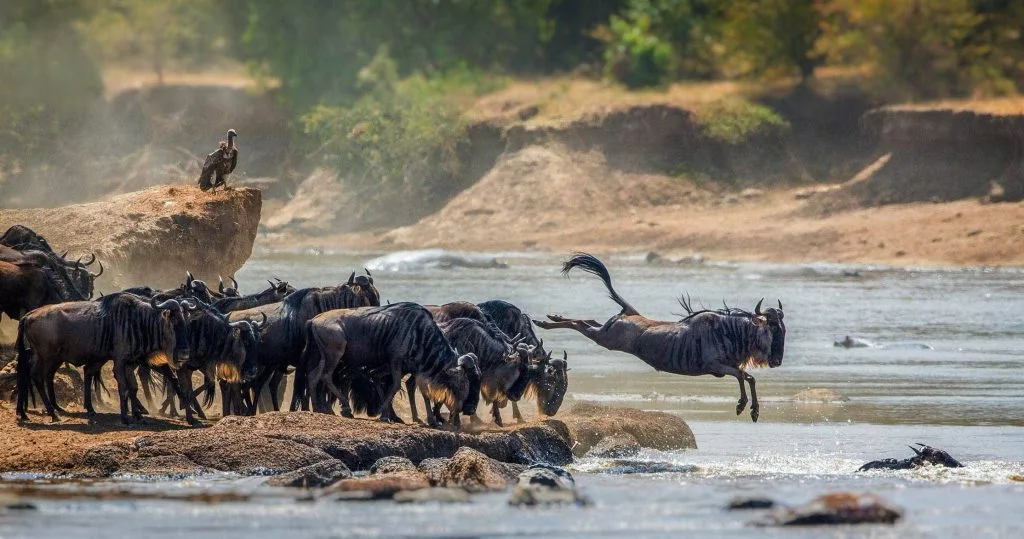
The Great Wildebeest Migration in the Serengeti
The Great Wildebeest Migration is a continuous movement of around 1.5 million wildebeest, accompanied by hundreds of thousands of zebras and gazelles, across the wider Serengeti ecosystem. The animals move in search of fresh grass, water, and suitable conditions for giving birth.
Many travelers think the migration happens only during the famous Mara River crossings. That is not correct. The migration takes place throughout the year, and every stage offers a different wildlife experience.
I was born near the northern Serengeti, and I have spent years watching how the movement of the herds changes with rainfall, grass conditions, and water availability. One thing I always explain to our guests is that the migration does not follow a fixed timetable. Nature decides when the animals move.
You can travel during the correct month and still find the herds farther north, south, east, or west than expected. This is why local planning, flexible accommodation, and the right Serengeti region matter so much.
Why Do the Wildebeest Migrate?
The wildebeest migrate because they need fresh grass and reliable water. Their movement is mainly controlled by seasonal rainfall across the Serengeti and Maasai Mara ecosystem.
When rain falls, new grass begins to grow. The wildebeest can often sense distant rain and gradually move toward the areas where food and water are becoming available.
Zebras travel with the wildebeest because the two animals feed differently. Zebras can eat the taller and harder grass first, leaving shorter and softer grass for the wildebeest. Thomson’s gazelles and other grazers often follow behind and feed on the shorter vegetation.
This relationship helps explain why so many animals can move through the same ecosystem together.
The migration is not one perfectly organized line of animals. Herds can spread across a very large area. Some groups may be moving while others are resting, grazing, giving birth, or gathering near water.
At certain times, the plains can appear completely covered with wildebeest. In other places, you may drive for some distance before finding the main concentration.
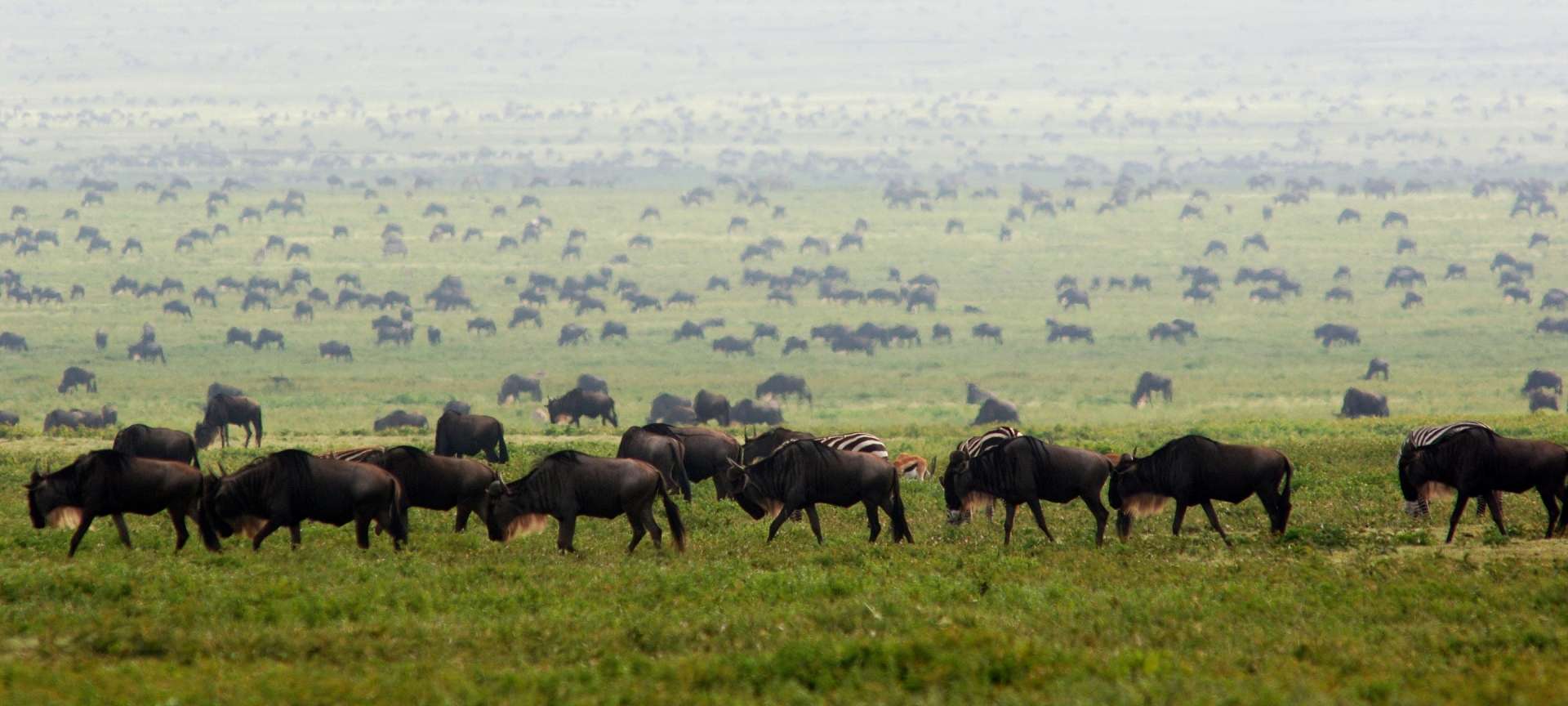
December to March: Calving Season in Southern Serengeti and Ndutu
From approximately December to March, the main herds gather across the short grass plains of southern Serengeti and the neighboring Ndutu area.
This is one of my favorite periods in the migration cycle because the landscape is green, the skies are dramatic, and the animals are spread across wide open plains.
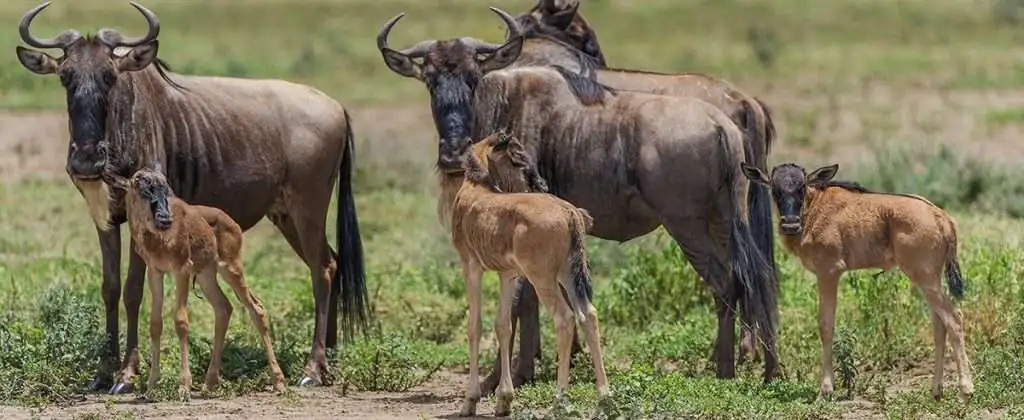
The main calving period usually takes place between late January and March, with February often considered the center of the season. Thousands of wildebeest calves can be born within a relatively short period.
A newborn wildebeest must stand and begin walking very quickly. Within minutes, many calves are already attempting to follow their mothers. This is essential because the herds are constantly moving and predators are always nearby.
Lions, cheetahs, leopards, hyenas, jackals, and vultures are all active during this period. However, calving season should not be described only as a time of hunting and danger. It is also a season of new life, social behavior, and strong family bonds within the herds.
For photographers, this period offers green backgrounds, young animals, large herds, and excellent predator activity. Roads may occasionally become muddy after rain, but the scenery and wildlife behavior can be exceptional.
We normally recommend spending at least three nights in the southern Serengeti or Ndutu area if calving is the main purpose of the safari.
April and May: The Herds Begin Moving West
As the southern plains begin to dry, the herds gradually start moving through central Serengeti and toward the Western Corridor.
April and May are part of the green season. Some travelers avoid these months because they expect continuous rain, but rain in the Serengeti often comes in periods rather than lasting the entire day.
The landscape is lush, visitor numbers are lower, and the atmosphere feels quieter. This can be an excellent time for travelers who enjoy photography, birdlife, open spaces, and fewer vehicles around wildlife sightings.
During this stage, the migration can spread across a wide area. The herds may not always form the tight concentrations seen during calving or river crossing periods.
This is also when experienced guides become particularly valuable. A guide who understands recent rainfall, road conditions, and herd reports can make better decisions about where to search.
May to July: Western Corridor and Grumeti Area
Between approximately May and July, many herds move toward the Western Corridor of the Serengeti.
This part of the park looks different from the open southern plains. It contains woodland, river systems, and longer grass. The Grumeti River becomes an important feature of the migration route.
The wildebeest may cross the Grumeti River as they continue north. These crossings can be dramatic, but they are usually different from the large Mara River crossings seen later in northern Serengeti.
The Grumeti River has crocodiles, steep sections, and areas of thick vegetation. However, crossings may occur over a longer period and in smaller groups.
Travelers visiting during this stage should understand that migration locations can vary significantly. Some herds may remain in central Serengeti while others have already moved west or north.
We often combine Central Serengeti with the Western Corridor when the migration pattern and accommodation availability make this practical.
July to October: Northern Serengeti and Mara River Crossings
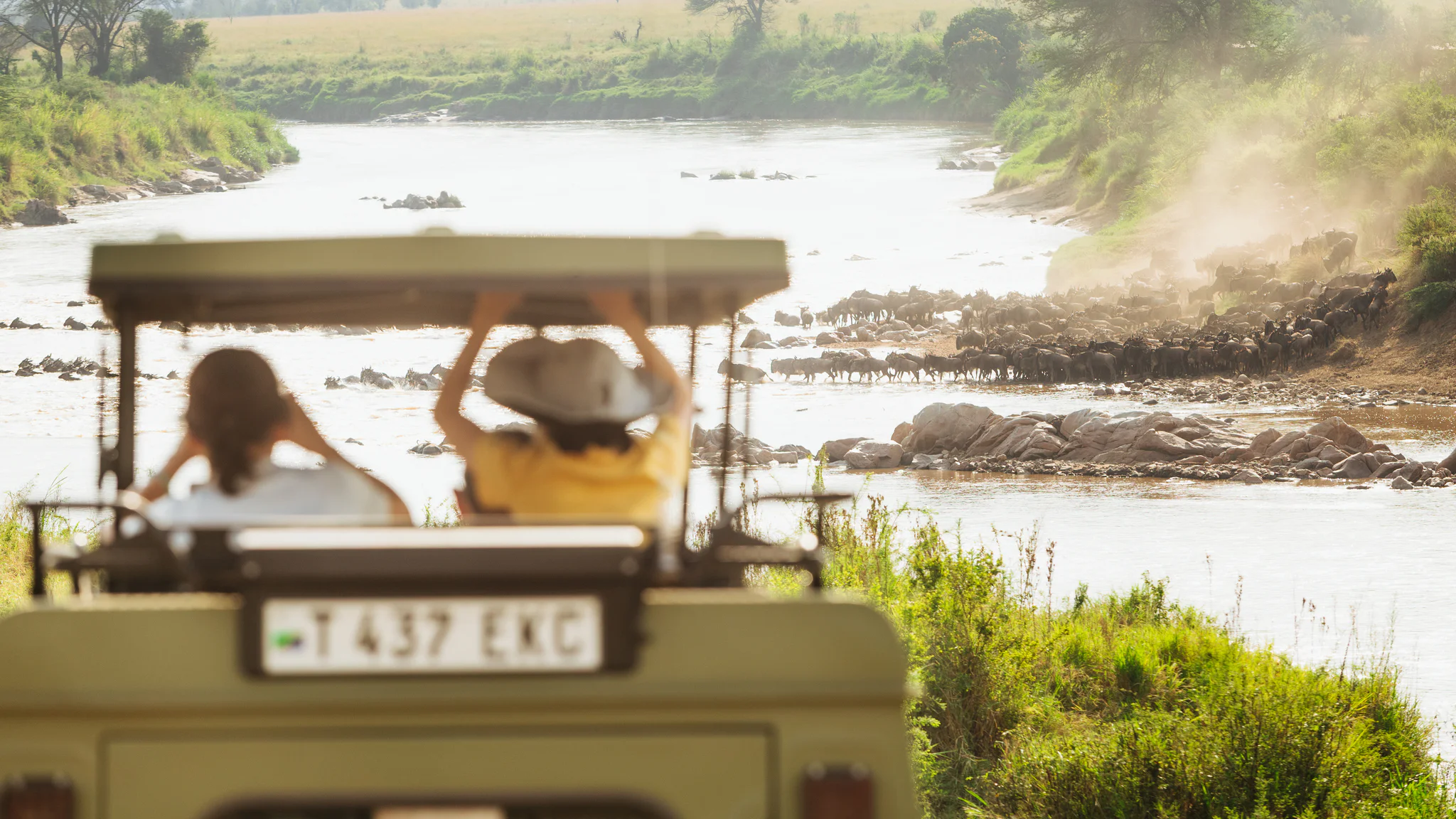
From approximately July to October, large numbers of wildebeest may gather in northern Serengeti around Kogatende, Lamai, and the Mara River.
This is the stage most people have seen in wildlife documentaries. The wildebeest gather near the river, hesitate at the edge, and sometimes suddenly begin crossing in large numbers.
A crossing may last a few minutes or continue for much longer. The animals may enter the river through different points, and they do not always choose the safest route.
Some crossings involve thousands of wildebeest. Others may involve only a small group.
The most important thing to understand is that no guide, lodge, or safari company can guarantee a river crossing. The herds may stand near the river for hours and then turn away. They may cross early in the morning, late in the afternoon, or when no safari vehicles are nearby.
Sometimes the same animals cross from Tanzania into Kenya and later return to Tanzania. They do not cross only once and continue in a straight line.
When clients tell me that seeing a Mara River crossing is their main priority, I recommend at least three nights in northern Serengeti. Four nights provide even better flexibility.
A one night stay is too rushed because you may arrive in the afternoon, have only one full day near the river, and leave the following morning.
Even when a crossing does not happen, northern Serengeti remains an excellent safari area. Lions, elephants, leopards, cheetahs, giraffes, buffaloes, hippos, crocodiles, and many plains animals can be seen throughout the region.
October to December: The Return Journey South
As the short rains begin, the wildebeest gradually leave northern areas and start moving south through eastern and central Serengeti.
This part of the migration receives less attention, but it can offer impressive wildlife viewing. Long columns of wildebeest may move through the plains while predators follow the herds.
The exact route depends on where rain has fallen. Some herds may pass through the eastern Serengeti, while others move through central areas.
By December, many animals begin reaching the southern plains, where the cycle starts again.
This stage shows why the Great Migration is best understood as a circular movement rather than a single journey from Tanzania to Kenya.
What Most Travelers Misunderstand About the Migration
The biggest misunderstanding is that the migration can be predicted by month alone.
A traveler may read that the herds are always in northern Serengeti in July or always in Ndutu in December. These are useful general patterns, but rainfall can cause earlier or later movement.
Another misunderstanding is that the migration is only about river crossings. The calving season, long columns of animals moving across the plains, predator interaction, mating behavior, and daily grazing patterns are all part of the migration.
Travelers also sometimes believe the entire wildebeest population stays together. In reality, the herds can spread across many kilometers. The main concentration may be in one area while smaller groups remain elsewhere.
This is why choosing accommodation only by price can weaken the safari. A lodge may be beautiful but located several hours from the main herds.
Location should always be considered together with comfort.
How We Plan a Great Migration Safari
At Tanzania Safari Experience, we begin by looking at the travel month, the number of available days, the guest’s arrival point, and the stage of the migration they want to experience.
For calving season, we normally focus on Ndutu and southern Serengeti. For river crossing opportunities, we use northern Serengeti. During transitional months, we may combine Central Serengeti with another seasonal region.
Central Serengeti remains important throughout the year because it supports strong resident wildlife. Even when the main migration herds are elsewhere, the Seronera area can offer excellent sightings of lions, leopards, elephants, cheetahs, buffaloes, giraffes, and hippos.
We also avoid changing camps every night unless the route genuinely requires it. Spending two or three nights in one location gives the guide time to explore, follow recent wildlife information, and wait patiently at promising areas.
For travelers arriving from Zanzibar, a fly in safari can save valuable time. Guests can fly directly to an airstrip near the appropriate Serengeti region, meet their private guide, and begin the game drive soon after arrival.
For travelers starting in Arusha, a road safari allows the Serengeti to be combined with Tarangire, Lake Manyara, and Ngorongoro Crater.
My Honest Recommendation
The best Great Migration safari is not always the one that promises the most destinations. It is the one that places you close to the expected herd location and gives you enough time to observe what is happening naturally.
For calving season, I recommend at least three nights around Ndutu or southern Serengeti. For Mara River crossings, I recommend three to four nights in northern Serengeti.
Travelers with more time should combine a seasonal migration area with Central Serengeti. This provides both migration opportunities and dependable resident wildlife viewing.
The Great Wildebeest Migration is famous because of its scale, but the experience becomes more meaningful when you slow down and observe the details. You may see a calf searching for its mother, zebras calling to one another, lions watching from a kopje, or thousands of wildebeest moving toward distant rain.
Those smaller moments are what make the migration feel real.
At Tanzania Safari Experience, we use our local knowledge to select the most suitable route, camp location, number of nights, and travel style for each guest. We cannot control the animals, but we can plan the safari carefully enough to give you the strongest possible opportunity to experience one of the world’s greatest wildlife movements.
Choosing the Best Serengeti Safari Package
The right Serengeti package depends on your available days, arrival point, preferred comfort level, wildlife priorities, and tolerance for long road journeys between Tanzania’s northern parks.
Three-Day Serengeti Safari
A three-day tour is the practical minimum, particularly when flying into the park.
A common fly-in plan includes:
- Day 1: Flight to Serengeti and afternoon game drive
- Day 2: Full-day Serengeti game drive
- Day 3: Morning game drive and departure flight
This works well for travelers already staying in Zanzibar or those with very limited time. However, three days can feel short if weather or wildlife movements affect one of the game drives.
Four-Day Serengeti Safari
Four days create a more comfortable rhythm. You can explore Central Serengeti properly or combine two nearby areas without turning the journey into a race.
This is one of our most recommended lengths for couples, honeymooners, and first-time safari visitors.
Five- to Six-Day Serengeti Safari
Five or six days offer stronger flexibility. You can combine Central Serengeti with northern, southern, or western areas depending on the season.
Longer tours also allow time for a balloon safari, relaxed lunches, longer predator sightings, and route adjustments based on recent wildlife information.
Seven Days or More
A longer safari is suitable for photographers, migration-focused travelers, wildlife enthusiasts, and repeat visitors.
It also allows the Serengeti to be combined naturally with Tarangire, Ngorongoro, Lake Manyara, or additional remote areas.
Animals in Serengeti National Park
Serengeti National Park is home to an extraordinary variety of wildlife, from large predators and elephants to giraffes, hippos, zebras, wildebeest, hyenas, and many antelope species. The park is especially famous for its strong populations of lions and other predators, supported by the vast numbers of grazing animals that move through the Serengeti ecosystem. The different habitats, including open plains, rivers, rocky kopjes, woodlands, and seasonal wetlands, allow visitors to see different animals in different parts of the park.
Lions in the Serengeti
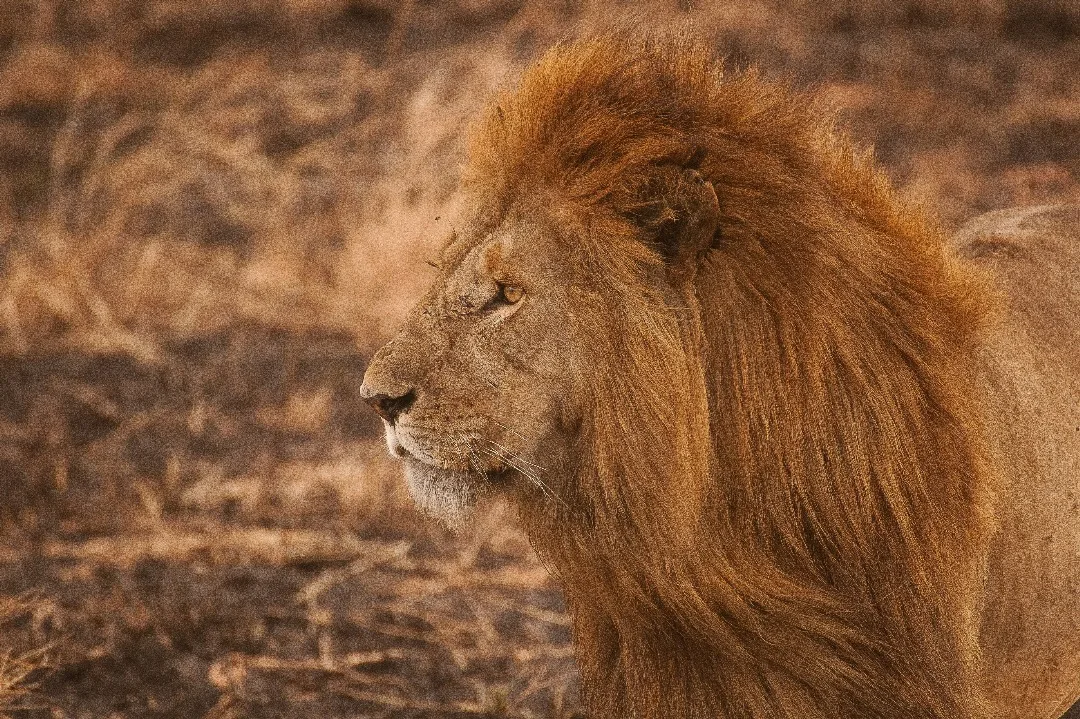
Lions are among the most commonly seen members of the Big Five in Serengeti National Park. The open plains provide excellent hunting grounds, while rocky kopjes offer shade, resting places, and good viewpoints over the surrounding grasslands. In Central Serengeti, especially around the Seronera area, guests often see lion prides resting beside the road, hunting near rivers, or watching herds from raised rocks. Early mornings and late afternoons are usually the best times to see lions active, although they may rest for many hours during the heat of the day.
Leopards in the Serengeti
Leopards are more secretive than lions, but Serengeti National Park is one of the best places in Tanzania to look for them. They are often found in acacia trees, riverine woodland, and areas with thick vegetation where they can hide and observe prey. The Seronera Valley is particularly well known for leopard sightings because the river system provides trees, shade, and a steady supply of animals. In our experience, patience is essential because a leopard can remain almost invisible in a tree even when it is only a short distance from the safari vehicle.
Elephants in the Serengeti
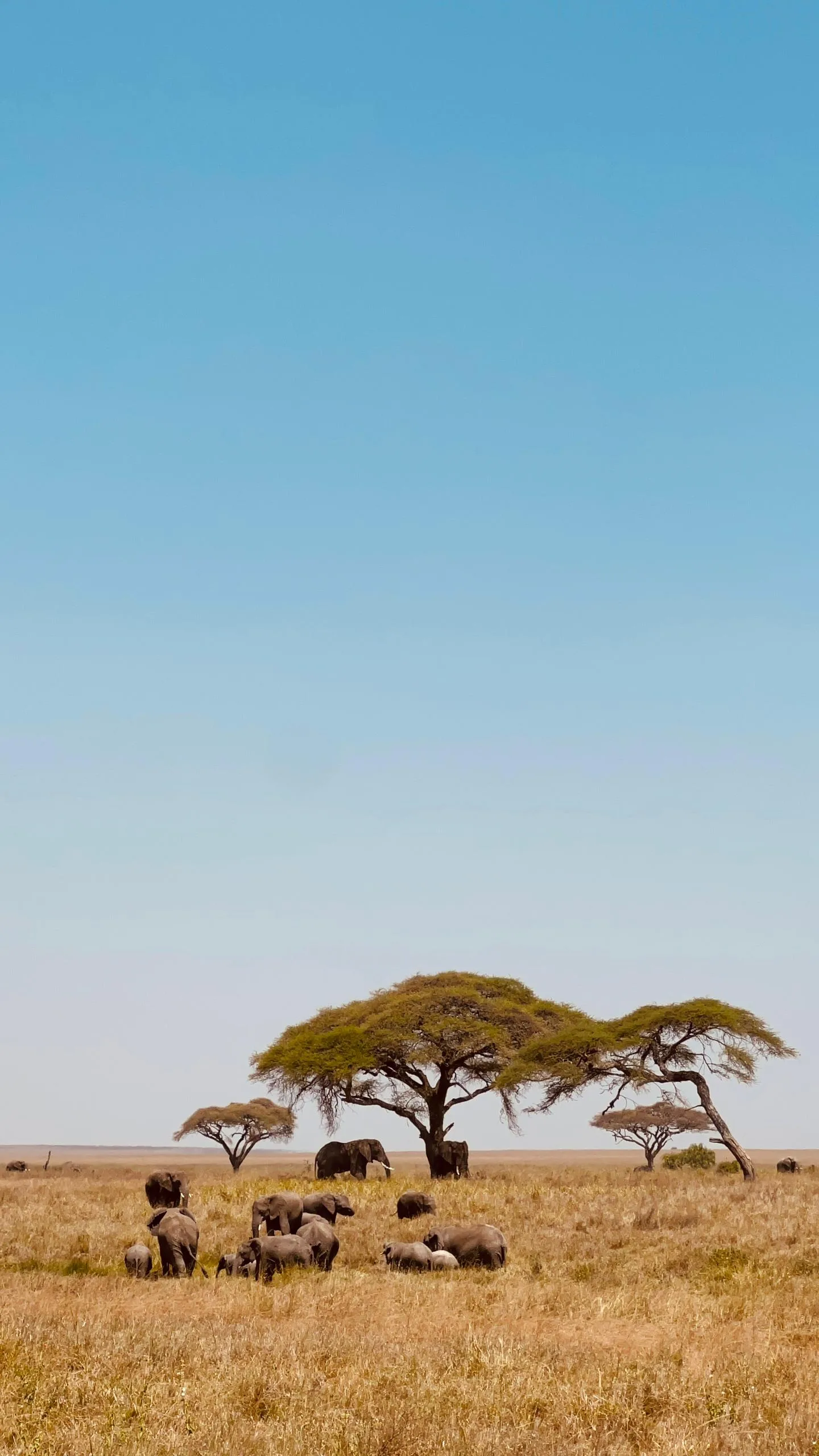
Elephants can be seen in several parts of the Serengeti, especially near rivers, woodlands, and areas with permanent water. Family groups are often led by an experienced matriarch who guides the herd between feeding and drinking areas. Elephants may appear calm, but their movements are highly organized and their social bonds are strong. Watching a herd cross the road, protect young calves, or gather near a water source is one of the most rewarding experiences in the park. Northern and western Serengeti often provide particularly good elephant sightings.
Buffaloes in the Serengeti
African buffaloes are common in Serengeti National Park and may be seen alone, in small groups, or in very large herds. They usually prefer areas with reliable grass and water, including river valleys and open plains. Older males are often seen resting separately from the main herd and may appear heavily built with thick, curved horns. Buffaloes are sometimes underestimated by visitors, but they are powerful, alert, and impressive to watch, especially when a large herd moves together across the grasslands.
RELATED ARTICLE: Is it safe to Camp in the Serengeti?
Black Rhinos in the Serengeti
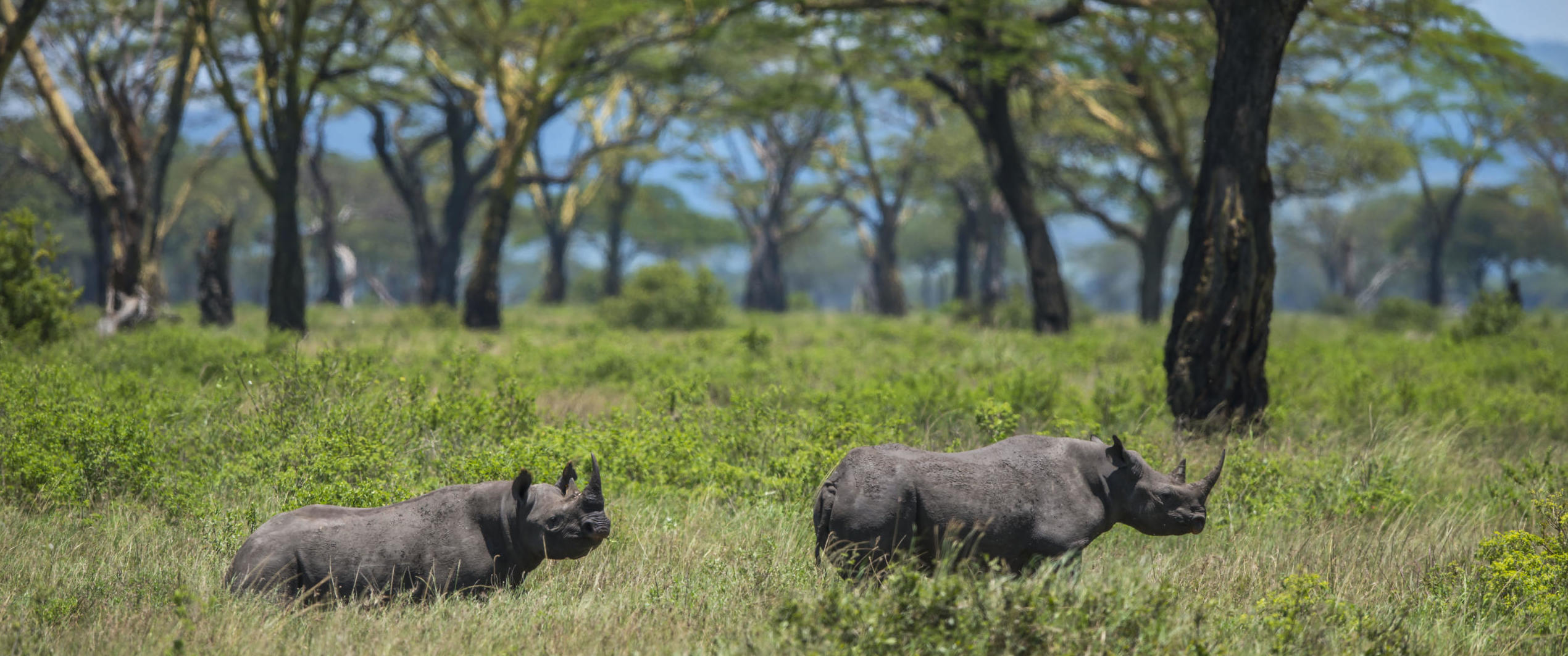
Black rhinos are the most difficult member of the Big Five to see in the Serengeti. Their numbers are much lower than those of lions, elephants, or buffaloes, and they usually live in protected areas with suitable vegetation and limited disturbance. Sightings are possible, but they are never guaranteed. For travelers whose main priority is seeing a black rhino, we usually recommend combining the Serengeti with Ngorongoro Crater, where the chances are often better. Even there, patience and good timing are still required.
Beyond the Big Five, the Serengeti is also home to cheetahs, spotted hyenas, jackals, wild dogs, giraffes, hippos, crocodiles, warthogs, elands, topis, hartebeests, gazelles, and more than 500 recorded bird species. Every region of the park offers a different wildlife experience, which is why staying several days gives travelers a much stronger chance of seeing both famous animals and the smaller details that make the Serengeti ecosystem so special.
Is Serengeti Good for Birdwatching?
Yes, Serengeti National Park is an excellent destination for birdwatching. The park supports hundreds of bird species, from large birds of prey to colorful rollers, bee eaters, hornbills, storks, and ground dwelling birds. Because the Serengeti includes open grasslands, rivers, woodlands, rocky kopjes, and seasonal wetlands, birdlife changes as you move between different parts of the park.
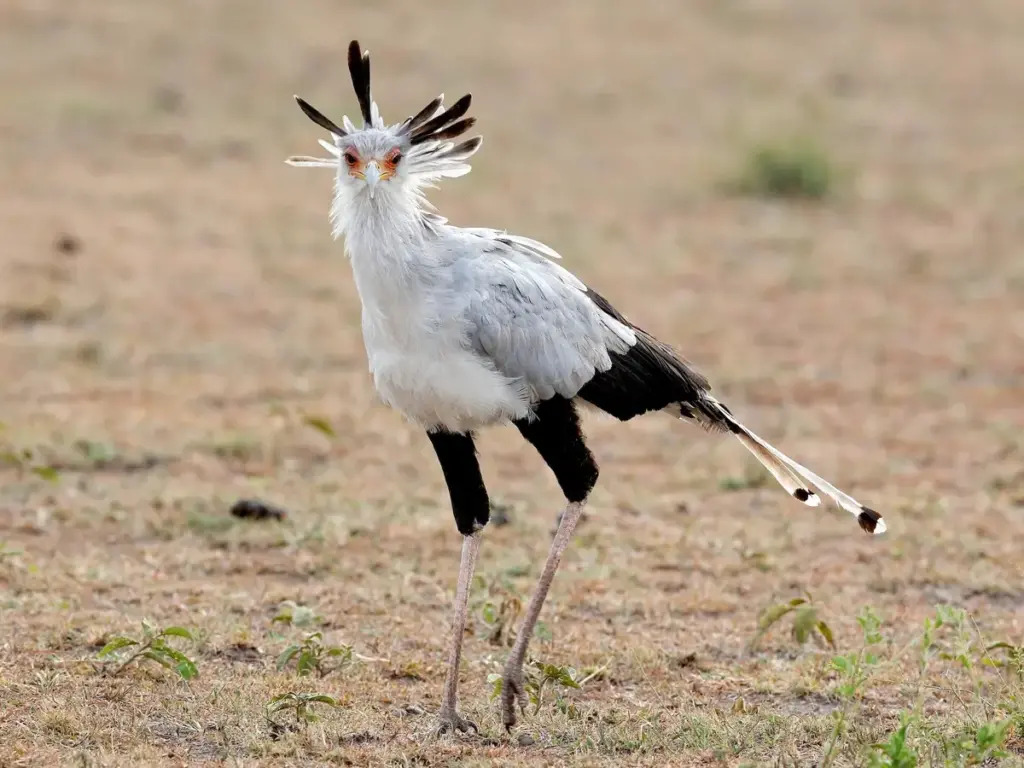
The open plains are especially good for spotting secretary birds, kori bustards, ostriches, crowned cranes, and different species of eagles and vultures. Around rivers and water sources, visitors may see herons, egrets, kingfishers, storks, and other water birds. Acacia woodlands are also productive, with hornbills, woodpeckers, barbets, and smaller colorful species often seen between the branches.
Birdwatching is rewarding throughout the year, but the wetter months usually bring greener scenery and more activity. Migratory birds also arrive during certain seasons, adding even more variety. Early morning is often the best time because birds are active, temperatures are cooler, and the park is quieter.
In our experience, birdwatching adds much more depth to a Serengeti safari. Even when lions or leopards are resting, there is always something interesting to observe in the trees, grasslands, or sky. Travelers who are serious about birds should tell their guide before the safari so the game drives can include more time near wetlands, woodlands, and other productive habitats.
How Many Days Should I Spend in Serengeti?
For most travelers, three to five days in the Serengeti is the right amount of time. Three days gives you a proper introduction to the park, while four or five days allows you to explore more slowly, follow wildlife sightings, and avoid feeling rushed.
A three-day Serengeti safari works well for travelers with limited time, especially those flying in from Zanzibar or Arusha. It normally includes an afternoon game drive on arrival, one full day in the park, and a final morning game drive before departure. This is enough to see a good variety of animals, but it leaves little room for delays, changing weather, or wildlife movements.
In our experience, four to five days provides the best balance for a first Serengeti safari. You have time for several morning and afternoon game drives, longer stops at important sightings, and a better chance of seeing lions, leopards, cheetahs, elephants, giraffes, buffaloes, and large herds. You can also stay in one area for more than one night instead of moving between camps every day.
Travelers visiting specifically for the Great Wildebeest Migration should consider at least five or six days, especially if the itinerary includes more than one region. For example, you may combine Central Serengeti with northern Serengeti during the Mara River season, or with Ndutu and southern Serengeti during the calving period. The distances are large, so adding extra days gives you more time where the wildlife is expected to be.
Photographers, repeat visitors, and serious wildlife enthusiasts may prefer six to eight days. Longer stays make it possible to wait patiently at sightings, return to productive areas, explore quieter routes, and observe animal behavior instead of simply moving from one species to another.
What many travelers underestimate is the size of the Serengeti. It is not a park that can be fully explored in one or two game drives. Central, northern, southern, and western Serengeti each offer different landscapes and wildlife experiences. Spending more days does not mean repeating the same safari. It usually means seeing the park in greater depth.
If I were planning a first Serengeti safari, I would recommend four or five days, ideally combined with Ngorongoro Crater. This gives enough time to enjoy the Serengeti properly without making the overall journey too long. For migration-focused travel, I would increase the stay to at least five or six days and place the accommodation close to the expected herd location.
Road Safari or Fly-In Serengeti Safari?
A road safari gives a fuller northern Tanzania experience and usually better overall value, while a fly-in safari reduces travel time and works best for short holidays or Zanzibar combinations.
| Safari style | Best for | Main advantage | Main consideration |
| Road safari | First-time visitors and longer trips | See several parks and changing landscapes | Longer driving days |
| Fly-in safari | Short holidays and Zanzibar guests | More time inside the Serengeti | Higher transport cost |
| Fly-in and road out | Travelers wanting balance | Saves time while keeping a northern circuit experience | Requires careful route planning |
| Road in and fly out | Guests ending in Zanzibar | Smooth transition from safari to beach | Flight baggage limits may apply |
The drive from Arusha to Central Serengeti is long. Most road itineraries break the journey through Tarangire, Lake Manyara, or Ngorongoro rather than treating it as a direct transfer.
The road from Ngorongoro toward Serengeti passes through changing highland and plains scenery. It can be dusty, but it is part of the safari experience rather than wasted time.
A fly-in safari is especially useful for guests staying in Zanzibar. Morning flights can connect Zanzibar with Serengeti airstrips, although schedules and routing vary.
We arrange internal flights, airport transfers, park transportation, accommodation, and game drives as one coordinated package.

Private, Mid-Range, Luxury, or Camping Safari?
Private safaris provide the most flexibility, while camping, mid-range, and luxury packages mainly differ in accommodation style, service level, location, privacy, and the amount of comfort available between game drives.
Private Serengeti Safari
A private safari gives your group its own vehicle and guide. You decide how long to stay at a sighting, when to stop for lunch, and whether to prioritize photography, birds, big cats, or family needs.
We normally recommend private safaris for:
- Families with children
- Honeymooners
- Photographers
- Older travelers
- Small groups
- Guests with specific wildlife interests
Mid-Range Safari
Mid-range camps offer comfortable beds, private bathrooms, good meals, and strong locations without the highest luxury cost.
For many travelers, this category provides the best balance between comfort and value.
Luxury Serengeti Safari
Luxury packages may include larger suites, elevated service, premium food, private dining, swimming pools, spacious common areas, or more exclusive locations.
The word “luxury” should not be judged only by room design. Location matters. A beautiful lodge far from your target wildlife can cost you valuable game-drive time.
Camping Safari
Camping brings guests closer to the sounds and atmosphere of the bush. Depending on the package, it may involve public campsites, mobile camps, or more comfortable tented arrangements.
Camping works best for adventurous travelers who value experience over hotel-style facilities.
Is a Serengeti Balloon Ride Worth It?
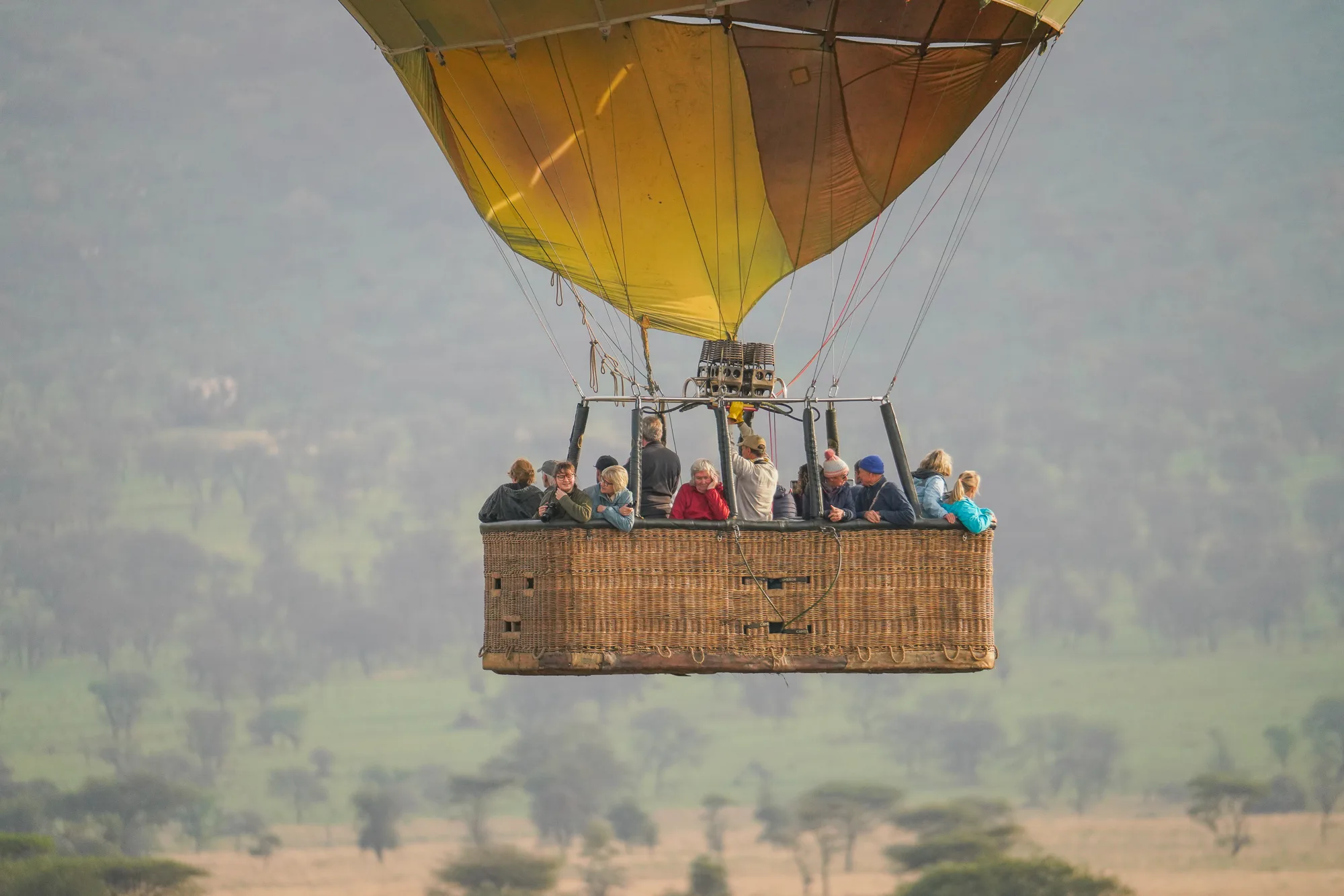
In my opinion, yes, a Serengeti balloon safari is worth paying around $550 per person, especially if this may be your only visit to the park. It is expensive, but the experience is completely different from a normal game drive and gives you a wider understanding of the Serengeti landscape.
The experience begins before sunrise, when you are collected from your camp and driven to the launch site. After a safety briefing, the balloon rises slowly as the sun begins to light the plains. From above, you can see rivers, kopjes, animal paths, forests, and open grasslands that are difficult to understand from the ground.
The flight normally lasts around 45 to 60 minutes, depending on the wind and landing conditions. You may see wildebeest herds, zebras, giraffes, elephants, gazelles, hippos, or predators below, but wildlife sightings are never guaranteed. The real value is the combination of silence, sunrise, open space, and the scale of the Serengeti beneath you.
What I personally like about the balloon safari is how peaceful it feels. During a game drive, you are close to the animals and can stop for detailed sightings. From the balloon, you see how the animals move through the wider ecosystem. You notice old river channels, tracks across the plains, and the enormous distance between different habitats.
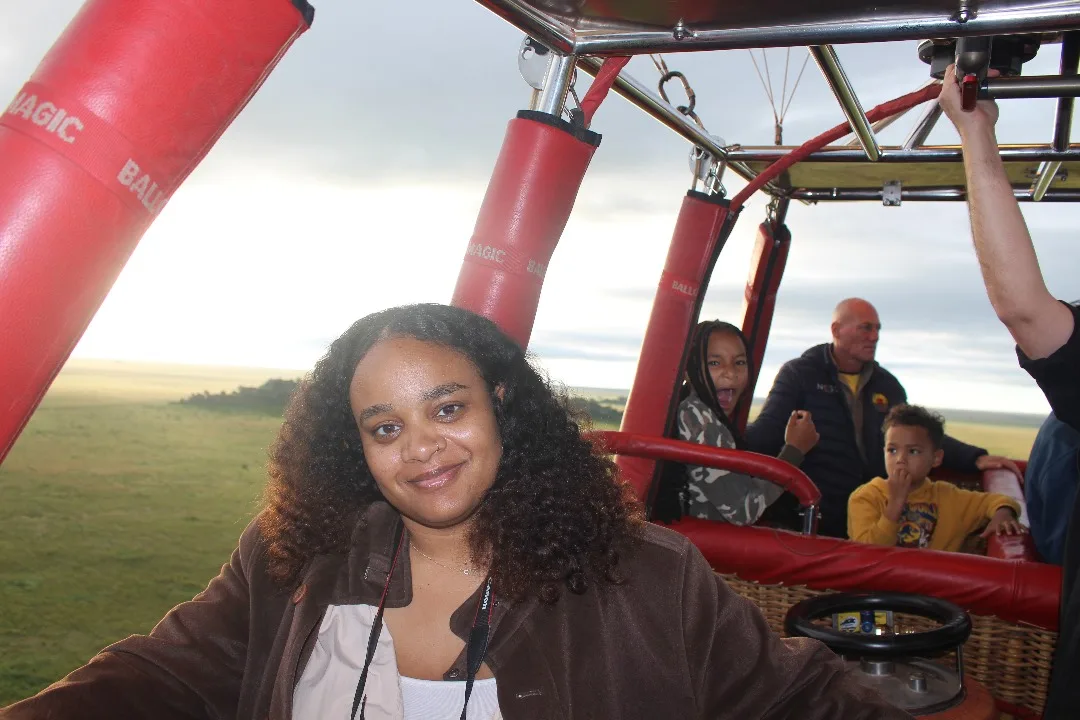
Most Serengeti balloon experiences also include transfers from selected camps, the flight, a celebration after landing, and a bush breakfast. When you consider the specialist pilots, ground crews, safety equipment, park permissions, fuel, and limited number of seats, the price becomes easier to understand.
However, I would not recommend removing an important safari day just to afford the balloon flight. Your normal game drives should remain the main part of the Serengeti experience. The balloon safari works best as an additional activity during a stay of at least three or four nights.
It is especially worthwhile for honeymooners, couples celebrating a special occasion, photographers, families with older children, and travelers who want to experience the Serengeti from a completely different viewpoint. Travelers who are uncomfortable with heights or working with a strict budget may prefer to use the money for an extra night in the park.
If I were planning the safari for myself, I would pay the $550, provided the rest of the itinerary was already well planned. You can see wildlife from a vehicle in many places, but floating silently over the Serengeti at sunrise is a rare experience that most travelers remember long after the safari ends.
Can You Go on a Walking Safari in the Serengeti?
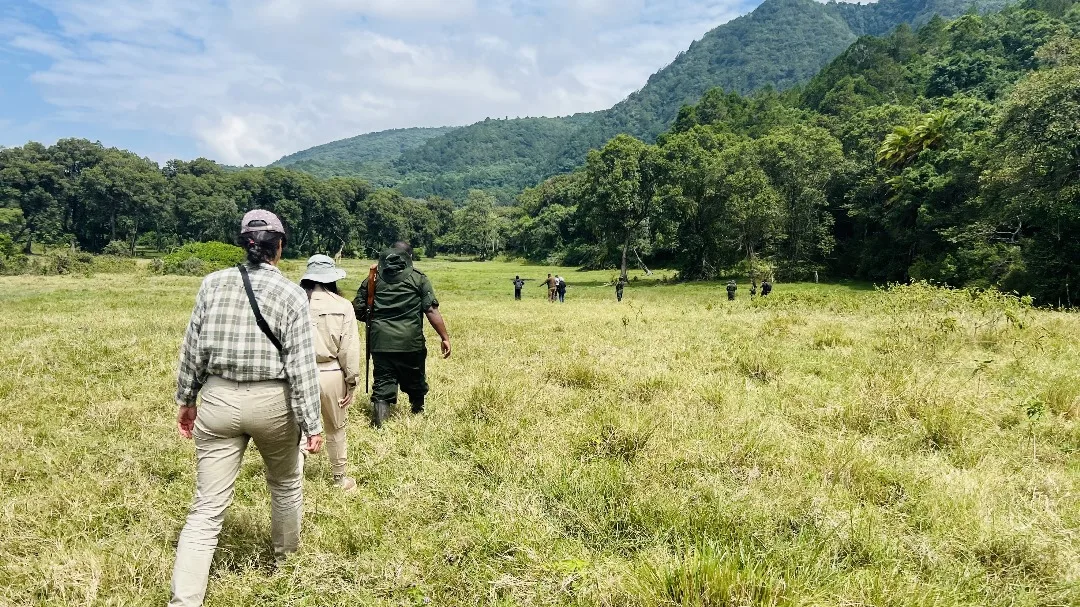
Yes, walking safaris are possible in selected parts of the Serengeti, but they are not available everywhere. These walks must be arranged in approved areas and led by qualified armed guides or rangers. Unlike a normal game drive, a walking safari focuses on animal tracks, plants, insects, birds, smaller wildlife, and understanding how the ecosystem works at ground level.
The Grumeti area in western Serengeti is one of the regions where guided walking experiences may be available through selected camps and private concessions. Some walking safaris are short nature walks, while others can last several hours. Availability depends on the location, season, camp arrangements, wildlife conditions, and current park permissions.
In my personal opinion, however, Arusha National Park is a better choice for most travelers who want a proper walking safari. The park has open areas near Mount Meru where guests can walk with an armed ranger and may see giraffes, buffaloes, zebras, warthogs, monkeys, birds, and antelopes. The experience is easier to organize and can be combined with a game drive or canoeing on Momella Lakes.
I normally recommend using your Serengeti days for traditional game drives, because the park is extremely large and the safari vehicle gives you a better chance of finding lions, leopards, cheetahs, elephants, and the Great Migration. You can then add a walking safari in Arusha National Park before or after the Serengeti. This gives you both experiences without sacrificing valuable wildlife viewing time.
Can You Go on Night Game Drives in the Serengeti?
No, regular night game drives are not permitted inside Serengeti National Park. Game drives must normally finish before the park’s evening closing time, so safari vehicles return to camp or lodge before darkness. The Serengeti is therefore best explored during early morning, daytime, and late afternoon game drives.
This does not reduce the quality of the Serengeti experience. Early mornings are often excellent for seeing lions, hyenas, cheetahs, and other predators while they are still active. Late afternoon also offers softer light, cooler temperatures, and more animal movement before sunset.
For travelers who specifically want a night game drive, I recommend including Tarangire National Park in the itinerary. Authorized night drives may be arranged in selected Tarangire areas, depending on the lodge, location, and current park arrangements. These drives offer a different safari experience because you may see nocturnal animals that are rarely active during the day.
During a night drive, you may look for genets, civets, porcupines, bush babies, owls, hares, and predators moving after dark. The guide uses a spotlight carefully to search the surrounding bush while avoiding unnecessary disturbance to the animals.
In my opinion, the best plan is to use your Serengeti days for traditional wildlife viewing and add Tarangire for the night safari experience. Serengeti gives you vast plains, big cats, and the Great Migration, while Tarangire adds elephants, baobab landscapes, and the chance to explore after sunset.
Photographic Safari in the Serengeti
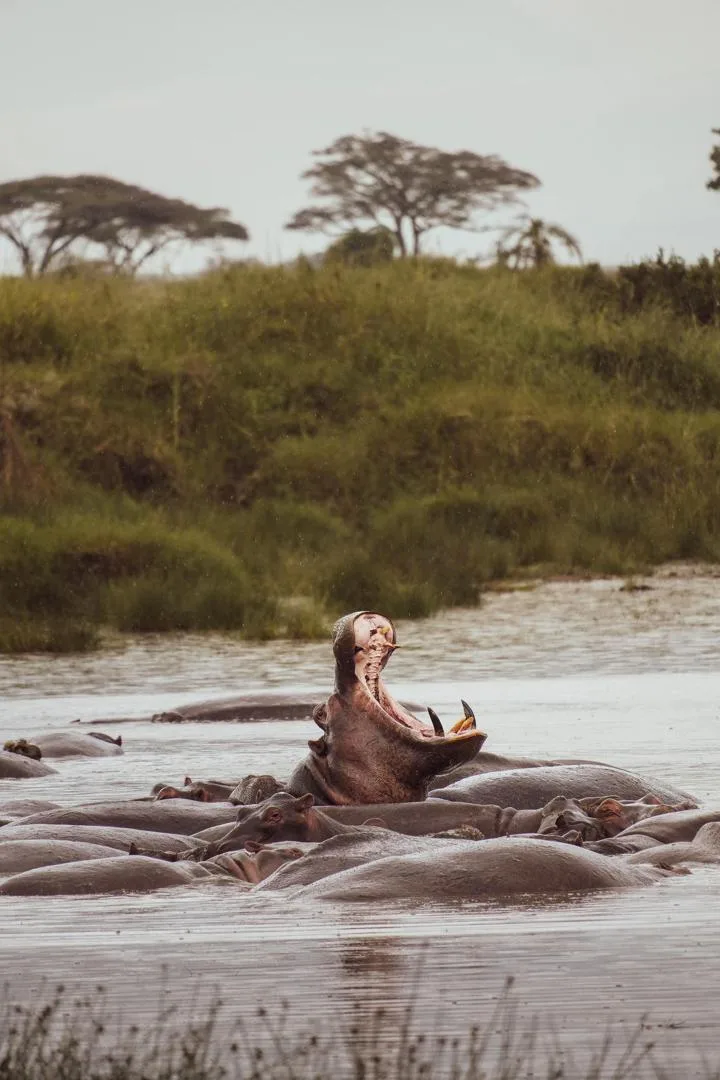
The Serengeti is one of the best places in Africa for a photographic safari. Its open plains, strong predator population, large herds, dramatic skies, and changing seasonal landscapes give photographers excellent opportunities throughout the year. Whether you use a professional camera or a mobile phone, the park offers scenes that are easier to frame because wildlife is often visible across wide, open areas.
In my experience, the Serengeti is especially strong for photographing lions, cheetahs, leopards, elephants, giraffes, zebras, wildebeest, hyenas, and birds of prey. Central Serengeti is reliable for big cats, while northern Serengeti is excellent during the Mara River season. Southern Serengeti and Ndutu are ideal during calving season, when the plains are green and young animals attract predators.
The best photography usually happens early in the morning and late in the afternoon. The light is softer, the temperatures are cooler, and animals are often more active. Midday can still be useful, especially for leopard sightings, elephants near water, and close wildlife portraits, but the light is usually harsher.
For serious photographers, I recommend a private safari vehicle rather than a shared safari. A private vehicle gives you more control over positioning, waiting time, shooting direction, and how long you remain at a sighting. It also allows your guide to focus on your preferred subjects instead of following a fixed group schedule.
I also recommend staying at least four or five days in the Serengeti if photography is a major priority. Longer stays give you time to return to productive areas, wait for animal behavior to develop, and photograph different conditions without rushing. The Serengeti is not only good for wildlife portraits; it is also one of the best places for wide landscape images that show animals within their natural environment.
How to Book Your Serengeti Safari
Booking a Serengeti safari starts with choosing your travel dates, number of travelers, preferred safari length, and where you will begin the journey. Most guests start from Arusha, Kilimanjaro, Zanzibar, or another part of Tanzania. Once we know these details, we can recommend the most suitable route, transport option, and Serengeti region for your travel month.
The next step is deciding what kind of safari experience you want. Some travelers prefer a private road safari that also includes Ngorongoro and Tarangire, while others choose a fly in safari from Zanzibar to save time. You should also decide whether you prefer camping, mid range accommodation, luxury lodges, or a combination of different styles.
Your travel season is especially important when planning around the Great Wildebeest Migration. For calving season, we normally focus on Ndutu and southern Serengeti. For Mara River crossing opportunities, we recommend northern Serengeti. Central Serengeti remains an excellent choice throughout the year because of its strong resident wildlife and reliable predator sightings.
Once the route and accommodation are selected, our team prepares a detailed safari proposal showing the daily program, included services, accommodation, transport, park fees, and total price. We recommend reading the proposal carefully and asking questions about anything that is not clear before confirming.
At Tanzania Safari Experience, a deposit is normally required to secure the booking. This allows us to reserve the safari vehicle, guide, accommodation, internal flights, and other services. The remaining balance is then paid according to the agreed booking terms before arrival.
In my experience, the best Serengeti safari is not booked by choosing the cheapest package or the longest list of destinations. It is booked by matching the right number of days, season, camp location, and travel style to what you genuinely want to experience. If you share your dates, group size, budget, and starting point, our team can design a Serengeti safari that feels well planned, comfortable, and personal.
Serengeti Safari Prices
Serengeti safari prices normally range from about $250 per person per day for a shared camping safari to more than $1,000 per person per day for a high-end luxury safari. The final price depends on the number of travelers, accommodation category, travel season, transport method, number of days, and the part of the Serengeti you want to visit.
In my experience, many travelers compare safari prices without checking what is actually included. A Serengeti safari price is not only the cost of a hotel room. It also covers park fees, a private or shared safari vehicle, an experienced guide, fuel, meals, accommodation, government taxes, transfers, and sometimes domestic flights.
Average Serengeti Safari Price Per Person
| Safari style | Estimated price per person per day |
|---|---|
| Shared camping safari | $250 to $350 |
| Private budget camping safari | $350 to $500 |
| Private mid-range lodge safari | $450 to $700 |
| Private luxury safari | $700 to $1,200 |
| High-end luxury safari | $1,200 and above |
| Fly-in Serengeti safari | Usually $2,800 to $3,800 for 4 days |
These prices are general estimates. The exact amount can increase or decrease depending on the season, group size, accommodation availability, flight schedule, and route.
Example Serengeti Safari Price Breakdown
For a private mid-range Serengeti safari, the total cost may include the following:
| Safari cost | What it covers |
| Accommodation | Lodge or tented camp, meals, service, and government taxes |
| Park entrance fees | Daily entry into Serengeti National Park |
| Concession or camping fees | Overnight charges for staying inside protected areas |
| Safari vehicle | Private 4×4 Land Cruiser with a pop-up roof |
| Professional guide | Experienced driver guide throughout the safari |
| Fuel | Long-distance transfers and daily game drives |
| Meals and drinking water | Breakfast, lunch, dinner, and water during the safari |
| Ngorongoro fees | Transit fees or crater service fees when included in the route |
| Internal flights | Flights between Zanzibar, Arusha, and Serengeti when required |
| Airport transfers | Transfers before and after the safari |
| Government taxes | Tourism and service taxes applied to the package |
Example Price for a Five-Day Private Serengeti Safari
A five-day private mid-range safari for two travelers may cost approximately $2,500 to $3,500 per person, depending on the route and season.
A typical breakdown may look like this:
| Item | Estimated cost per person |
| Four nights of mid-range accommodation | $800 to $1,200 |
| Serengeti and other park fees | $500 to $750 |
| Private safari vehicle, guide, and fuel | $650 to $1,000 |
| Meals and drinking water | Usually included |
| Transfers and administration | $100 to $250 |
| Estimated total | $2,500 to $3,500 |
This example does not automatically include international flights, visas, travel insurance, tips, balloon safaris, or personal expenses.
Why Group Size Changes the Price
A private safari becomes more affordable per person when more travelers share the vehicle. The safari vehicle, guide, and fuel cost almost the same whether there are two people or five people inside the vehicle.
For example, a couple may pay a higher price per person than a family or group of four because the vehicle cost is divided between only two travelers.
This is why we always ask for the exact number of adults and children before preparing a Serengeti safari quotation.
How Much Does a Serengeti Safari From Zanzibar Cost?
A Serengeti safari from Zanzibar normally costs more than a road safari starting in Arusha because domestic flights must be included.
A three-day fly-in safari from Zanzibar may start from approximately $1,800 to $2,800 per person. A four-day fly-in safari may cost around $2,800 to $3,800 per person, depending on the accommodation category, flight availability, and whether the safari is private.
The price usually includes flights, airstrip transfers, game drives, park fees, accommodation, meals, and the safari vehicle.
Does the Travel Season Affect the Price?
Yes. Serengeti safari prices are normally highest during the busiest migration periods, especially from July to October and during the Christmas and New Year season.
Northern Serengeti camps near the Mara River can be expensive because they operate seasonally, have limited rooms, and are located far from the main supply towns.
Calving season around Ndutu can also become busy between January and March. Booking early gives travelers a better choice of camps and room categories.
The green season may offer lower accommodation prices, fewer vehicles, green landscapes, and excellent birdwatching. It can provide very good value for travelers who are flexible with weather conditions.
What Is Usually Not Included?
Most Serengeti safari packages do not include:
- International flights
- Tanzania visa fees
- Travel insurance
- Tips for the safari guide and lodge staff
- Alcoholic drinks unless stated
- Personal shopping
- Laundry at some camps
- Balloon safari fees
- Optional cultural activities
A Serengeti balloon safari normally costs around $550 per person and should be added separately unless it is clearly included in the package.
My Honest Advice About Serengeti Safari Prices
I do not recommend choosing a Serengeti safari only because it has the lowest price. A very cheap package may use accommodation far from the main wildlife area, include long daily transfers, reduce game-drive time, or leave out important fees.
The best value comes from a package with a practical route, a reliable vehicle, an experienced guide, suitable accommodation, and enough time inside the park.
At Tanzania Safari Experience, we prepare each quotation based on the travel dates, number of people, preferred accommodation, starting point, and wildlife interests. Once we receive these details, we provide a clear breakdown showing the safari price and what is included.
For the most accurate Serengeti safari price, share your travel dates, number of adults and children, preferred number of days, accommodation level, and whether you will start from Arusha or Zanzibar.
Why Is the Serengeti So Expensive?
A Serengeti safari is expensive mainly because of accommodation, park fees, transportation, and the high cost of operating tourism services in such a remote protected area. In many packages, accommodation takes the largest share of the total price, especially when staying inside the national park.
Serengeti camps and lodges operate far from major towns. Food, drinking water, fuel, building materials, staff supplies, and maintenance equipment must be transported over long distances. Many properties also generate their own electricity, manage water systems, employ large teams, and maintain vehicles in difficult conditions. These operating costs are reflected in the nightly room rate.
Accommodation inside the Serengeti can also include a concession fee in addition to the normal lodge or camp price. This is why a night inside the park usually costs more than a similar room outside the protected area. However, I personally recommend staying inside the Serengeti because it reduces transfer time and allows you to begin game drives earlier and remain in productive wildlife areas until later in the afternoon.
The park fees are another major part of the safari price. The Serengeti is a vast and internationally important ecosystem. Managing an area of this size requires rangers, park staff, patrol vehicles, road maintenance, conservation programs, veterinary work, wildlife monitoring, and protection against illegal activity. These services cost a great deal of money, and visitor fees help support the park and its wildlife.
Transport is also expensive. A proper Serengeti safari requires a strong four-wheel-drive Land Cruiser, an experienced guide, fuel, vehicle maintenance, tires, spare parts, and emergency support. Safari vehicles travel long distances on rough roads, so maintenance costs are much higher than for ordinary road vehicles.
How Much Does It Cost to Enter the Serengeti?
Using the standard planning figures below, the Serengeti entrance fee is $70 plus 18% VAT, bringing the total to $82.60 per adult for each 24-hour period.
Travelers staying overnight inside the park must also pay a concession fee of $60 plus 18% VAT, making the total $70.80 per adult per night.
This means that one adult staying inside the Serengeti for a single 24-hour period may already pay approximately:
| Fee | Cost per adult |
|---|---|
| Serengeti entrance fee with VAT | $82.60 |
| Overnight concession fee with VAT | $70.80 |
| Total before accommodation and transport | $153.40 |
These charges are separate from the cost of the lodge, meals, safari vehicle, guide, fuel, and other services.
Additional Cost When Entering by Road
Travelers entering the Serengeti by road from Arusha normally pass through the Ngorongoro Conservation Area. Based on the stated planning figure, the Ngorongoro transit fee is approximately $70 per person each way.
A round trip through the conservation area may therefore add around $140 per person, before including vehicle-related charges or any visit to Ngorongoro Crater.
Although this increases the safari price, the road journey allows travelers to combine the Serengeti with Ngorongoro, Tarangire, or Lake Manyara. It also provides a gradual change of scenery from the highlands to the open Serengeti plains.
Cost of Flying to the Serengeti
Flying is faster, but it usually costs more. A flight to or from the Serengeti may cost approximately $300 per person each way, depending on the route, airline, season, and availability.
A return flight may therefore cost about $600 per person. This can still be worthwhile for travelers arriving from Zanzibar or those with limited safari time because it replaces a long road journey with a short flight directly to a Serengeti airstrip.
RELATED ARTICLE: How much is the Serengeti safari from Zanzibar?
Where Does Most of the Safari Money Go?
In many Serengeti safari packages, accommodation is the largest expense. The rest of the price is divided among several essential services:
- Lodge or tented-camp accommodation
- Park entrance fees
- Overnight concession fees
- Ngorongoro transit fees when traveling by road
- Private safari vehicle
- Professional safari guide
- Fuel and vehicle maintenance
- Meals and drinking water
- Internal flights when included
- Government taxes
- Staff salaries and operational support
A Serengeti safari may look expensive when shown as one total figure, but that total combines many separate services and government charges.
In my opinion, the best way to reduce the cost is not to choose accommodation that is too far from the wildlife areas. A cheaper camp located several hours away may save money on the room but waste valuable game-drive time and increase daily driving.
At Tanzania Safari Experience, we normally focus on finding the right balance between camp location, comfort, route, and price. The Serengeti is expensive to visit, but a carefully designed itinerary ensures that the money is spent on the parts of the safari that genuinely improve the experience.
Park fees and government charges can change, so the final amounts should always be confirmed when the safari is booked.
Where to Stay in the Serengeti
Where you stay in the Serengeti can completely change the quality of your safari. The park is enormous, so the best accommodation is not always the most luxurious one. In many cases, location matters more than the size of the room, the swimming pool, or the design of the lodge.
In my experience, travelers often choose accommodation based only on photos and price. What they do not always realize is that a beautiful camp located far from the main wildlife area can mean several extra hours of driving every day. This reduces your game drive time and can make the safari feel more tiring.
I normally recommend choosing accommodation according to the season, the part of the Serengeti you want to explore, your budget, and the type of safari experience you prefer.
Staying in Central Serengeti
Central Serengeti, especially around the Seronera area, is one of the best places to stay for first-time visitors. It offers reliable wildlife throughout the year and is known for strong populations of lions, leopards, cheetahs, elephants, buffaloes, giraffes, hippos, and many other animals.
This region is also practical because it has several airstrips, a wide choice of accommodations, and good road connections to other parts of the park.
I often recommend Central Serengeti for travelers who want a balanced safari rather than focusing only on one stage of the Great Migration.
It is especially suitable for:
- First-time safari visitors
- Families
- Couples and honeymooners
- Photographers
- Travelers visiting outside the main migration seasons
- Guests staying three or four nights in the Serengeti
Staying in Northern Serengeti
Northern Serengeti is the best area for travelers visiting between approximately July and October who want a chance to see the Mara River crossings.
The main accommodation areas include Kogatende, Lamai, and nearby sections of northern Serengeti. Camps in this region are usually seasonal and may operate only during the migration period.
I personally recommend staying at least three nights in northern Serengeti if river crossings are your main priority. One night is too short because crossings cannot be predicted.
Northern Serengeti also offers excellent resident wildlife, including lions, leopards, elephants, giraffes, buffaloes, hippos, and crocodiles.
Staying in Southern Serengeti and Ndutu
Southern Serengeti and the Ndutu area are best from approximately December to March, especially during the wildebeest calving season.
This region offers wide open plains, green landscapes, large herds, young wildebeest, and excellent predator activity.
Many camps in this area are mobile or seasonal, meaning they operate only when the migration is nearby.
For calving season, I recommend staying at least three nights in Ndutu or southern Serengeti. This gives you enough time to follow the herds, search for cheetahs and lions, and enjoy the area without rushing.
Staying in Western Serengeti
Western Serengeti is known for the Grumeti River, woodland scenery, and the movement of the migration during parts of May, June, and July.
The landscape here is greener and more wooded than Central or Southern Serengeti. It can feel quieter and less crowded, especially outside the busiest migration periods.
This region is a good choice for repeat visitors, photographers, and travelers who want to explore a less familiar part of the park.
Should You Stay Inside or Outside Serengeti National Park?
I normally recommend staying inside Serengeti National Park whenever the budget allows.
Staying inside the park means you can begin your game drive earlier, avoid long transfers through the gate, and remain closer to wildlife areas.
Accommodation outside the park can sometimes be cheaper, but you may lose valuable time driving between the lodge and the park entrance.
For a short Serengeti safari, location becomes even more important. If you have only two or three nights, staying inside the park usually provides better value because more of your time is spent on game drives.
Tented Camp or Permanent Lodge?
Both tented camps and permanent lodges can provide excellent safari experiences.
A tented camp gives you a closer connection to the sounds and atmosphere of the Serengeti. You may hear lions, hyenas, zebras, or wildebeest during the night while remaining safely inside your tent.
Permanent lodges usually offer more solid buildings, larger common areas, swimming pools, and hotel-style facilities.
I normally recommend tented camps for travelers who want a more traditional safari atmosphere. Permanent lodges are often better for families, older guests, or travelers who prefer more facilities.
Mid-Range Accommodation
Mid-range Serengeti camps normally include comfortable beds, private bathrooms, hot showers, meals, and good service.
For many travelers, this is the best balance between comfort, location, and price.
A well-positioned mid-range camp can provide a better safari than a more expensive lodge located far from the main wildlife area.
Luxury Accommodation
Luxury Serengeti lodges and camps may offer larger suites, private decks, swimming pools, premium dining, private dining arrangements, spa services, and more personalized service.
However, luxury should never be judged only by the room.
The best luxury accommodation combines comfort with an excellent location, strong guiding, good food, and easy access to productive wildlife areas.
Mobile Migration Camps
Mobile camps move between different parts of the Serengeti ecosystem according to the expected position of the Great Migration.
They may operate in Ndutu during calving season and later move toward northern Serengeti for the Mara River season.
These camps are ideal for migration-focused travelers because they place guests closer to the herds.
They are not basic camping experiences. Many offer comfortable beds, private bathrooms, hot showers, excellent food, and high service standards.
Our Recommended Accommodations in the Serengeti
Below are some of our recommended accommodations in the Serengeti. The best choice depends on your travel dates, budget, preferred comfort level, and the wildlife area you want to explore.
Four Seasons Safari Lodge Serengeti
Four Seasons Safari Lodge is one of the best choices for travelers looking for a high level of comfort, spacious rooms, excellent service, and a swimming pool overlooking the surrounding landscape.
It is especially suitable for families, honeymooners, and travelers who want a luxury lodge experience while remaining inside the Serengeti.
Serengeti Mara River Camp
Serengeti Mara River Camp is a strong option for travelers visiting northern Serengeti during the Mara River migration season.
Its location gives guests easier access to the river and surrounding wildlife areas, which is important when river crossings are the main purpose of the safari.
I particularly recommend staying close to the river because long drives from distant camps can reduce your chances of arriving at the right time.
Mbuni Luxury Camp
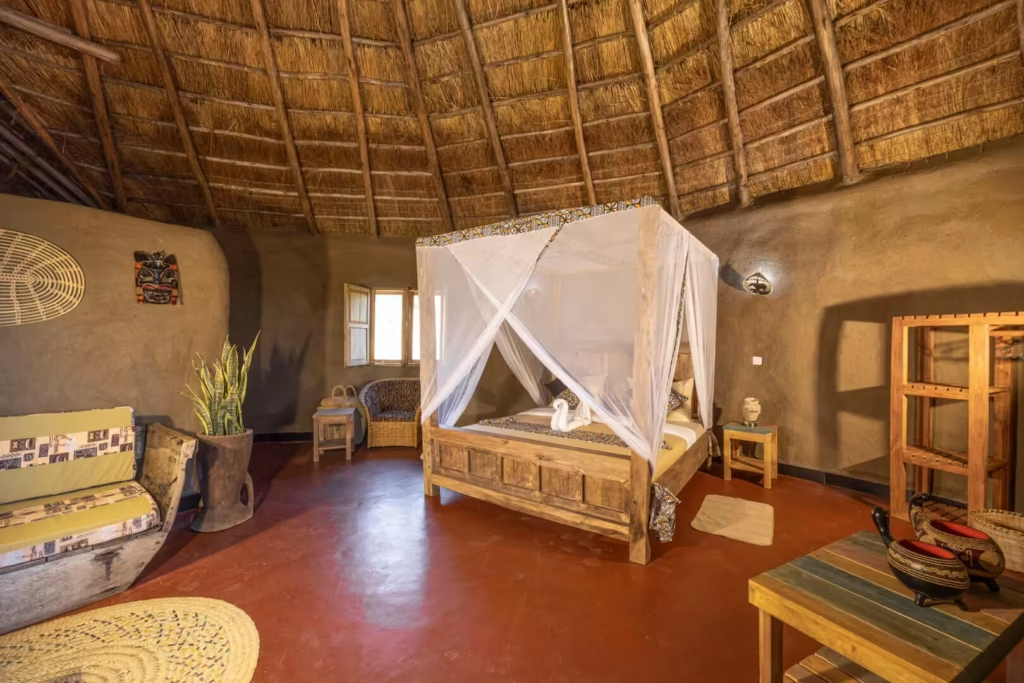
Mbuni Luxury Camp is a comfortable option for travelers who want a tented safari experience with modern facilities and good access to Serengeti wildlife areas.
It works well for couples, families, and guests looking for a balance between comfort and a natural bush atmosphere.
Tukaone Serengeti Camp
Tukaone Serengeti Camp offers a more traditional tented camp experience and is suitable for travelers who want to remain close to nature without giving up essential comfort.
Its style works well for guests who want to hear the sounds of the Serengeti at night and enjoy a quieter camp atmosphere.
Central Serengeti Tented Camps
We also recommend several well-located tented camps around Central Serengeti. These camps are ideal for year-round wildlife viewing and provide good access to Seronera Valley, river areas, rocky kopjes, and predator territories.
When selecting a central camp, we focus on location, travel time, service quality, room comfort, and recent guest experience.
Seasonal Ndutu Camps
For calving season, we recommend seasonal camps in Ndutu and southern Serengeti. These camps are positioned close to the short-grass plains where wildebeest gather between approximately December and March.
The exact camp recommendation depends on herd movement, road conditions, availability, and the guest’s preferred comfort level.
Northern Serengeti Migration Camps
For travel between July and October, we recommend seasonal camps around Kogatende and the Mara River area.
These camps are best for travelers who want to maximize their chances of seeing large migration herds and possible river crossings.
Because rooms are limited during this period, we recommend booking early.
My Personal Recommendation
For first-time visitors, I usually recommend staying in Central Serengeti for at least two or three nights. If the safari is focused on the Great Migration, I then add a second accommodation in northern Serengeti or Ndutu, depending on the season.
I do not recommend changing camps every night. Staying at least two nights in one area gives your guide more time to explore and allows you to enjoy the safari without constantly packing and moving.
At Tanzania Safari Experience, we choose Serengeti accommodation based on location, season, comfort, service quality, and the type of wildlife experience the guest wants.
The best place to stay is not simply the most expensive lodge. It is the accommodation that places you close to the right wildlife area and allows you to use your safari time properly.
 Budget
Africa Safari Maasai Boma
Africa Safari Maasai Boma is a special place in a special location; with the Kenyan Masai Mara to the north, Lake Natron
 Mid Range
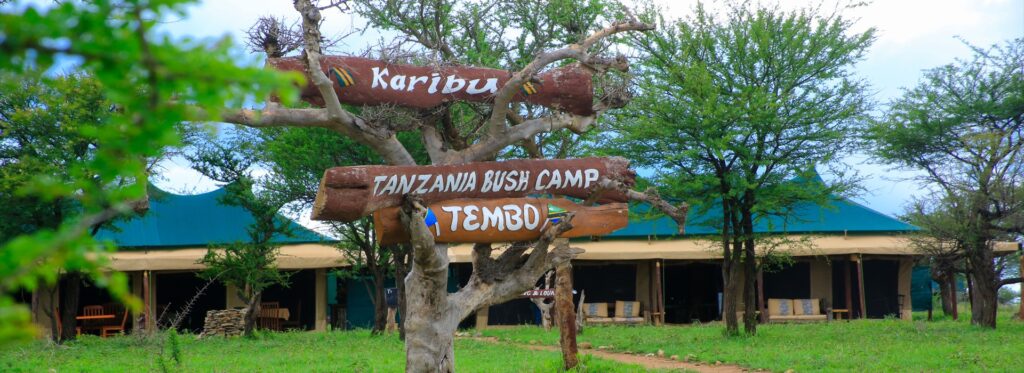
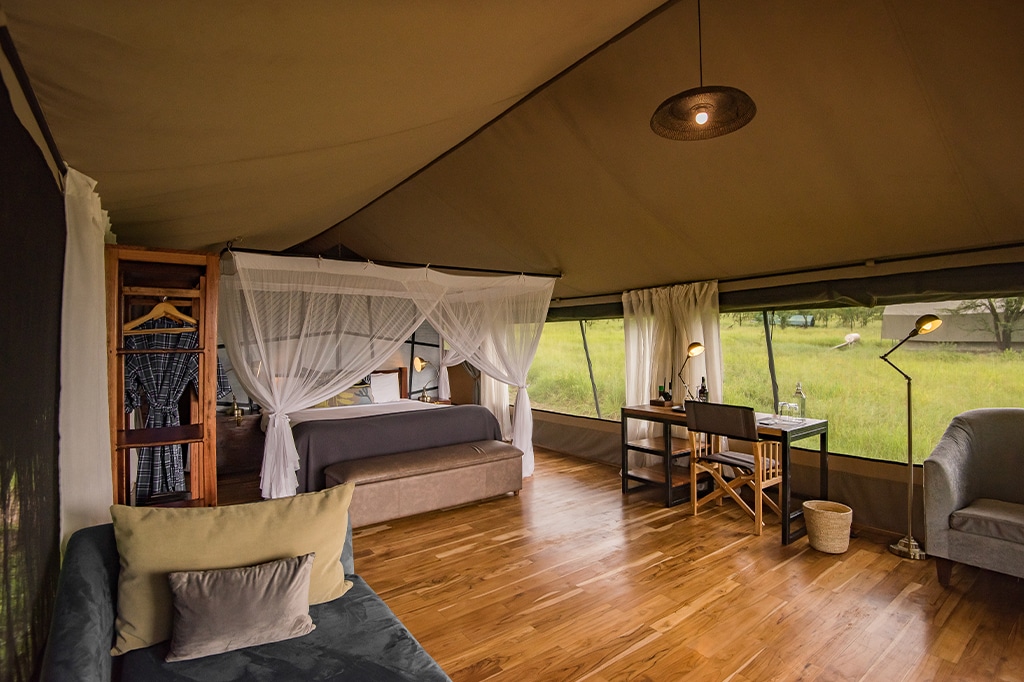
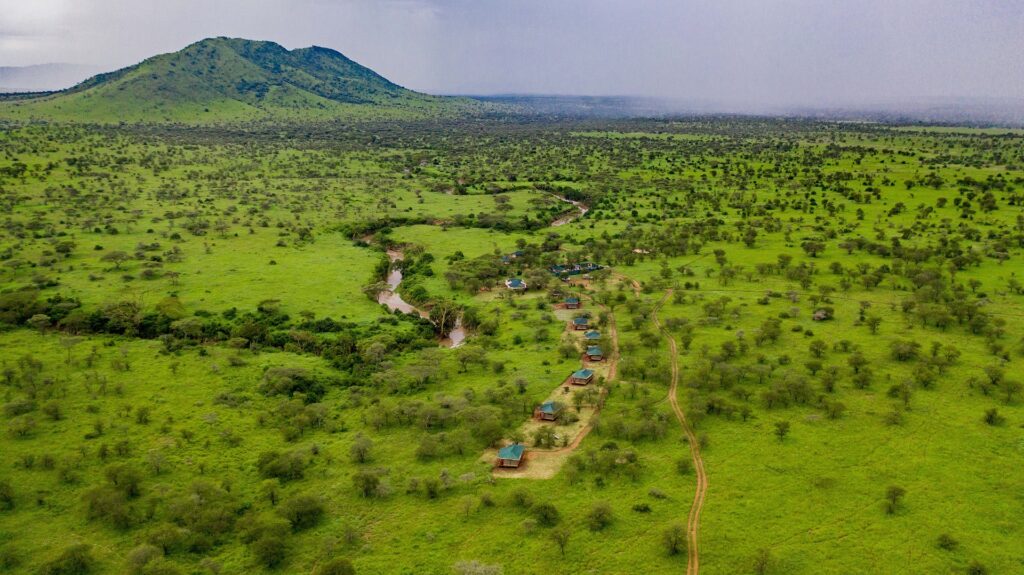
Central Serengeti – Tanzania Bush Camps
Tanzania Bush Camps Central Serengeti is an intimate tented camp located in the heart of Serengeti National Park, around 15 km north
 Ultra Luxury
Dunia Camp
Dunia Camp is a luxury tented safari camp located in the central Serengeti, between the Seronera Valley and the southern plains near
 Mid Range
Embalakai Authentic Camp
Embalakai Authentic Camp is a comfortable tented safari camp located in the Banagi area of Central Serengeti. It offers an authentic wilderness
Should I Stay Inside Serengeti National Park?
Yes, when visiting the Serengeti, I strongly recommend staying inside the park. For most travelers, this is not simply a luxury choice. It is one of the most important decisions you can make when planning the safari.
Here is the main reason: the Serengeti is extremely large. Wildlife areas are spread across long distances, and reaching the park from accommodation outside its boundaries can take several hours. If you stay too far away, much of your day may be spent transferring instead of watching wildlife.
For example, Karatu is a convenient safari town near Ngorongoro, but it is not a practical base for daily Serengeti game drives. Driving from Karatu to the Serengeti can take around four to five hours, depending on road conditions, gate procedures, wildlife stops, and the exact location you want to reach.
After spending several hours reaching the park, you would have limited time left for a proper game drive before needing to think about the return journey. In my opinion, that is not a serious way to experience the Serengeti.
Why Staying Inside the Park Matters
When you stay inside Serengeti National Park, you wake up close to the wildlife areas. Your guide can begin the game drive early, when temperatures are cooler and predators are often more active.
You also avoid wasting the best morning hours driving from a distant town or waiting to enter through the park gate.
Early morning is one of the most productive times in the Serengeti. Lions may still be moving, hyenas may be returning from the night, and cheetahs may be searching for prey before the day becomes hot.
Staying inside the park also allows you to remain on safari later in the afternoon. This is another excellent period for wildlife viewing because animals begin moving again as temperatures fall and the light becomes softer.
Does Staying Outside the Serengeti Reduce the Cost?
Yes, accommodation outside the park can reduce the room price and may help you avoid some overnight park charges. However, this saving does not always create better value.
You may spend more time driving, use more fuel, arrive later at wildlife areas, and leave earlier than guests staying inside the park.
The safari may look cheaper on paper, but the actual experience becomes weaker because you are paying to visit the Serengeti while spending less time properly exploring it.
For some parks, staying outside can work very well. Tarangire, Lake Manyara, and Ngorongoro have several practical accommodation options near their entrances. The Serengeti is different because of its size, remoteness, and long access routes.
Sleeping outside can reduce costs, but for the Serengeti, I do not normally recommend it.
Staying Inside Gives You More Safari Time
A Serengeti safari is already a major investment. You are paying for park fees, accommodation, a guide, a safari vehicle, fuel, meals, and sometimes flights.
It makes little sense to save a small amount on accommodation while losing several hours of valuable game-drive time each day.
Staying inside means:
- Earlier access to wildlife areas
- Less daily transfer time
- More relaxed morning game drives
- Better opportunities during late afternoon
- Less exhaustion from long road journeys
- More time to wait at important sightings
- A stronger feeling of being inside the Serengeti ecosystem
You also experience the sounds of the park at night. Depending on the location, you may hear lions, hyenas, zebras, wildebeest, or other animals from your camp.
That atmosphere is part of the Serengeti experience and cannot be recreated in a town several hours away.
Choose the Right Area Inside the Park
Staying inside the Serengeti is important, but choosing the correct region is equally important.
Central Serengeti is excellent for year-round wildlife viewing and first-time visitors. Northern Serengeti is best during the Mara River migration season. Southern Serengeti and Ndutu are best during calving season.
A lodge may technically be inside the Serengeti but still be far from the wildlife area you want to explore. This is why accommodation location should be matched to the season and your main safari goal.
At Tanzania Safari Experience, we look at the expected wildlife location, road access, travel time, service quality, and budget before recommending a camp or lodge.
My Personal Recommendation
When visiting the Serengeti, staying inside the park is a must in my opinion. It gives you more time with wildlife, reduces unnecessary transfers, and allows you to experience the park during its best morning and afternoon hours.
If the budget is limited, I would rather choose a simple, well-located tented camp inside the Serengeti than a more luxurious lodge several hours outside the park.
The Serengeti is too large and too important to experience through rushed day trips from Karatu. Stay inside, choose the right region, and give yourself enough time to enjoy the park properly.
How Do I Get From Serengeti to Zanzibar?
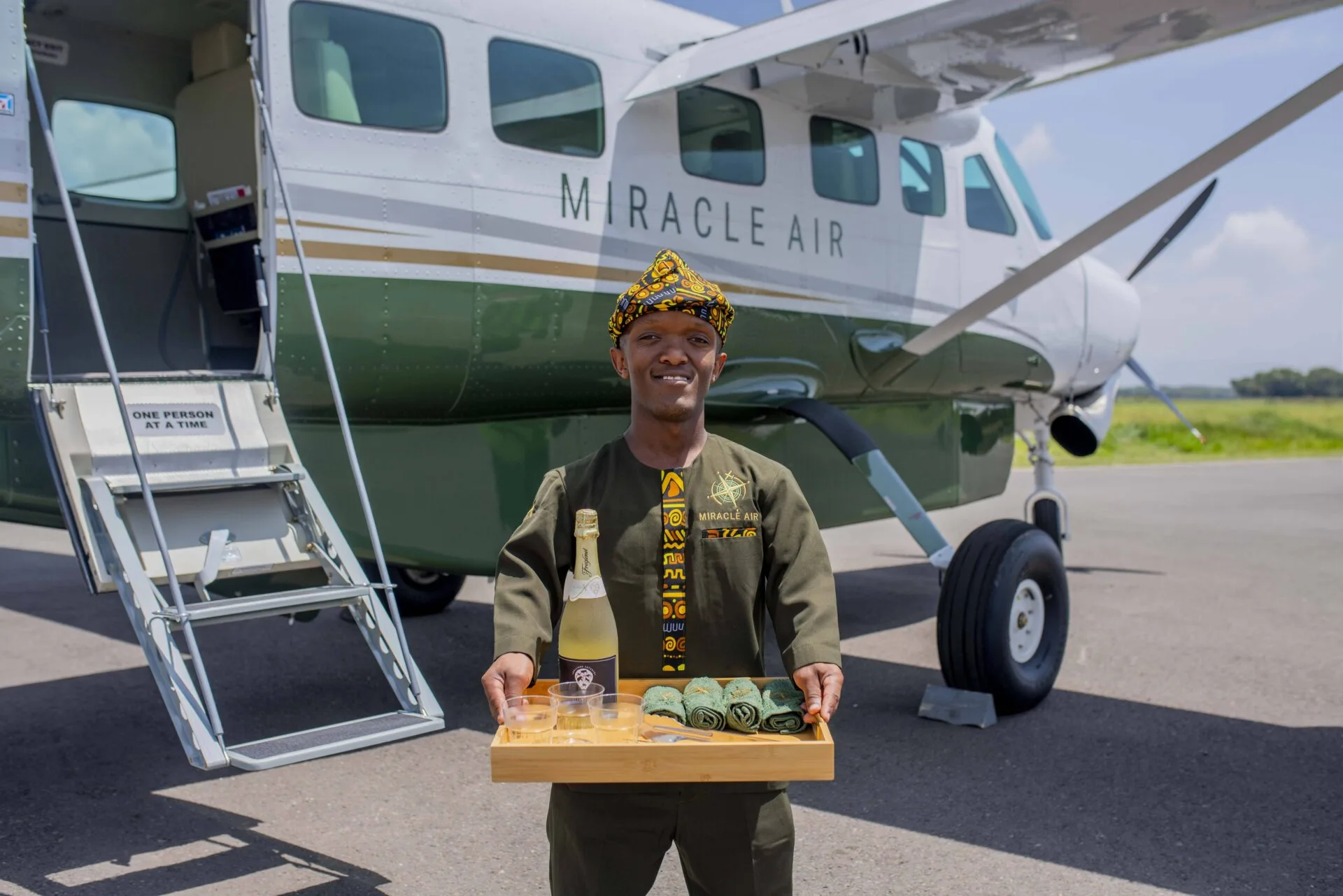
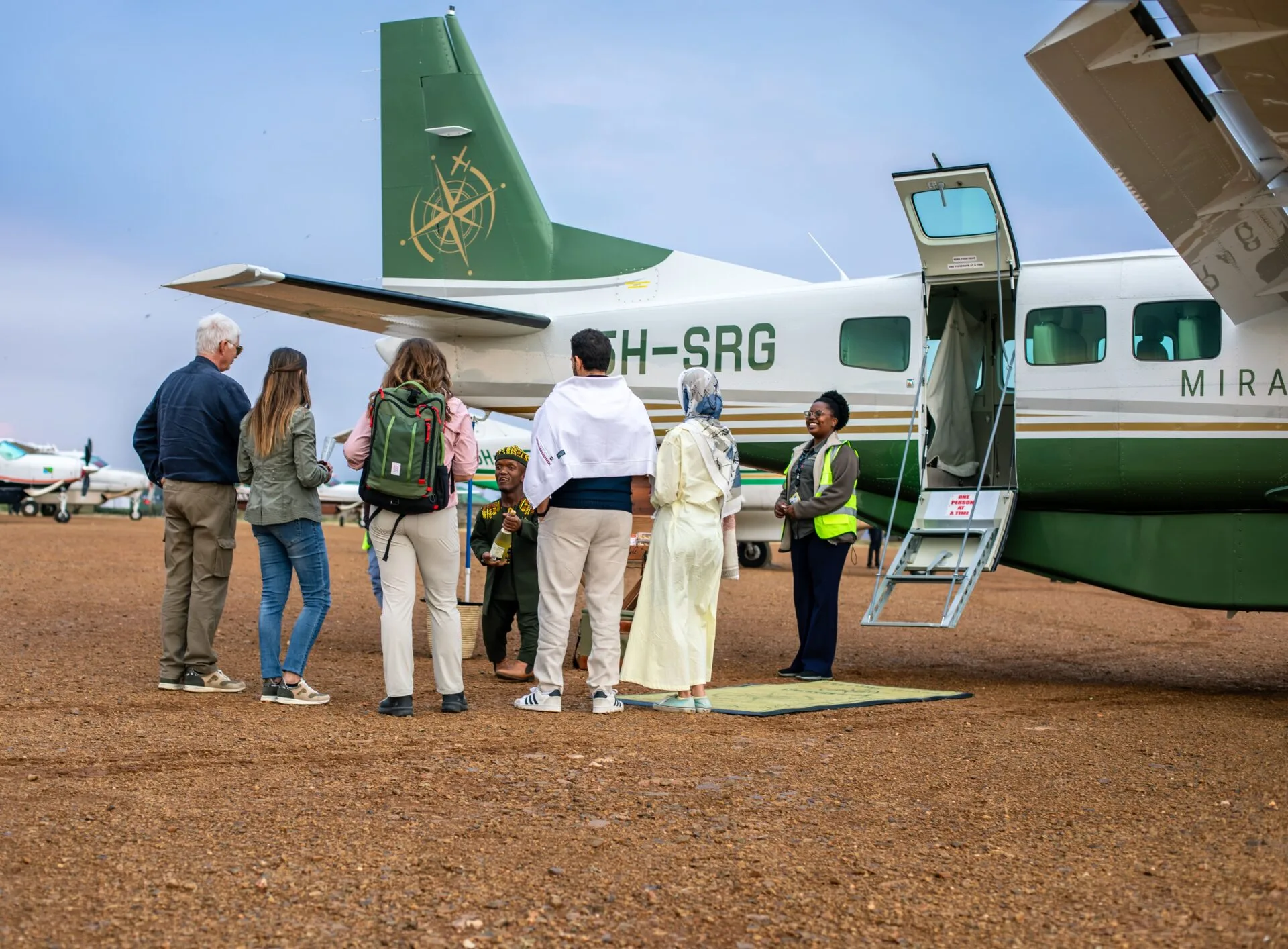
The easiest and fastest way to travel from the Serengeti to Zanzibar is by safari flight. Flights depart from several Serengeti airstrips and connect with Zanzibar, sometimes directly and sometimes with a short stop in Arusha without passengers leaving the aircraft.
In my experience, flying is the best option because the Serengeti and Zanzibar are far apart. Traveling entirely by road would require a long transfer from the park to Arusha, followed by another flight or a journey to the coast. This would take too much time and reduce the value of your holiday.
At Tanzania Safari Experience, we arrange reliable safari flights between Zanzibar and the Serengeti as part of the complete package. We also coordinate your hotel transfer in Zanzibar, your flight, your Serengeti airstrip collection, your safari vehicle, accommodation, park fees, and game drives.
This means you do not have to organize each service separately.
Should I Fly From Zanzibar to Serengeti?
I always advise travelers whose holiday begins in Zanzibar to consider a fly in and fly out safari, especially when they have limited time.
This works very well for travelers who have only three nights available for safari or for visitors who are already enjoying a Zanzibar beach holiday but also want to experience the Serengeti.
A typical fly in and fly out safari may look like this:
Day 1: Morning flight from Zanzibar to the Serengeti, followed by an afternoon game drive
Day 2: Full day Serengeti game drive
Day 3: Full day Serengeti game drive
Day 4: Morning game drive, followed by a flight back to Zanzibar
This route gives you more time inside the park and removes the long road transfer from Arusha.
For a three night safari, flying is not only more comfortable. It is the most practical way to use your limited time properly.
Can I Travel From Safari to Zanzibar Beach?
Yes. Combining a Tanzania safari with Zanzibar is one of the most popular holiday options, and it is the combination I recommend to many of our guests.
Most travelers begin with the safari and finish with Zanzibar. This is often called a safari and beach experience.
The safari comes first because it involves early mornings, game drives, changing locations, and active travel. Zanzibar then gives you time to relax beside the ocean, enjoy the beaches, visit Stone Town, take a spice tour, or spend quiet days at your resort.
A popular itinerary may include:
• Tarangire National Park
• Ngorongoro Crater
• Serengeti National Park
• Flight from Serengeti to Zanzibar
• Five to eight nights on the Zanzibar coast
You can also reverse the route and begin in Zanzibar before flying into the Serengeti. This works particularly well when your international flight arrives in Zanzibar or when you are already staying on the island.
In my opinion, the best order depends on your international flights, available days, and travel style. However, safari first and beach afterward remains the most popular option because Zanzibar becomes a relaxing end to the journey.
How Long Does It Take to Fly From Zanzibar to Serengeti?
A flight from Zanzibar to the Serengeti usually takes approximately two to three hours, depending on the airline, route, airstrip, and number of scheduled stops.
Some flights travel directly to a Serengeti airstrip. Others may stop briefly in Arusha or at another safari airstrip to collect or drop off passengers.
Even when a flight includes a stop, passengers may remain inside the aircraft. The exact flying time therefore depends on the operating schedule for that day.
The Serengeti has several airstrips, including Seronera in Central Serengeti and Kogatende in northern Serengeti. Your arrival airstrip should be selected according to your accommodation and the wildlife area you want to explore.
For example, flying into Seronera while staying in northern Serengeti would create a long road transfer. We therefore try to book the airstrip that places you closest to your camp and safari area.
Are Safari Flights Safe?
Yes. The safari airlines we use operate aircraft designed for regional and bush airstrip travel. They are commonly used by safari camps, guides, residents, and international travelers throughout Tanzania.
The aircraft are smaller than normal international planes, but this does not mean they are unsafe. They are operated by professional pilots and follow the aviation rules required for commercial passenger services.
Bush flights are a normal part of safari travel in Tanzania. Serengeti airstrips are used every day to connect guests with Arusha, Kilimanjaro, Zanzibar, and other safari regions.
Travelers should expect limited luggage space, lower baggage allowances, and soft sided bags rather than large hard suitcases.
At Tanzania Safari Experience, we arrange flights with established safari aviation companies. Private charter flights can also be organized when required, although they normally cost more than scheduled safari flights.
How Much Does a Flight From Zanzibar to Serengeti Cost?
The price depends on the flight company, travel season, destination airstrip, availability, and whether the service is scheduled or privately chartered.
In many cases, travelers can spend less than $500 per person for a one way scheduled safari flight between Zanzibar and the Serengeti.
Some routes may cost less, while flights to remote seasonal airstrips can cost more.
Private charter flights are normally more expensive because the entire aircraft is reserved for one group. For most travelers, scheduled safari flights offer better value and are perfectly suitable.
When preparing a safari proposal, we include the confirmed flight cost so the guest can see the complete price before booking.
How Many Days Do You Need in Tanzania and Zanzibar?
For a balanced Tanzania safari and Zanzibar holiday, I normally recommend at least ten to fourteen days.
This gives you enough time to enjoy the safari properly and still have several relaxing days at the beach.
A shorter trip is possible, but it needs careful planning.
Seven to Nine Days
A seven to nine day trip works for travelers with limited time.
You could spend three nights in the Serengeti and four or five nights in Zanzibar.
This option works best with flights because road transfers would use too much of the available time.
A simple example would be:
Three nights: Serengeti safari
Four to five nights: Zanzibar beach holiday
Ten to Twelve Days
Ten to twelve days gives you a more balanced experience.
You can include Serengeti, Ngorongoro Crater, and possibly Tarangire before flying to Zanzibar.
A good example would be:
Five to six days: Tanzania safari
Five to six nights: Zanzibar
This is one of the most practical options for couples, honeymooners, families, and first time visitors.
Thirteen to Sixteen Days
Thirteen to sixteen days allows you to travel at a slower pace.
You can spend more time in the Serengeti, include different parks, and enjoy a longer beach stay without feeling rushed.
A possible itinerary would be:
Seven to eight days: Tarangire, Ngorongoro, and Serengeti
Six to eight nights: Zanzibar
This option is ideal for travelers coming from far away who want to experience both wildlife and the Indian Ocean properly.
My Personal Recommendation
If you are already in Zanzibar and have only three nights for safari, I recommend flying directly into the Serengeti and flying back to Zanzibar.
Do not spend valuable safari time traveling by road when your holiday is short.
For travelers planning a full Tanzania holiday, I recommend beginning with a five to seven day safari and finishing with five to eight nights in Zanzibar.
The safari gives you wildlife, landscapes, early mornings, and adventure. Zanzibar then gives you beaches, warm ocean water, local culture, and time to relax.
At Tanzania Safari Experience, we arrange the safari, internal flights, airport transfers, accommodation, park fees, and Zanzibar extension as one connected journey. This makes the trip easier, more comfortable, and properly timed from the first arrival to the final beach stay.
Which Is Better, Maasai Mara or Serengeti?
Honestly speaking, neither destination is automatically better for every traveler. The Serengeti is better for travelers who want a longer, deeper safari across a vast wilderness, while the Maasai Mara is better for travelers with limited time who want concentrated wildlife viewing in a smaller area.
In my personal opinion, the Serengeti offers the stronger overall safari experience. It is much larger, has more varied landscapes, supports excellent wildlife throughout the year, and allows you to spend several days exploring different regions without repeating the same routes. However, the Maasai Mara is still an excellent destination, especially for travelers visiting Kenya or combining safari with Nairobi and the Kenyan coast.
The correct choice depends on your travel dates, available days, budget, international flights, and what you want to see.
Quick Comparison: Maasai Mara vs Serengeti
| Safari feature | Serengeti National Park | Maasai Mara National Reserve |
|---|---|---|
| Country | Tanzania | Kenya |
| Overall size | Much larger | Smaller and more concentrated |
| Best for | Longer and more complete safaris | Short safaris and concentrated wildlife |
| Great Migration | Present through much of the annual cycle | Best known for migration herds from around July to October |
| River crossings | Mara River crossings in northern Serengeti | Mara River crossings on the Kenyan side |
| Wildlife density | Excellent, but spread across a vast area | High concentration in a smaller area |
| Crowd levels | More space to spread out | Can feel busier during peak migration months |
| Landscapes | Plains, rivers, kopjes, woodland, valleys, and seasonal areas | Rolling grasslands, rivers, and open plains |
| Recommended stay | Four to six days | Two to four days |
| Best for first safari | Excellent when combined with Ngorongoro | Excellent for a shorter Kenya safari |
| Best for photographers | Strong variety and more room to explore | Strong wildlife concentration and easier short stays |
| Beach combination | Zanzibar | Diani Beach, Mombasa, or Lamu |
| Main safari gateway | Arusha or Kilimanjaro | Nairobi |
| Balloon safari | Available in several Serengeti regions | Available in the Maasai Mara |
| Cultural combination | Maasai visits around northern Tanzania | Maasai community experiences in Kenya |
Why I Personally Prefer the Serengeti
The Serengeti gives travelers more space, more regional variety, and a stronger sense of being inside a large natural ecosystem. You can spend several days in Central Serengeti, northern Serengeti, southern Serengeti, or the Western Corridor, and each area feels different.
Central Serengeti is excellent throughout the year and is especially reliable for lions, leopards, cheetahs, elephants, buffaloes, giraffes, hippos, and hyenas. Northern Serengeti is famous for Mara River crossing opportunities. Southern Serengeti and Ndutu become important during the calving season, while western Serengeti offers river systems, woodland, and seasonal migration movements.
The Maasai Mara is smaller, which can be an advantage when time is limited. Wildlife can be easier to find quickly because animals are concentrated within a more compact area. However, during the busiest migration months, popular sightings may attract many vehicles.
The Serengeti can also become busy around major sightings, especially in Central Serengeti, but its greater size gives guides more opportunities to explore quieter routes.
For travelers who want three or more full safari days, I would usually choose the Serengeti.
Which Is Better for the Great Wildebeest Migration?
Both the Serengeti and Maasai Mara are part of the same migration ecosystem. The wildebeest do not recognize the international border between Tanzania and Kenya. They move according to rainfall, water, and fresh grass.
The Serengeti hosts the migration during most of its annual cycle. Calving normally happens across the southern Serengeti and Ndutu plains between approximately January and March. The herds then move through central and western areas before reaching northern Serengeti.
From around July to October, many herds may cross the Mara River between northern Serengeti and the Maasai Mara. This is the dramatic river crossing season shown in many wildlife documentaries.
The Maasai Mara is therefore important during part of the migration cycle, but the Serengeti supports more stages of the annual movement.
Travelers often believe they must visit Kenya to see a Mara River crossing. That is not true. Many important crossings happen in northern Serengeti on the Tanzanian side.
No crossing is guaranteed in either destination. Wildebeest may gather near the river, wait for several hours, turn around, or cross at a different location.
If river crossings are your main priority, I recommend staying at least three or four nights close to the Mara River, whether you choose northern Serengeti or the Maasai Mara.
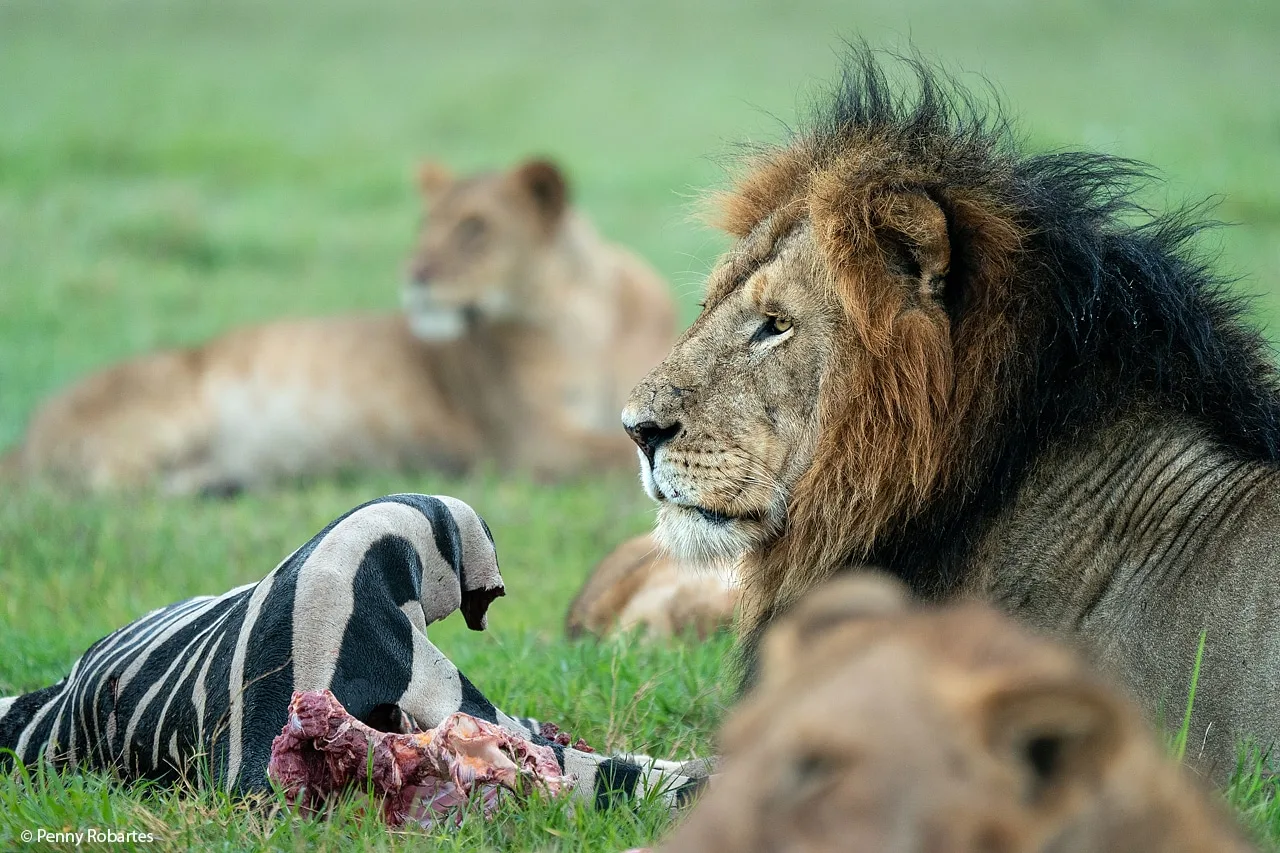
Which Destination Has More Wildlife?
Both destinations offer excellent wildlife viewing. The Maasai Mara often feels as though it has more animals because wildlife is concentrated within a smaller area.
The Serengeti has an enormous wildlife population, but the park is much larger. Sightings may be spread across long distances, and different regions become more productive during different seasons.
The Serengeti is especially strong for lions, cheetahs, leopards, elephants, buffaloes, giraffes, hyenas, wildebeest, zebras, gazelles, hippos, crocodiles, and many bird species.
The Maasai Mara is also excellent for big cats, elephants, buffaloes, giraffes, hyenas, plains animals, and birds. It is well known for lion, cheetah, and leopard sightings.
For a short safari, the Maasai Mara may produce faster wildlife results. For a longer safari, the Serengeti offers greater variety and a more complete ecosystem experience.
Which Is Better for Photography?
The Serengeti is my preferred choice for a dedicated photographic safari because it offers wider landscapes, more habitat variety, longer route possibilities, and excellent opportunities to photograph wildlife with fewer vehicles in some areas.
The open southern plains are ideal for cheetahs, wildebeest herds, and wide landscape images. Seronera is strong for lions and leopards. Northern Serengeti offers migration herds, river scenes, and resident predators.
The Maasai Mara is also excellent for photography because wildlife density is high and sightings can happen within shorter driving distances. It may be particularly suitable for photographers who have only two or three days.
In either destination, I recommend booking a private vehicle. A private safari gives you control over positioning, waiting time, camera direction, and how long you stay at each sighting.
Which Is Less Crowded?
The Serengeti usually provides more room to spread out because it is much larger. However, popular areas such as Seronera, Ndutu during calving, and the Mara River during crossing season can still become busy.
The Maasai Mara is smaller, and peak season sightings can attract many vehicles, especially near river crossings or big cats.
Private conservancies surrounding the Maasai Mara may offer fewer vehicles and more exclusive activities, but they can also increase the safari cost.
In the Serengeti, a skilled guide can often use less traveled routes and avoid following every vehicle. Staying longer also helps because you are not forced to rush toward every reported sighting.
Which Is Easier to Reach?
The Maasai Mara is normally accessed from Nairobi by road or domestic flight. Flying saves time, while driving can take several hours depending on the route and road conditions.
The Serengeti is usually reached from Arusha by road through Tanzania’s northern safari circuit or by flight from Arusha, Kilimanjaro, Zanzibar, or other safari destinations.
For travelers already in Zanzibar, flying directly to the Serengeti is usually the most practical option. For travelers beginning in Nairobi, the Maasai Mara may be easier.
Your international flight route can therefore influence which destination provides better value.
Which Is Better for a Short Safari?
For a safari of only two nights, the Maasai Mara may be the more practical choice because of its smaller size and concentrated wildlife.
The Serengeti deserves at least three days, and I personally recommend four to five days. A very short Serengeti visit can feel rushed, especially when road transfers are included.
However, travelers staying in Zanzibar can fly directly into the Serengeti for a three night safari. This gives them one arrival game drive, two full safari days, and a final morning before flying back.
Which Safari Is More Expensive?
The cost depends more on accommodation, transport, season, private conservancy fees, park charges, and safari style than on the destination name alone.
A Maasai Mara safari may be more affordable when starting from Nairobi and staying outside the reserve. Luxury camps in private conservancies can be very expensive.
The Serengeti can become expensive because of park fees, overnight concession fees, long driving distances, internal flights, and accommodation inside the park.
In many Serengeti packages, accommodation takes the largest part of the total price. Camps must operate far from towns and transport supplies, staff, fuel, food, and equipment over long distances.
The best comparison is not simply the final price. Check the number of nights, camp location, vehicle type, included flights, park fees, meals, and time available for game drives.
Should I Combine the Serengeti and Maasai Mara?
It is possible to combine them, but the route requires careful planning because the parks are separated by an international border.
You cannot normally drive directly across the wildlife boundary as though it were one park. Travelers usually use designated border crossings and may need vehicle changes, road transfers, or flights.
Combining both destinations makes sense for travelers with enough time, usually at least ten to fourteen days for the wider trip. For a shorter holiday, I would rather explore one destination properly than lose valuable time crossing between Tanzania and Kenya.
Seeing both does not automatically create a better safari. The wildlife ecosystem is connected, and many of the same animal species can be seen on each side.
Who Should Choose the Serengeti?
I recommend the Serengeti for:
• Travelers wanting four or more safari days
• Visitors combining safari with Ngorongoro or Tarangire
• Travelers visiting Tanzania or Zanzibar
• Guests interested in the full Great Migration cycle
• Photographers wanting varied landscapes
• Families wanting a complete private safari
• Honeymooners combining safari with Zanzibar
• Travelers who prefer more space and regional variety
Who Should Choose the Maasai Mara?
The Maasai Mara may be the better choice for:
• Travelers starting their holiday in Nairobi
• Guests with only two or three safari nights
• Visitors combining safari with Diani Beach or the Kenyan coast
• Travelers wanting concentrated wildlife viewing
• Guests interested in private conservancy experiences
• Travelers already planning a wider Kenya itinerary
My Honest Verdict
If you have enough time and want the strongest overall safari experience, I recommend the Serengeti. It is larger, more varied, and hosts the Great Migration through more stages of the year.
If you have limited time, are already in Kenya, or want a short safari with high wildlife density, the Maasai Mara is an excellent choice.
I would not claim that the Serengeti is better simply because it is in Tanzania. That would not be honest. The Maasai Mara delivers outstanding wildlife viewing and may suit some travelers better.
However, if I were planning my own first safari and had four to six days available, I would choose the Serengeti and combine it with Ngorongoro Crater. That route offers open plains, big cats, changing landscapes, migration opportunities, concentrated crater wildlife, and a more complete understanding of East Africa’s natural environment.
At Tanzania Safari Experience, we help travelers choose the destination based on their dates, available time, budget, starting point, and main wildlife interests. The best safari is not decided by the most famous name. It is decided by choosing the destination that fits the way you actually want to travel.
Serengeti and Ngorongoro: Should You Visit Both?
Serengeti and Ngorongoro offer different experiences and are best combined when time allows: the Serengeti provides vast landscapes and extended game drives, while Ngorongoro offers concentrated wildlife inside the crater.
The Serengeti feels open and limitless. You may spend a long time tracking one pride of lions or driving between distant habitats.
Ngorongoro Crater is more compact. After descending from the crater rim, wildlife can often be seen within a relatively concentrated area.
The crater is one of Tanzania’s best places to look for black rhinos, although sightings are never guaranteed. Lions, buffaloes, zebras, wildebeest, hippos, hyenas, and many bird species are also commonly seen.
For a first safari, we would normally choose both rather than trying to decide between them.
| Feature | Serengeti | Ngorongoro Crater |
| Landscape | Vast plains, rivers, kopjes, woodlands | Enclosed volcanic crater |
| Ideal time | 3 to 6 days | Half-day to one full day |
| Best known for | Migration, predators, open-space safari | Concentrated wildlife and rhino opportunities |
| Driving style | Long, varied game drives | More compact game-viewing circuit |
| Best combination | Seasonal Serengeti regions | Serengeti, Tarangire, or Lake Manyara |
Sample Five-Day Serengeti and Ngorongoro Itinerary
A five-day itinerary offers enough time to experience the Serengeti properly, visit Ngorongoro Crater, and avoid turning every day into a long transfer between distant accommodations.
Day 1: Arusha to Ngorongoro Highlands
Travel from Arusha toward the Ngorongoro area. Depending on your arrival time, the day can include a cultural visit, a short activity, or a relaxed afternoon at the lodge.
Day 2: Ngorongoro Crater to Serengeti
Descend into Ngorongoro Crater early in the morning for a game drive. After lunch, continue toward Central Serengeti.
The scenery changes gradually from highland forest to open plains.
Day 3: Full-Day Central Serengeti Safari
Explore the Seronera region. The day can be adjusted around recent sightings, weather, and guest interests.
We recommend remaining flexible rather than following a fixed checklist of animals.
Day 4: Full-Day Serengeti or Seasonal Area
Continue exploring Central Serengeti or travel toward a seasonal migration zone if the itinerary has been designed around herd movements.
A balloon safari can also be added on this morning.
Day 5: Final Game Drive and Departure
Enjoy a final morning game drive before flying out of the Serengeti or continuing by road.
Travelers heading to Zanzibar can often connect through Arusha or fly on selected safari routes, depending on the operating schedule.
Expert Tips From Our Serengeti Team
Good Serengeti planning depends on location, patience, realistic driving times, and small logistical decisions that can create more productive game drives without increasing the number of safari days.
- Sleep near the wildlife area you want to explore. A cheaper camp far away may result in early departures, late arrivals, and less time at sightings.
- Do not move accommodation every night. Two nights in one location usually produce a better safari than constantly chasing a longer list of camps.
- Carry a light jacket for morning drives. Serengeti mornings can feel cold, especially in an open-roof vehicle before sunrise.
- Keep binoculars close, not inside your luggage. Important sightings may begin far from the road, particularly cheetahs, leopards, and hunting animals.
- Use soft-sided luggage for internal flights. Small safari aircraft normally have stricter baggage limits and less storage space than international planes.
- Choose neutral, comfortable clothing. You do not need a completely new safari wardrobe. Lightweight layers, comfortable shoes, sun protection, and a warm morning layer are usually enough.
- Let the guide wait. Some of the best sightings develop slowly. A sleeping lion may become active, a leopard may descend from a tree, or a herd may suddenly react to a predator.
- Do not build a safari around seeing every animal. Wildlife is not staged. A good safari focuses on behavior, landscapes, and the quality of encounters.
- Discuss photography before the first game drive. Your guide can position the vehicle differently when photography is a priority.
- Treat migration maps as guides, not guarantees. Rainfall influences grass and water, which influence herd movements.
- Book seasonal areas early. Well-located camps in northern Serengeti and Ndutu have limited capacity during peak migration periods.
What Travelers Often Miss and How to Plan It Better
Travelers often underestimate the size of the Serengeti, the importance of camp location, and the value of staying longer in fewer areas rather than covering every destination quickly.
Choosing a Package Only by Price
The lowest price may involve a distant lodge, more shared transfers, a less direct route, or fewer hours inside the park.
Compare what is included, where you will sleep, how much driving is required, and whether the vehicle is private.
Expecting Guaranteed Migration Action
The Great Migration is a year-round movement, not one event. River crossings, calving, mating, grazing, and long herd movements happen in different places and seasons.
A well-designed tour improves your opportunities but cannot control nature.
Spending Too Little Time in the Park
A one-night Serengeti stay often involves arriving late and departing early. Guests may technically visit the park without experiencing its rhythm.
Three days should be treated as the minimum, not the ideal maximum.
Ignoring Transfer Distances
Distances that look short on a map can take several hours on safari roads. Wildlife stops, road conditions, park rules, and scenic breaks also affect travel time.
Planning Every Minute
Some guests arrive with a strict list of animals and an exact daily schedule. The Serengeti rewards flexibility.
Your guide may receive information about a cheetah, leopard, lion pride, or wild dog sighting that changes the original plan.
What Makes a Serengeti Safari Unique?
The Serengeti combines scale, wildlife diversity, predator activity, seasonal change, and the freedom to spend several days exploring without repeating exactly the same experience.
The first thing many travelers notice is the space. The horizon appears wider than expected, especially on the central and southern plains.
Then the smaller details begin to matter.
You notice how zebras turn their bodies toward the early sun. You hear hyenas calling before dawn. You see giraffes moving through acacia woodland without appearing to hurry.
A lion sighting is exciting, but the behavior around it often becomes more memorable. Cubs may play near the pride. Buffaloes may approach and force the lions to move. Vultures may circle above a distant carcass.
The Serengeti also gives travelers time to slow down. A strong safari is not only a sequence of animal sightings. It includes early coffee before a game drive, conversations with your guide, picnic lunches in the park, changing light, dust on the vehicle, and quiet moments between sightings.
Serengeti Visual Planning Guide
The Serengeti suits first-time visitors, wildlife enthusiasts, families, couples, photographers, and migration-focused travelers, provided the route and travel season are matched to their main expectations.
Best for first-time safari visitors: Central Serengeti and Ngorongoro
Best migration experience: The region where the herds are expected during your travel month
Best river-crossing period: Usually July to October
Best calving period: Usually January to March
Best overall stay: Four to six days
Best short-trip option: Fly-in safari
Best value option: Mid-range private safari
Best for photographers: Longer private safari with fewer camp changes
Best family option: Private vehicle and family-friendly camps
Best beach combination: Serengeti safari followed by Zanzibar
Main highlight: Large-scale wildlife viewing across varied landscapes
Recommended travel style: Flexible itinerary guided by local conditions
Frequently Asked Questions
How many days are enough for a Serengeti safari?
Three days is the practical minimum, but four to six days provide a better experience. Longer stays allow more wildlife viewing, fewer rushed transfers, and greater flexibility to explore different areas.
What is the best month to visit Serengeti National Park?
The best month depends on your goal. January to March suits calving-season travel, July to October suits northern Serengeti and river-crossing opportunities, while other months offer resident wildlife and fewer vehicles.
Can I visit the Serengeti from Zanzibar?
Yes. Fly-in safari packages connect Zanzibar with Serengeti airstrips, often through scheduled domestic flights. These tours are ideal for travelers combining a beach holiday with three or more safari days.
Is a Serengeti safari suitable for children?
Yes. A private vehicle, suitable accommodation, reasonable driving hours, and flexible game drives make the Serengeti suitable for families. The itinerary should reflect the children’s ages and attention spans.
Are Great Migration river crossings guaranteed?
No. Wildebeest cross when conditions encourage movement, and they may wait near the river for hours or days. Spending several nights in northern Serengeti gives travelers a stronger opportunity than a rushed visit.
Final Verdict: Is a Serengeti Safari Worth It?
A Serengeti safari is worth planning when you give the park enough time, choose the correct seasonal area, stay in a practical location, and avoid turning the journey into a rushed checklist.
For most first-time visitors, our recommendation is a four- to six-day private safari combining Central Serengeti with Ngorongoro Crater. The route can then be adjusted for calving season, northern river crossings, family travel, honeymoon comfort, photography, or a Zanzibar extension.
For travel in 2026, the best package will not necessarily be the one with the most destinations. It will be the one that puts you in the right area at the right time, with enough freedom to enjoy what happens naturally.
Tanzania Safari Experience is a local Tanzania safari company with real knowledge of the Serengeti, Ngorongoro, Zanzibar, and the wider northern circuit. We plan the transport, accommodation, internal flights, game drives, and daily timing as one connected journey.
If you want a Serengeti safari that feels personal, properly paced, and grounded in local knowledge, our team can help you choose the right route, season, accommodation level, and number of days.
