
Wildebeest Migration Safari
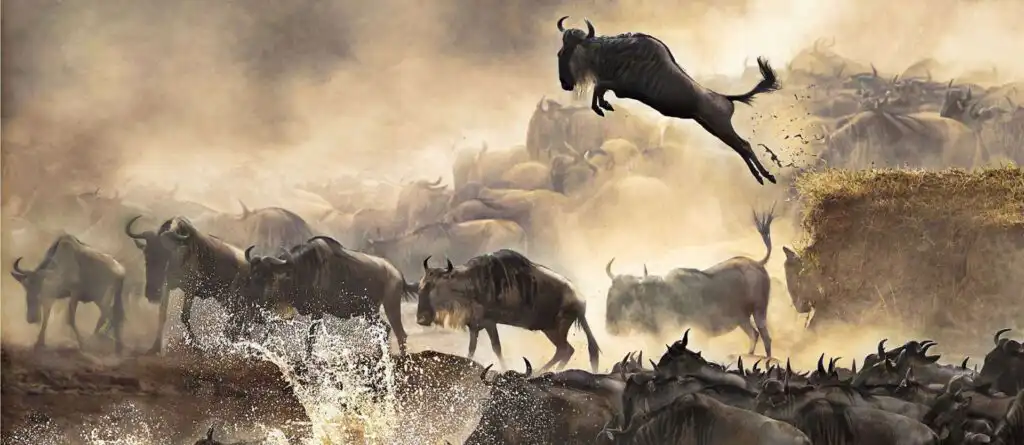
The Serengeti doesn’t just host a show; it breathes with the rhythm of two million hooves. To stand on the edge of the Mara River as the first wildebeest commits to the water is to feel the raw, unfiltered pulse of the planet.
At Tanzania Safari Experience, we don’t just track the herds; we live the migration. Our teams are stationed in the dust of the Ndutu plains and the granite kopjes of the north year-round. This is our definitive guide to the 2026 cycle, written from the driver’s seat of a 4×4.
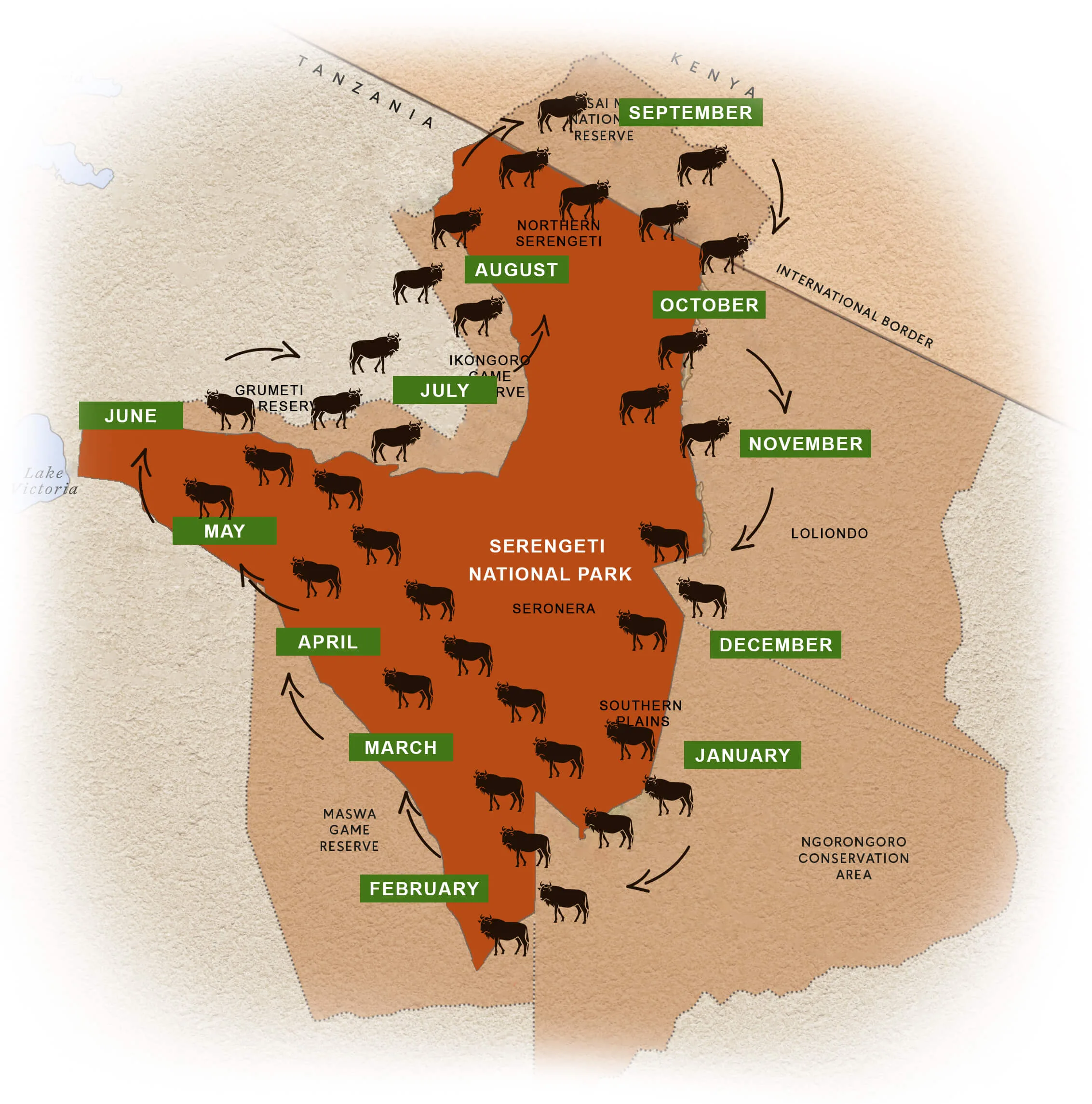
The 2026 Migration Calendar: A Living Map
The Wildebeest Migration is a perpetual, clockwise loop across the Serengeti-Mara ecosystem, driven by seasonal rains and the search for nutrient-rich green grass.
2026 marks a unique year for the migration. While most travelers think of the “river crossings” as the only event, the truth is that the migration is a 365-day story. In 2026, we are seeing slightly shifted rain patterns, making “Information Gain” about specific locations more critical than ever.
| Month | Region | Key Event | Expert Strategy |
| Jan – March | Southern Serengeti (Ndutu) | Calving Season | Stay in mobile camps to be in the center of the 8,000 daily births. |
| April – May | Central Serengeti | The “Long Rains” | Best for photography; lush green backgrounds and zero crowds. |
| June – July | Western Corridor | Grumeti River Crossing | Focus on the “Hidden Crossings” where giant Nile crocodiles wait. |
| Aug – Oct | Northern Serengeti | Mara River Crossing | The peak of the drama. Book “Fly-in” to Kogatende to save 10 hours of driving. |
| Nov – Dec | Eastern Serengeti | The Return South | Witness the “Short Rains” trek as herds sprint back to the southern plains. |
The Southern Surge: Calving in Ndutu (January – March)
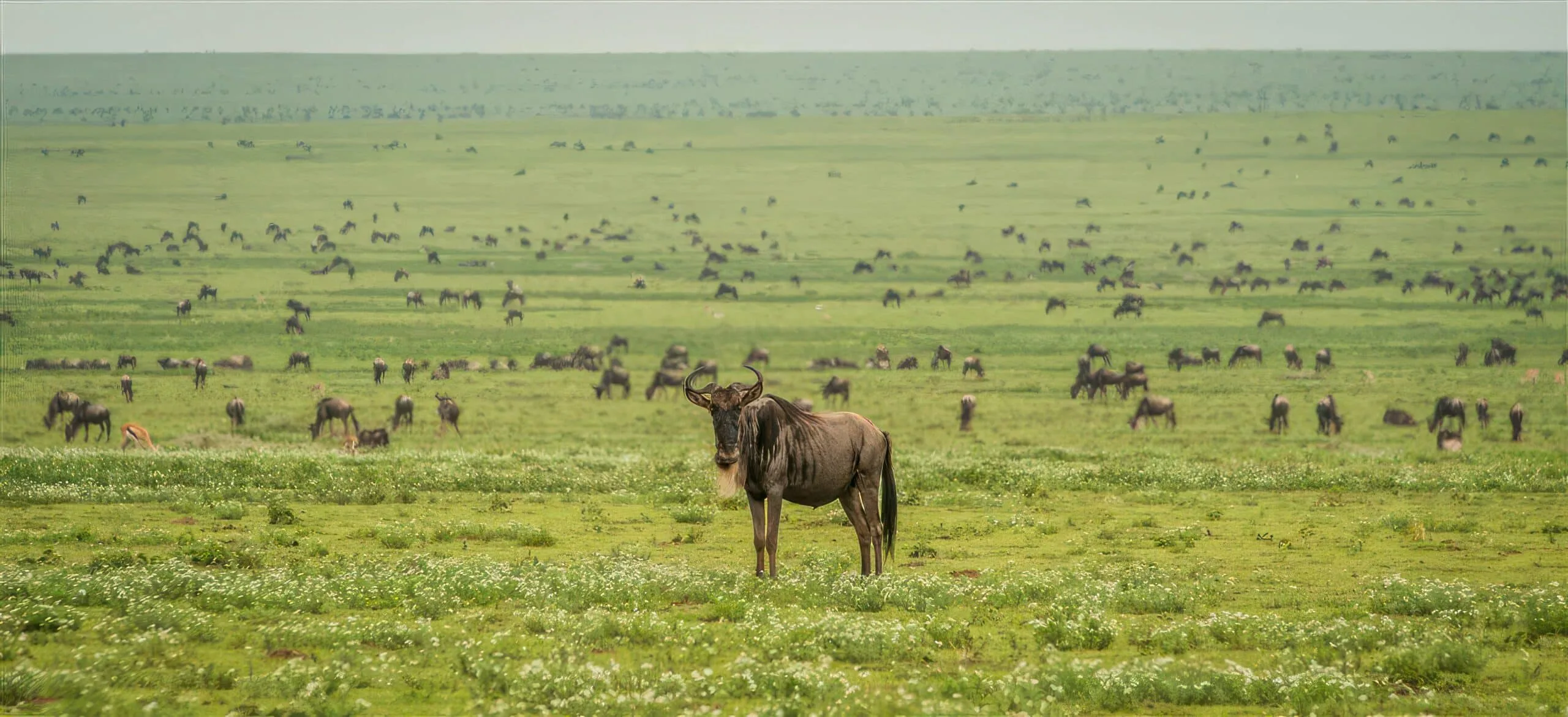
The calving season is the most “predator-dense” window of the migration, where half a million calves are born within a three-week peak, attracting lions, cheetahs, and hyenas.
When I lead groups into the Ndutu region in February, the air is thick with the scent of fresh rain and new life. This isn’t just about the babies; it’s about the hunt. Because the calves are wobbly, the Serengeti’s big cats don’t have to travel far for a meal.
Pro-Tip: Most tourists stick to the main tracks. I recommend heading toward the “Twin Hills” area early in the morning. It offers a natural amphitheater view of the mega-herds without fifteen other vehicles blocking your shot.
The Western Corridor: The Forgotten River (June – July)
The Grumeti River crossing is the migration’s best-kept secret, offering high-stakes drama with significantly fewer vehicles than the more famous Mara River further north.
While everyone waits for August to see a crossing, our team often sees the first major “leap of faith” at the Grumeti River in late June. The water is shallower here, but the crocodiles are some of the largest in Africa.
Comparison: Grumeti vs. Mara River
-
Grumeti: Lower banks, intimate sightings, fewer crowds, “boutique” feel.
-
Mara: Steep cliffs, massive scale, high energy, can be crowded.
The Great Mara Crossing: Nature’s Ultimate Gauntlet (August – September)
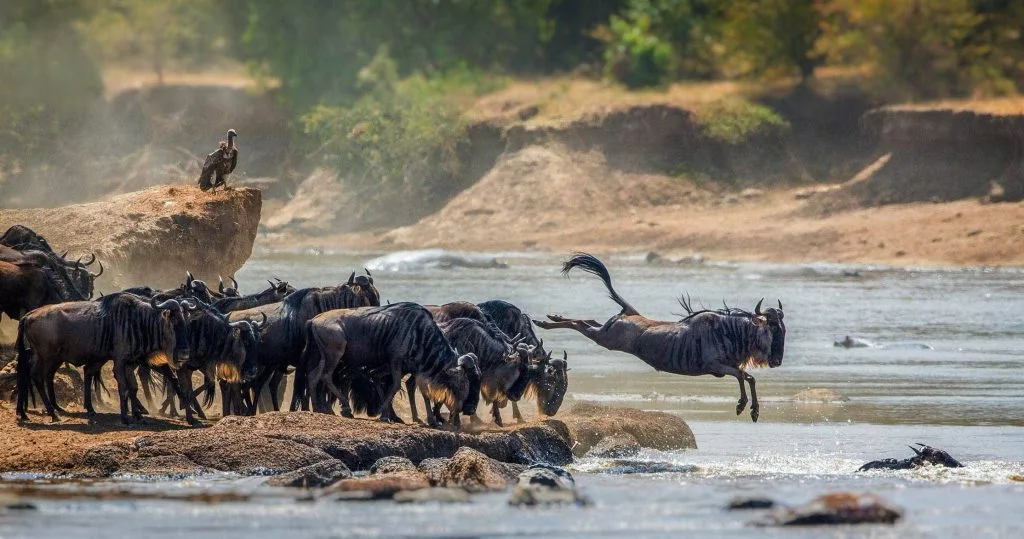
The Mara River crossing is a high-adrenaline event where herds must brave treacherous currents and predators to reach the grazing lands of the Lamai Wedge.
I’ve spent days parked by “Crossing Point No. 4,” waiting for a single wildebeest to lead the charge. The tension is palpable. The “Information Gain” secret here? Don’t just watch the water. Look at the “Dust Clouds.” You can see the herds gathering from miles away by the towers of dust they kick up.
Essential Gear for 2026:
-
Dust-proof Camera Sleeves: The Northern Serengeti in September is a dust bowl.
-
Binoculars (8×42): Crucial for spotting the “lead” animal before the chaos begins.
-
Patience: A crossing can take 10 minutes or 10 hours to start.
Hidden Viewpoints and Unique Insights
To truly experience the migration, you have to look where others aren’t.
-
The Lamai Wedge: This “triangle” of land between the Mara River and the Kenyan border is often ignored. It’s where the herds relax after the crossing. It feels like the Serengeti did 50 years ago.
-
Moru Kopjes: In May, the herds pass through these giant rock formations. It’s the best place to see the rare Black Rhino alongside the migration.
FAQ: What You Need to Know for 2026
Is the migration guaranteed on a specific date?
No. It is a biological response to weather. However, by using mobile camps that move with the herds, we maintain a 98% success rate in finding the “Mega-Herds.”
Which is better: Serengeti or Masai Mara?
In 2026, the Serengeti holds the migration for 9 months of the year, while the Mara only sees them for 3. For the full “cycle” experience, Tanzania is the authority.
What is the “Silent Trek”?
This is the period in November when the herds move quickly and quietly back south. It’s a fantastic time for “Walking Safaris” in the eastern corridors.
Can I see the Big Five during the migration?
Absolutely. The migration actually makes it easier to find lions and leopards, as they follow their “buffet” of prey.
Is it safe for children?
Yes, but we recommend the calving season (Jan-March) for families. The drives are shorter, and the “cuteness factor” of the calves keeps younger travelers engaged.
Final Verdict: Why Authenticity Matters
The Wildebeest Migration is not a documentary you watch; it’s an environment you enter. At Tanzania Safari Experience, we prioritize the “Human Touch”—our guides are locals who grew up on these plains and can read the tilt of a wildebeest’s head to predict its next move. Choosing an authentic local partner ensures you aren’t just following a map, but following the pulse of the wild.
