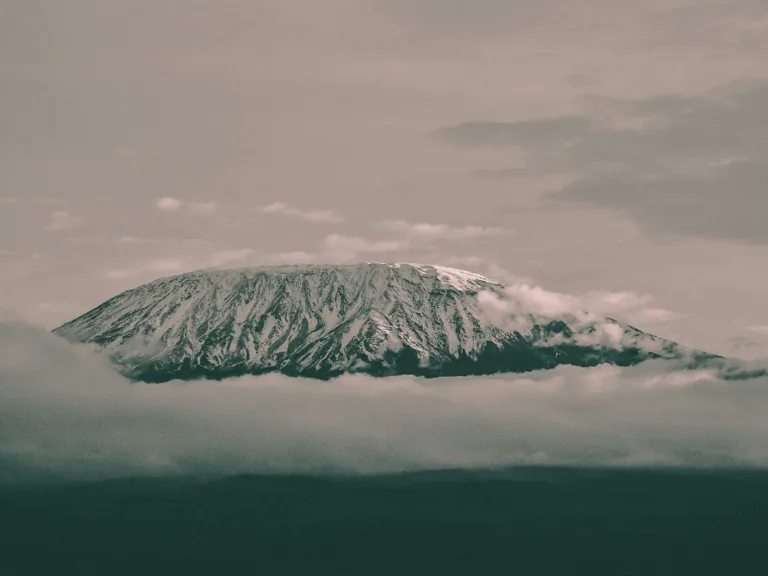
6 Days Kilimanjaro Marangu Route Climb to Uhuru Peak

Clear Cancellation Terms

Clear Cancellation Policies

Expert Local Guides

10+ years in Tanzania

No Hidden Fees

All-inclusive pricing

24 / 7 Support

We're always available

Overview of the 6 Days Kilimanjaro Marangu Route Climb to Uhuru Peak

A 6 day Kilimanjaro Marangu Route climb is the best Marangu option for travelers who want hut accommodation and an additional acclimatisation day before attempting Uhuru Peak. The route follows the same trail up and down, covering approximately 78 kilometres through rainforest, moorland, alpine desert and the summit zone.

This climb suits reasonably fit travelers who prefer sleeping in permanent mountain huts rather than tents. Previous high altitude experience is useful but not compulsory. Consistent preparation, slow pacing and honest communication with your guide matter more than walking quickly.

The extra acclimatisation trek from Horombo Hut to Zebra Rocks makes this itinerary more sensible than the shorter 5 day version. It does not remove the risk of altitude sickness, but it gives your body more time to adjust before reaching Kibo Hut and beginning the summit attempt.

What many climbers misunderstand is that Marangu is not an easy route. The trail is clear and the huts simplify accommodation, but summit night remains cold, steep, physically demanding and mentally exhausting. We recommend choosing Marangu for its accommodation style and gradual lower sections, not because someone described it as the easiest Kilimanjaro route.

Quick Safari Overview

This six day climb combines permanent hut accommodation, a dedicated acclimatisation day and a direct approach to the summit from Kibo Hut. It is a practical choice for climbers who dislike camping, but it still requires serious fitness, suitable cold weather equipment and the ability to walk slowly for many hours.

Best for: Climbers who prefer huts instead of tents
Recommended stay: Six mountain days plus arrival and recovery nights
Best season: January to early March and June to October
Best wildlife experience: Monkeys and forest birds may be seen on the lower slopes
Travel style: Guided mountain expedition
Difficulty level: Challenging
Photography: Landscapes, Mawenzi, Kibo, sunrise and summit photographs
Accommodation style: Shared mountain huts
Main highlight: Reaching Uhuru Peak at 5,895 metres
Value for money: Strong for climbers who value hut accommodation and an acclimatisation day

Is the 6 Day Marangu Route Right for You?

The 6 day Marangu Route is suitable for active travelers who can manage consecutive hiking days, basic shared accommodation and a summit day lasting approximately 12 to 15 hours. It is not suitable for anyone expecting a comfortable holiday, private rooms, warm showers or guaranteed success at the summit.

Marangu is the only main Kilimanjaro route where climbers sleep in permanent huts throughout the mountain journey. This removes the need for sleeping tents, although you still need a proper sleeping bag and warm clothing.

The path is generally well established. Lower sections are less technical than some people imagine, and no specialist climbing equipment is normally required. The real challenge comes from altitude, cold temperatures, limited recovery time and the long summit ascent.

Choose this route when you value:

• Hut accommodation
• A clear and established trail
• A shorter total expedition than many seven or eight day routes
• Direct access from Marangu Gate
• An acclimatisation day at Horombo Hut

Consider another route when you value:

• Quieter trails
• Changing scenery on the ascent and descent
• More acclimatisation time
• Private tented camps
• A longer and more gradual altitude profile


6 Days Kilimanjaro Marangu Route Climb to Uhuru Peak - Summit Success Rate

The 6 day Marangu Route has an estimated summit success rate of around 70% to 80%. The additional acclimatisation day at Horombo Hut gives climbers a better chance than the shorter 5 day itinerary.

However, no responsible operator can guarantee that every climber will reach Uhuru Peak. Success depends on how your body responds to altitude, your fitness, walking pace, weather conditions and willingness to follow the guide’s instructions.

At Tanzania Safari Experience, we recommend walking slowly, staying hydrated, reporting altitude symptoms honestly and choosing the full 6 day itinerary rather than shortening the climb. Your safety will always take priority over reaching the summit.

Kilimanjaro Success Rate Calculator

US units
Metric
How many days is your climb?
Active (run 3–5 km)
Climbed above 4,000 m (13,100 ft) in the last 2 years?
Do you smoke regularly?
Estimated Summit Success Rate
Quick breakdown of factors:
• Route base rate: %
• Climb duration adjustment: %
• Fitness adjustment: %
• Prior high-altitude experience: %
• Smoking status: %
• Age & weight influence: %
This is an estimated probability based on reported summit success rates and physiological factors.
Real outcomes depend heavily on weather, guide quality, hydration, group support, and personal resilience.
This tool is for informational purposes only — always consult your doctor before high-altitude trekking.

Day-by-Day Itinerary 6 Days Kilimanjaro Marangu Route Climb to Uhuru Peak — Tanzania Safari

Your safari is carefully planned to maximize wildlife viewing while still giving you time to relax and enjoy the journey. Here’s what you can expect day by day.

Climb Mount Kilimanjaro Itinerary

1Day

Arusha or Moshi to Marangu Gate and Mandara Hut

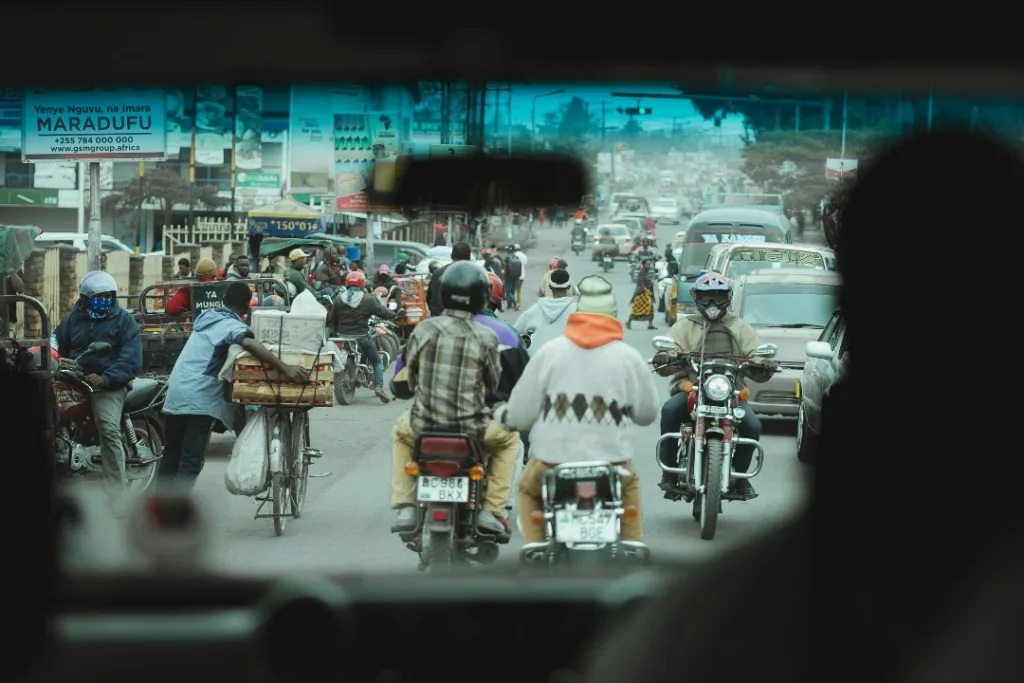
Arusha City Phots - Tanzania Safari Experience

Your expedition begins with collection from your accommodation in Arusha or Moshi. The drive from Moshi to Marangu Gate normally takes around one to one and a half hours. From Arusha, allow approximately two and a half to three hours depending on traffic and the collection point.

At Marangu Gate, your guide completes the required park registration while the mountain crew organises equipment and supplies. This process can take time, especially when several groups are starting on the same morning.

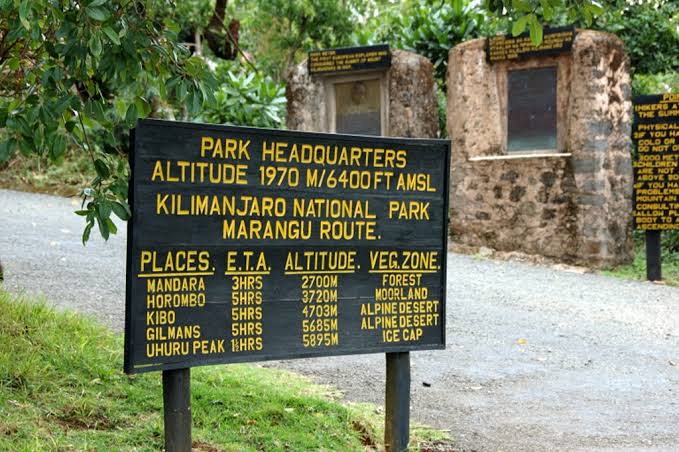
The trail begins at approximately 1,860 metres and enters the montane rainforest. Expect a humid environment, large trees, moss, ferns and sections that may become muddy after rain. Blue monkeys and black and white colobus monkeys are sometimes seen, although wildlife sightings cannot be guaranteed.

The hike to Mandara Hut covers approximately 8.3 kilometres and normally takes around five hours. The pace should feel controlled rather than exhausting. This first day is an opportunity to establish your walking rhythm and tell your guide about any discomfort.

After reaching Mandara Hut at approximately 2,700 metres, you can rest, eat and prepare for the following day. When weather and time allow, your guide may suggest a short walk toward Maundi Crater for views across the lower slopes and toward Kenya.

Accommodation: Mandara Hut
Meal plan: Lunch and dinner on the mountain

Trekking time
8.3km / 5.2mi
Distance
Approx. time taken: 5 hours
2Day

Mandara Hut to Horombo Hut

Mandara Hut Hike To Horombo Hut

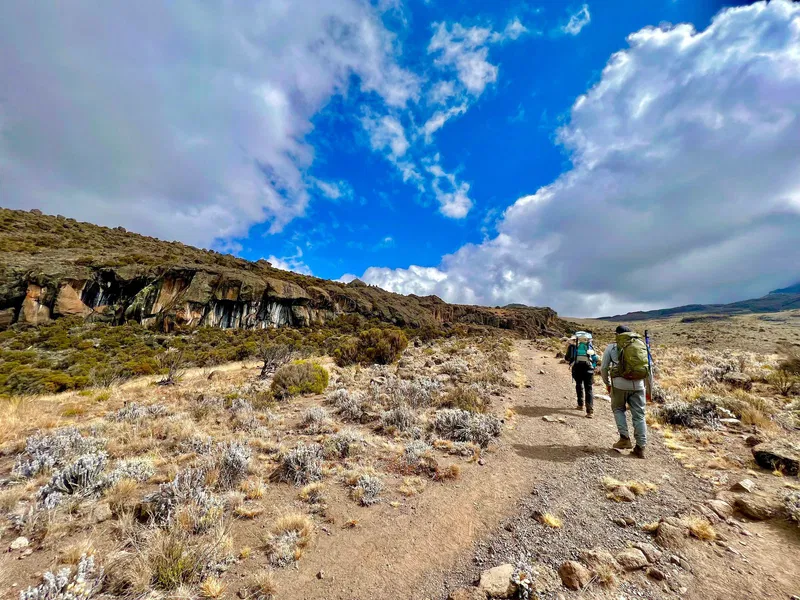
After breakfast, the trail continues through the upper forest before reaching the heath and moorland zone. Vegetation becomes shorter, temperatures begin to change more quickly and views of Mawenzi and Kibo may appear when cloud cover clears.

The distance to Horombo Hut is approximately 12.5 kilometres. Some itineraries describe this as a four to six hour walk, but many climbers require six to nine hours once rest stops, lunch and a responsible pace are included.

You will gain around 1,000 metres of altitude during the day. This is a substantial increase, so headaches, reduced appetite or unusual tiredness should be reported to your guide immediately. Hiding symptoms does not improve your chance of reaching the summit.

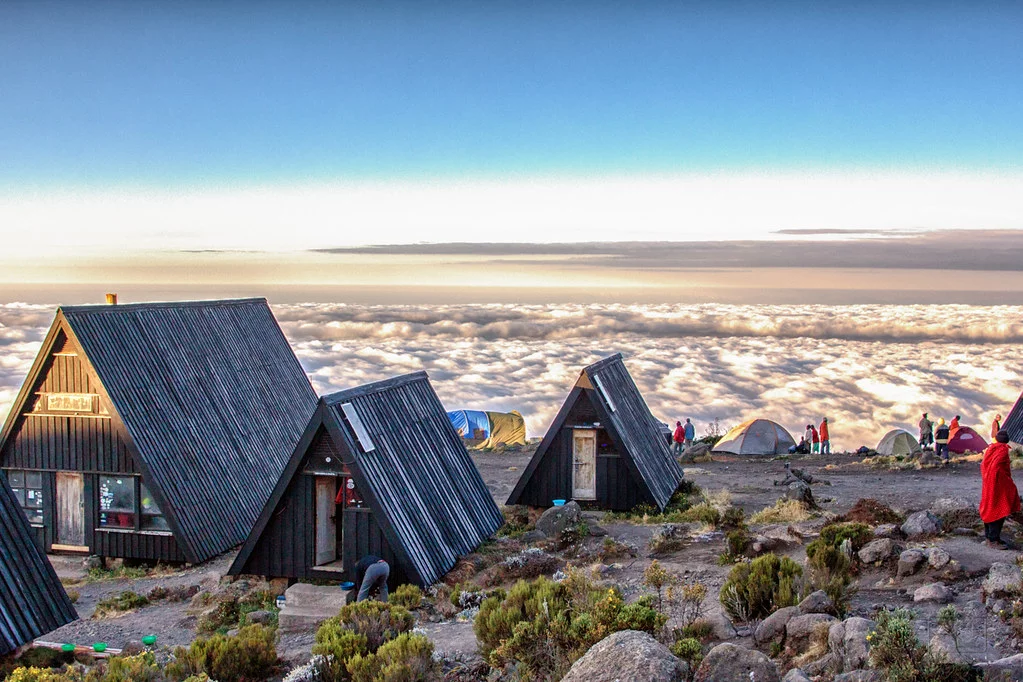
Horombo Hut stands at approximately 3,700 metres and is one of the busiest locations on the Marangu Route. Ascending climbers, descending climbers and some acclimatising groups may all use the camp.

Temperatures drop quickly after sunset. Change out of damp clothing, keep your drinking water accessible and organise the equipment needed for the acclimatisation walk before going to sleep.

Accommodation: Horombo Hut
Meal plan: Breakfast, lunch and dinner

Trekking time
12.5km / 7.8mi
Distance
Approx. time taken: 9 hours
3Day

Acclimatisation Trek to Zebra Rocks

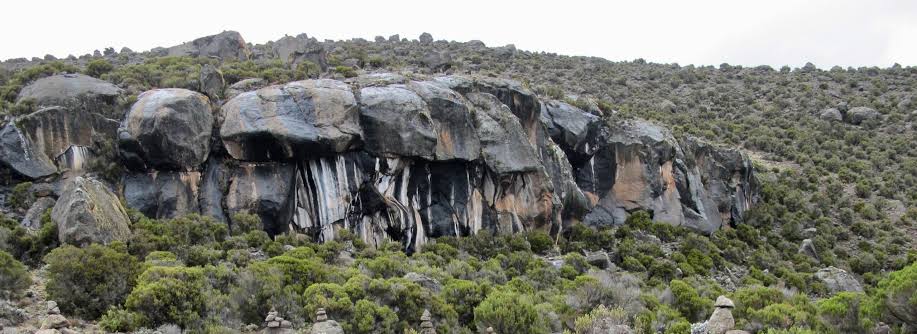
Zebra Rocks Kilimanjaro

The third day is dedicated to acclimatisation rather than gaining permanent sleeping altitude. After breakfast, you will walk from Horombo Hut toward Zebra Rocks at approximately 4,020 metres before returning to sleep at Horombo Hut.

The round trip covers approximately five kilometres and usually takes around four hours. The coloured mineral patterns on the rocks create the striped appearance that gives the formation its name.

This walk follows an important altitude principle: climb higher during the day and sleep lower at night. Reaching 4,020 metres briefly exposes your body to thinner air while returning to Horombo allows additional recovery.

The afternoon is normally reserved for lunch, rest, hydration and preparation. Do not treat the free time as an invitation to walk around unnecessarily. Conserving energy becomes increasingly important as summit day approaches.

Your guide will monitor your condition and may ask about headaches, nausea, appetite, sleep and energy. Give accurate answers. There is no benefit in pretending to feel well when symptoms are becoming worse.

Accommodation: Horombo Hut
Meal plan: Breakfast, lunch and dinner

Expert Recommendation from Tanzania Safari Experience

The acclimatisation day is not a sightseeing break. Walk slowly, drink consistently and pay attention to how your body responds above 4,000 metres.

If symptoms become stronger during the ascent to Zebra Rocks, tell your guide immediately. This information helps the guide decide whether you need additional rest, medication advice or descent.

Trekking time
5km / 3.1mi
Distance
Approx. time taken: 4 hours
4Day

Horombo Hut to Kibo Hut

Horombo Hut to Kibo Hut

Today you leave Horombo Hut and continue toward Kibo Hut. The trail passes through increasingly dry terrain before reaching the broad saddle between Mawenzi and Kibo.

Vegetation becomes limited, shade is scarce and wind can make the temperature feel much colder. Sun protection remains important because ultraviolet exposure is strong at altitude even when the air feels cool.

The route covers approximately 9.5 kilometres and normally takes six to seven hours. The final approach to Kibo Hut may feel slow because the air contains less oxygen and your body has already completed several hiking days.

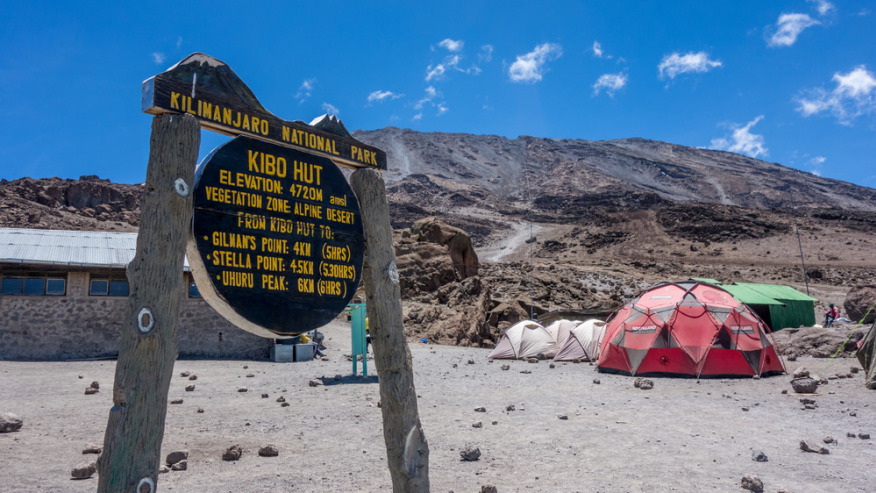
Kibo Hut stands at approximately 4,700 metres. After arrival, you will eat, rest and organise the clothing and equipment required for the summit attempt. Your guide will explain the expected departure time, walking order and turnaround rules.

Dinner is normally served early because the summit climb begins around midnight. Many climbers sleep only briefly. Even when sleep is difficult, lying quietly and keeping warm still gives your body some recovery.

Accommodation: Kibo Hut
Meal plan: Breakfast, lunch and early dinner

Trekking time
9.5km / 5.9mi
Distance
Approx. time taken: 7 hours
5Day

Kibo Hut to Uhuru Peak and Down to Horombo Hut

Uhuru Peak Kilimanjaro

Summit day normally begins around midnight. You will leave Kibo Hut wearing several warm layers and carrying water, snacks, gloves, head protection and a headlamp.

The first section climbs slowly over loose volcanic ground. The darkness, cold and repetitive movement make this stage mentally demanding. Your guide will set a very slow pace to conserve energy.

You will pass Hans Meyer Cave before continuing toward Gillman’s Point at approximately 5,681 metres. Reaching the crater rim is a major achievement, but Uhuru Peak remains another one to two hours away.

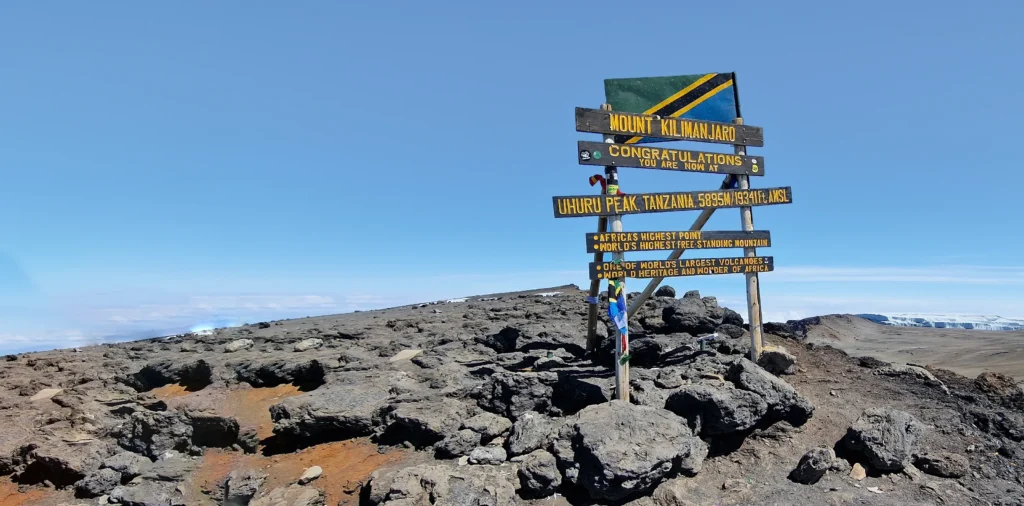
The route follows the crater rim toward Stella Point and then Uhuru Peak at 5,895 metres. Snow, ice, wind and temperature conditions vary. Your time at the summit may be brief because remaining at extreme altitude provides no additional benefit.

After photographs and a safety assessment, you will descend to Kibo Hut. The loose ground can make the descent quicker, but it places pressure on knees and tired leg muscles.

A warm meal and short rest normally follow at Kibo Hut. You then continue down to Horombo Hut, making the complete day approximately 22 kilometres and 12 to 15 hours of movement.

Do not underestimate the second descent. Many climbers focus entirely on reaching Uhuru Peak and forget that several more hours of walking remain before reaching the sleeping hut.

Accommodation: Horombo Hut
Meal plan: Breakfast, lunch and dinner

Trekking time
22km / 13.7mi
Distance
Approx. time taken: 12 - 15 hours
6Day

Horombo Hut to Marangu Gate and Arusha

Marangu Gate | Mount Kilimanjaro

The final descent begins after breakfast and passes through the heath and moorland toward Mandara Hut. Your legs may feel tired or stiff, especially after the long summit day.

From Mandara, the trail continues through the rainforest to Marangu Gate. Wet roots, stones and mud can make the lower section slippery, so continue using your walking poles and avoid rushing.

The distance is approximately 20.8 kilometres and normally takes six to eight hours. Although you are descending, this remains a full hiking day.

At Marangu Gate, the guide completes the exit procedures. Eligible climbers receive the appropriate summit certificate based on the highest official point reached.

You will say goodbye to the mountain crew before transferring to your accommodation in Moshi or Arusha. A shower, proper meal and full night of sleep are usually the immediate priorities.

Trekking time
20.8km / 12.9mi
Distance
Approx. time taken: 8 hours

Looking for 6 Days Kilimanjaro Marangu Route Climb to Uhuru Peak for your dates ?

Receive a free Tanzania safari quote straight to your email within 6 hours! Customize your preferences, and we’ll craft a unique experience just for you. Prices vary based on group size and accommodation choice.

We've got you covered

Our tours combine high-quality safari experiences with excellent value. The price provided clearly outlines what is included, such as accommodation, park fees, private safari transport, guide services, selected flights, and transfers listed in your itinerary.

Connect with our local experts for personalized travel planning

Plan your 6 Days Kilimanjaro Marangu Route Climb to Uhuru Peak today

Request a Program
Response within 24 hours
No obligations

6 Days Kilimanjaro Marangu Route Climb to Uhuru Peak TripAdvisor Reviews

SEE WHAT OUR GUESTS HAVE TO SAY ABOUT THEIR TANZANIA SAFARI EXPERIENCE.

*For the most recent reviews/testimonials from our guests, please visit our TripAdvisor page and Trustpilot.

Tripadvisorreviews
See all
5
Excellent · 4 reviews
Travellers’ Choice
  • mattropolis
    mattropolis
    July 31, 2026

    Great Tanzanian vacation

    We toured with Tanzania Safari Experience for an eight day trip to Tanzania. Five days of safari and then three days of beach vacation in Zanzibar. They were great to work with and customized everything exactly the way we wanted it. The lodges we were booked in were all incredible, particularly the Lahia Tented Lodge in the Serengeti. Our driver, Jay, seemed to know every road in every national park and as a result the wildlife viewing was unparalleled. There were times where we were the only vehicle seeing lions or hippos. The owner, Laurent, was extremely responsive and any issues we had in-country with our logistics were immediately sorted by him. He genuinely wanted us to have a first-rate experience. The only thing we were unprepared for is that some of the days in the safari vehicle were very long (10+ hours) and the roads can be really rough. But there were plenty of cold drinks in the car and it was worth it to see the wildlife. The safari/beach split was a great way to do the vacation and the beaches of Zanzibar were beautiful with clear blue water.

    Family · July 31, 2026
    Read more
  • nicolykiardopoul2018
    nicolykiardopoul2018
    June 2, 2026

    Safari May 2026

    This company exceeded everything we’d hoped for. From the start, the tour operator had everything covered — a detailed itinerary laid out well in advance, quick responses to any questions, and a genuine attentiveness that made the whole thing feel effortless. The accommodation was seriously impressive. Not what I was expecting at all — comfortable, well-appointed, and luxurious. We also spent time right in the heart of the bush. A proper treat. The two people who really made this trip were our guide Mariki and photographer Agnes. Mariki’s knowledge of the bush and animal behaviour is something else — he always seemed to know exactly where to go, and his instincts paid off every single time. Agnes has a brilliant eye and captured shots we could never have got ourselves. As for the wildlife — we saw far more than we ever imagined we would. Elephants, lions, leopard, buffalo, giraffe, zebra, hippos — the lot. As a first safari, I couldn’t have asked for more. Would recommend without hesitation.

    Friends getaway · June 2, 2026
    Read more
  • 370godsong
    370godsong
    January 3, 2026

    Great Experience with Tanzania Safari Experience

    We had an amazing safari with Tanzania Safari Experience, and honestly the whole trip was put together really well by Laurent and his team. From our first message to the last day, they were easy to reach, quick to reply, and clear about everything. The plan made sense, the timing was smooth, and we didn’t have to stress about anything. Uncle J was a big part of what made it special. He knows the parks incredibly well and seems to notice things before anyone else. He’d position the vehicle perfectly for photos and often got us to sightings before the crowds built up. We were lucky to see [your highlights: migration / lions / cheetahs / elephants / a crossing], and every drive felt exciting and different. The vehicle was comfortable and in good shape, and everything ran on schedule. If you’re looking for a well-organized safari with a great guide, I’d definitely recommend Tanzania Safari Experience.

    Solo travel · January 3, 2026
    Read more

Do you need a visa to visit Tanzania?

Most travelers to Tanzania need a visa, which can be obtained online or on arrival at the airport. Use the widget below to select your citizenship and see the type of visa required and how long the application will take.

● Tanzania Entry Guide

Visa requirements checker

Select your citizenship to instantly see what you need before your Tanzania safari.

Visa required
Visa type
Cost (USD)
Approval time
As a Tanzanian citizen, no visa is required for entry into Tanzania.

Everything You Need to Know About Your Safari

Planning a Tanzania safari often comes with important questions, from choosing the right travel season to understanding what to pack, where to stay, and what to expect each day. We have answered the questions travelers ask most often before booking, helping you prepare properly and plan your safari with confidence.

The Marangu Route requires no technical climbing, but the six day itinerary is physically and mentally challenging. The main difficulty is not the trail surface. It is the combination of altitude, cold, interrupted sleep, limited recovery, changing weather and a summit day that may continue for 12 to 15 hours.

You should be comfortable walking for six to eight hours on consecutive days. Summit day requires an even longer effort after waking around midnight.

Training should begin several weeks or months before departure depending on your present condition. Focus on:

• Long walks on hills
• Consecutive hiking days
• Controlled cardiovascular training
• Leg strength
• Core stability
• Walking with a light daypack
• Using the boots you will wear on Kilimanjaro

Do not train only on flat roads or gym machines. Uneven ground, long descents and extended time on your feet place different demands on the body.

Mental preparation also matters. Summit night involves darkness, cold, slow progress and limited conversation. Breaking the climb into small sections is often more effective than thinking continuously about the distance remaining.