


Tanzania Safari in February
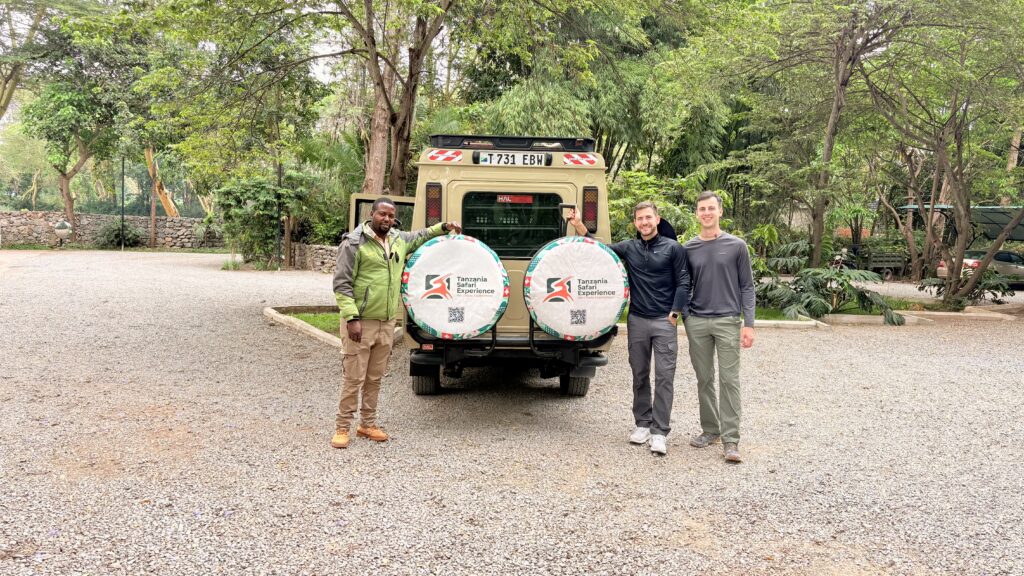
Tanzania Safari in February: Calving Season, Weather, Wildlife & Best Parks to Visit
February is one of the best months for a Tanzania safari, especially for travelers who want to witness the Great Migration’s wildebeest calving season in Ndutu and the Southern Serengeti. Thousands of wildebeest calves can be born each day during the peak calving period, attracting lions, cheetahs, hyenas, and other predators to the open grasslands.
February is also peak safari season in Tanzania’s southern Serengeti and Ndutu region. Although it falls outside the traditional July–October dry-season peak, demand for accommodation around the calving grounds is exceptionally high. Wildlife enthusiasts, photographers, and families travel from around the world to witness one of Africa’s most remarkable natural events.
But February isn’t only about the Serengeti. Ngorongoro Crater remains a fantastic wildlife destination, Tarangire offers beautiful green landscapes and resident elephants, and southern parks such as Mikumi provide an alternative for travelers seeking a shorter safari, particularly those staying in Zanzibar.
The weather is generally warm, the landscapes are green, and wildlife viewing can be excellent. However, occasional rain, muddy roads, and busy game-viewing areas are all things worth understanding before you book.
Why February Is Such a Special Month for a Tanzania Safari
February brings together several experiences that are difficult to find in quite the same combination during other months.
-
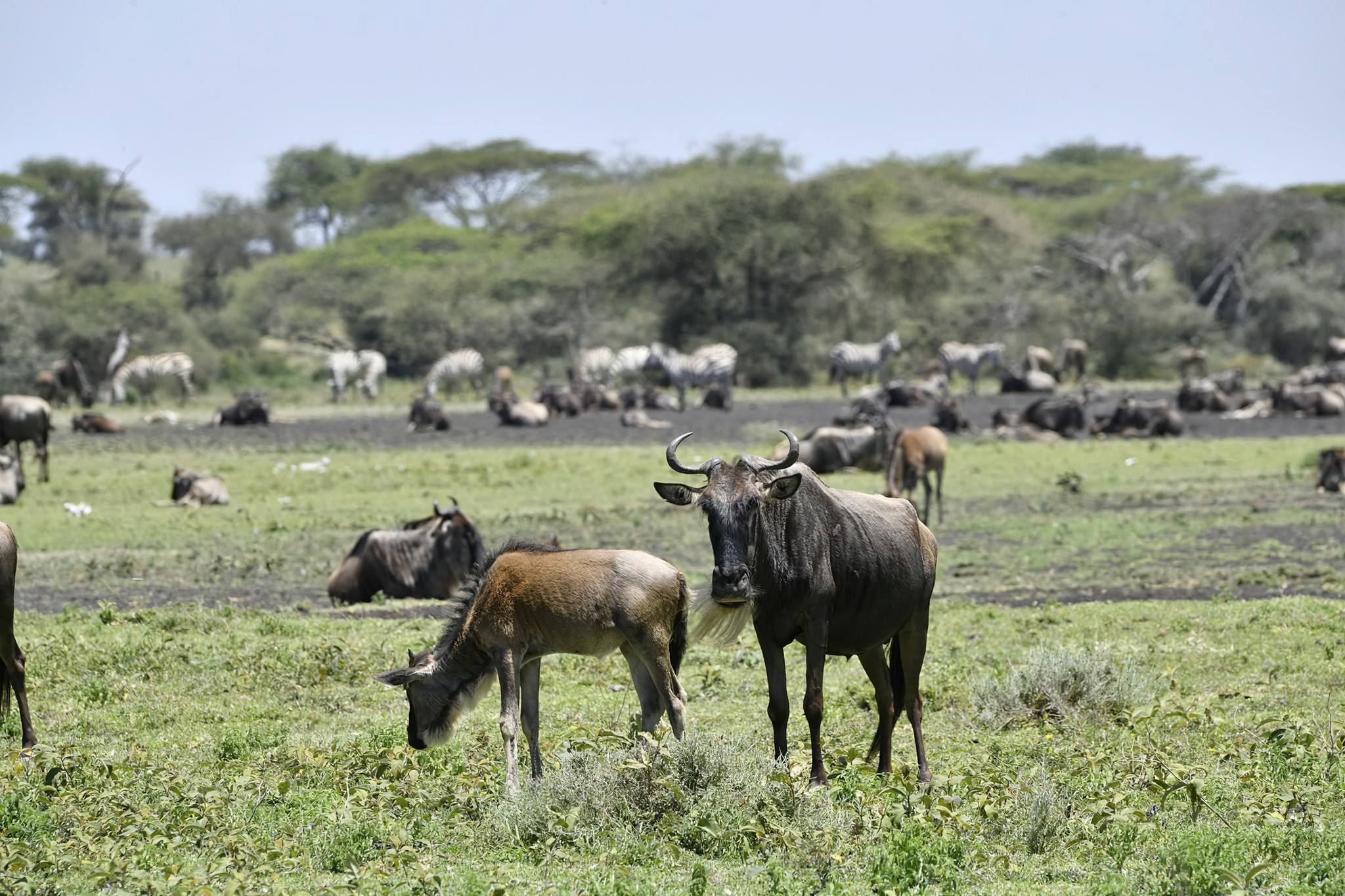
Wildebeest calving season: Hundreds of thousands of wildebeest gather on the southern plains, with an estimated 400,000–500,000 calves born across the wider calving season.
-
Excellent predator opportunities: Lions, cheetahs, hyenas, and occasionally leopards are active, although successful hunts are never guaranteed.
-
Beautiful green scenery: The short-rains period generally leaves the grasslands lush, creating striking contrasts for photography.
-
High demand in Ndutu: Seasonal migration camps and well-positioned lodges can sell out months ahead.
-
Different safari experiences: Travelers can combine the migration with Ngorongoro, Tarangire, Lake Manyara, or explore Mikumi and other southern destinations instead.
Wildebeest Calving Season in Ndutu and the Southern Serengeti
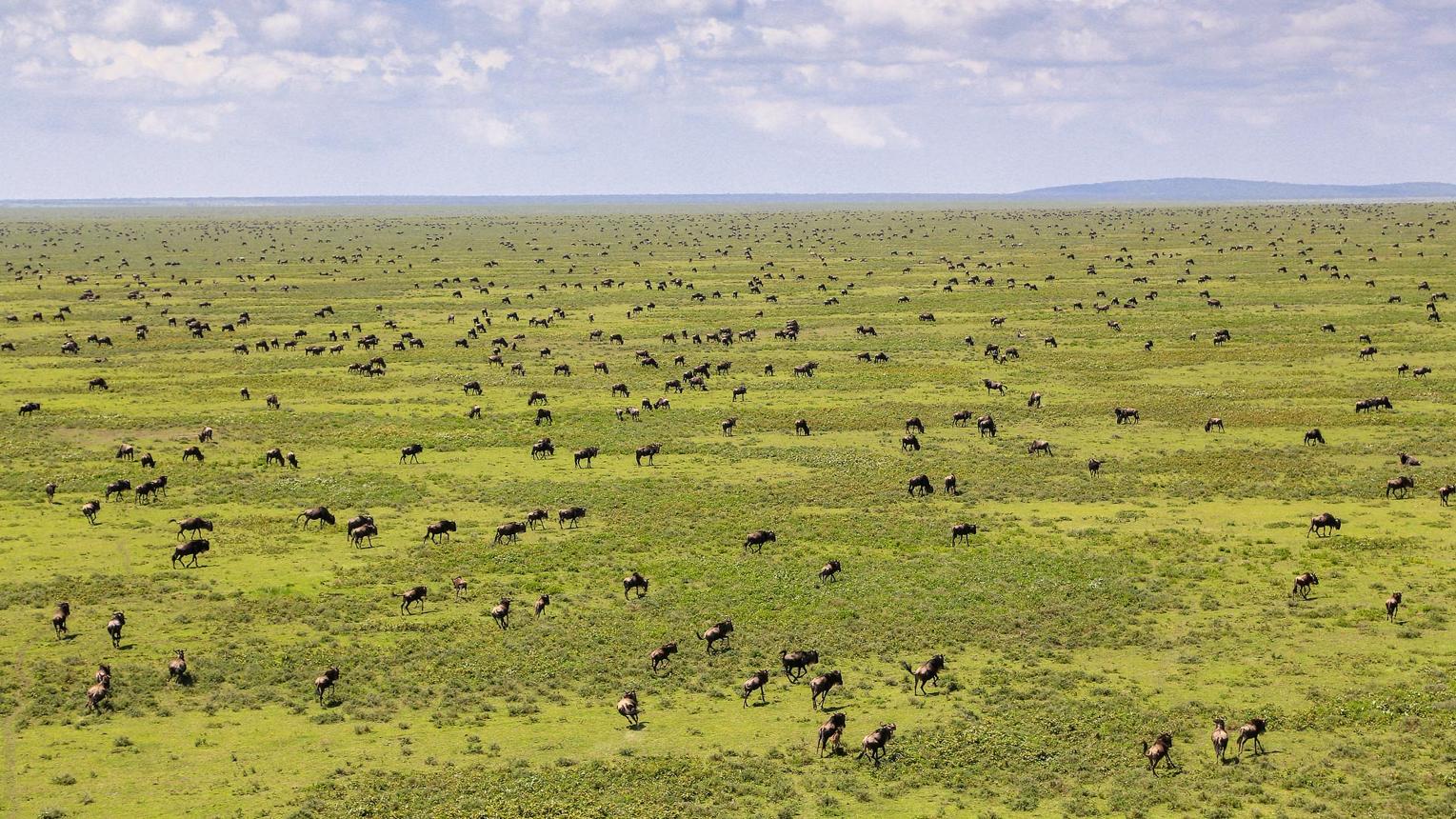
The biggest reason to visit Tanzania in February is the Great Migration calving season.
Every year, migrating wildebeest move across the Serengeti ecosystem following seasonal rains and fresh grazing. Between approximately December and March, large herds are often found around Ndutu, the Southern Serengeti, and the surrounding short-grass plains of the Ngorongoro Conservation Area.
February is traditionally the most concentrated period for calving, although exact timing varies with rainfall and grazing conditions.
During the broader calving season, approximately half a million wildebeest calves may be born, with peak periods seeing thousands of births daily.
Newborn calves can stand and begin moving remarkably quickly, an important survival advantage in an environment where predators are constantly searching for opportunities.
Why predators are so active during February
The concentration of newborn wildebeest attracts predators, particularly cheetahs and lions. Spotted hyenas also play an important role as both hunters and scavengers.
The relatively open plains around Ndutu can make it easier to observe wildlife interactions compared with densely vegetated landscapes elsewhere.
However, it is important to understand that predator sightings and hunts are natural events. No responsible safari operator can guarantee a particular hunt, birth, or interaction.
Why Ndutu is often better than Central Serengeti in February
Many first-time travelers assume that booking any accommodation in Serengeti National Park will place them close to the Great Migration.
That assumption can result in unnecessarily long game drives.
Ndutu and the Southern Serengeti are generally the primary areas to consider for calving-season viewing, while Central Serengeti offers excellent resident wildlife throughout the year, including big cats.
The calving herds can shift with the rains, so choosing accommodation based on the expected migration movements is more important than simply choosing a property with Serengeti in its name.
Our local recommendation: Spend at least two nights in the Ndutu or Southern Serengeti region during February. Three nights provides greater flexibility for wildlife movements, weather, and unhurried game drives.
Is February High Season or Low Season in Tanzania?
February is best described as peak calving-season demand in Ndutu and the Southern Serengeti, rather than uniformly peak season in every national park.
This distinction matters when choosing where to travel and budgeting for accommodation.
Migration-focused camps are especially popular from January through March. Some seasonal camps operate specifically during these months to place travelers close to the herds.
By contrast, parks such as Tarangire and Mikumi may offer a quieter experience than their principal dry-season periods.
Travelers planning a February calving safari should ideally reserve well-located camps several months in advance, especially when seeking particular room categories, family accommodation, or luxury tented camps.
Best National Parks to Visit in Tanzania in February
Not every national park offers the same experience in February. While Ndutu is the main attraction for migration-focused safaris, other destinations have their own advantages.

1. Ndutu and Southern Serengeti
February is traditionally the prime month to witness wildebeest births, large migrating herds and predator activity. The green short-grass plains also provide excellent photographic opportunities. Game-viewing areas can become busy when the herds and predators are concentrated in accessible locations.

2. Ngorongoro Crater
Best for concentrated resident wildlife
February offers green crater scenery and reliable opportunities to see buffalo, zebra, wildebeest, lions, and, with luck, black rhinos. The crater has resident wildlife throughout the year. It can be crowded, especially around popular sightings, so an early descent is recommended.

3. Tarangire National Park
Best for elephants and green landscapes
Tarangire is greener in February, with elephants, giraffes, antelopes, and a rich variety of birds. However, animals are more dispersed because water is available across the ecosystem. This means wildlife concentrations are generally less dramatic than during the dry season, but the park can feel more peaceful.

4. Central Serengeti
Best for resident big cats
The Seronera Valley remains an excellent year-round game-viewing destination. Lions, leopards, cheetahs, elephants, and resident herbivores can be found here, although the main migrating herds are usually farther south during February.

5. Lake Manyara National Park
Best for birds, forest and varied habitats
February is rewarding for birdwatching, with lush forests, waterbirds, monkeys, and elephants. The park is beautiful after seasonal rains, but conditions and lake levels vary. Tree-climbing lions are sometimes seen, although they should not be expected on every visit.

6. Arusha National Park
Best for relaxed nature experiences
February brings attractive mountain scenery, birdlife, giraffes and colobus monkeys. Depending on conditions, travelers can enjoy guided walking safaris and canoeing. It is a convenient choice for visitors with limited time around Arusha.
Southern Tanzania Safaris in February: Mikumi, Nyerere and Ruaha
While the northern safari circuit receives significant attention during February because of the wildebeest calving season, southern Tanzania offers a different kind of wildlife experience.
February is part of the greener and wetter season in southern Tanzania. The landscapes are beautiful, visitor numbers are generally lower, and birdlife is often exceptional.
However, travelers should be aware that wildlife can be more widely dispersed and some routes may be muddy or temporarily inaccessible after heavy rainfall.

Mikumi National Park
Mikumi is one of the most practical options for travelers coming from Dar es Salaam or Zanzibar. Its Mkata floodplain is home to elephants, giraffes, zebras, buffaloes, and lions. In February, expect green landscapes, fewer safari vehicles, and opportunities for excellent birdwatching. Wildlife can be more dispersed than in the dry season.

Nyerere National Park
Nyerere offers a more remote safari experience with extensive woodlands, waterways, elephants, hippos, and diverse birdlife. February brings lush scenery but also an increased chance of muddy roads and disrupted activities. Some camps reduce operations during wetter months, so availability and access must be confirmed.

Ruaha National Park
Ruaha is excellent for wilderness enthusiasts, with dramatic baobab landscapes, elephants, and big cats. February falls within the wet season, making some routes challenging. It is better suited to flexible travelers using camps that remain operational rather than those looking for predictable dry-season game viewing.
Tanzania Safari from Zanzibar in February


If you are enjoying a beach holiday in Zanzibar and would like to experience Tanzania’s wildlife without spending a week traveling across the mainland, February still offers several safari possibilities.
Mikumi National Park is one of the most convenient mainland safari destinations for travelers staying in Zanzibar. It is particularly attractive for visitors who have only one to three days available.
One-day Mikumi safari from Zanzibar
A day safari generally involves an early departure from Zanzibar, a flight to the mainland, game drives in Mikumi, and a return flight later that day.
When a suitable flight schedule is available, this allows visitors to experience a genuine wildlife safari without changing hotels in Zanzibar.
You may encounter elephants, giraffes, zebras, buffaloes, antelopes, and occasionally lions. Wildlife sightings are never guaranteed, and February’s taller vegetation may make some animals harder to locate.
Two-day Mikumi safari from Zanzibar
A two-day safari allows more time to explore the park and reduces the pressure of fitting everything into a single day.
For visitors who want a more relaxed experience, an overnight stay is often a better option than a one-day safari, particularly when flight schedules or weather conditions limit game-drive time.
Can you visit Serengeti from Zanzibar in February?
Yes. Zanzibar can be combined with a fly-in safari to the Serengeti, subject to flight schedules and available airstrips.
For February’s wildebeest calving season, the important detail is choosing an arrival airstrip and camp that are practical for Ndutu or the Southern Serengeti.
A multi-day safari is strongly recommended. Traveling all the way to the Serengeti for only a few hours of wildlife viewing is usually poor value compared with a properly planned two- or three-night experience.
Travelers with very limited time are generally better served by Mikumi or another accessible mainland park.
Tanzania Weather in February: Is It Hot or Rainy?
February is generally warm in Tanzania, but temperatures, rainfall and humidity vary substantially between the Northern Highlands, Serengeti plains, southern parks and Zanzibar.
It is not accurate to describe the entire country as having completely dry weather throughout the month.
February usually falls between the short-rains period and the onset of the longer rains, which typically begin around March or April. Rainfall can still occur, particularly in the afternoons.
Typical February Temperatures in Tanzania
Approximate daytime and nighttime temperatures across popular safari destinations. Actual weather varies by elevation, location and rainfall.
14–28°C (57–82°F)
10–23°C (50–73°F)
18–30°C (64–86°F)
21–32°C (70–90°F)
25–32°C (77–90°F)
☀️ February Weather Tip:
Expect warm afternoons, cooler mornings in the highlands and occasional seasonal showers. Pack light clothing, a warm layer for early game drives and a lightweight rain jacket.
What happens when it rains during a safari?
Most safari activities continue during ordinary light rainfall. In fact, some of our most beautiful landscape photography opportunities occur when sunlight breaks through the clouds after a shower.
However, heavy rain can affect road conditions, particularly around black-cotton soil areas in Ndutu and sections of southern Tanzania.
Experienced guides adjust routes to account for road conditions, wildlife movements and safety.
For February safaris, a lightweight waterproof jacket, sun protection, comfortable layers and closed footwear are sensible additions to your packing list.
How Crowded Is Tanzania in February?

Crowding is highly dependent on where you travel.
| Destination | Typical February crowds |
|---|---|
| Ndutu / Southern Serengeti | High around migration herds and predator sightings |
| Ngorongoro Crater | Often busy, especially around major sightings |
| Central Serengeti | Moderate to busy in popular wildlife areas |
| Tarangire | Often quieter than its dry-season peak |
| Lake Manyara | Generally moderate |
| Mikumi | Generally quieter than the major northern highlights |
| Nyerere / Ruaha | Usually low visitor numbers, subject to seasonal operations |
The most noticeable safari-vehicle concentrations in February are usually around major wildlife sightings in Ndutu and Ngorongoro Crater.
An experienced guide can improve your experience by choosing sensible game-drive times, understanding animal behavior, and exploring less crowded areas when conditions permit.
A private safari also provides flexibility over how much time you spend at each sighting, although it cannot guarantee an absence of other vehicles.
Recommended Tanzania Safari Itineraries for February

3 Days – Tarangire, Ngorongoro and Lake Manyara
A practical short safari for visitors who want varied wildlife experiences without traveling as far as the Serengeti. Ideal when time is limited, but it does not include the migration calving grounds.

5 Days – Ndutu Calving Season and Ngorongoro
Focus on the February migration with multiple game drives in Ndutu, followed by a visit to Ngorongoro Crater. A strong choice for travelers mainly interested in newborn wildebeest and predator activity.

7 Days – Ndutu, Serengeti and Ngorongoro
A more comprehensive experience with several nights near the calving grounds, additional time for the resident big cats of Central Serengeti, and game viewing inside Ngorongoro Crater.

2 Days – Mikumi Safari from Zanzibar
A convenient option for beach holidaymakers who want to see mainland Tanzania’s wildlife while spending most of their holiday in Zanzibar.
Is February a Good Month to Combine a Safari with Zanzibar?
Yes. February can be an excellent month to combine a wildlife safari with time on Zanzibar’s beaches.
Zanzibar is typically hot and humid in February, with warm sea temperatures and opportunities for beach activities, snorkeling and boat excursions, subject to local marine conditions.
A popular combination is five to seven days exploring Tanzania’s northern safari circuit, followed by three to five nights relaxing in Zanzibar.
Travelers can also reverse this arrangement, starting their holiday with a Zanzibar beach stay and finishing with a mainland safari.
For visitors primarily interested in the calving season, we recommend arranging the safari around Ndutu accommodation availability first, then planning Zanzibar around those dates.
How Far in Advance Should You Book a February Safari?
February attracts substantial demand around Ndutu because many international visitors travel specifically for the calving season.
The best-located accommodation can have limited availability, especially for travelers requiring family tents, triple rooms, or premium properties.
As a general planning guide, booking six to nine months ahead is sensible for guests with fixed dates and specific camp preferences. Even earlier planning may be worthwhile for highly sought-after camps.
Last-minute trips are sometimes possible, but flexibility over accommodation and route becomes more important.
At Tanzania Safari Experience, we recommend confirming the travel itinerary, accommodation availability and logistics before finalizing your booking arrangements.
Frequently Asked Questions About Tanzania Safaris in February
Is February a good month for a safari in Tanzania?
Yes. February is particularly good for the wildebeest calving season in Ndutu and the Southern Serengeti. It also offers green landscapes, excellent birdlife and resident wildlife in other parks.
Where is the Great Migration in February?
The large wildebeest herds are traditionally concentrated in Ndutu, the Southern Serengeti and adjacent short-grass plains of the Ngorongoro Conservation Area. Their exact location depends on rainfall and grazing.
How many wildebeest are born in February?
During the wider calving season, approximately 400,000–500,000 wildebeest calves may be born. February is often the peak month, with thousands of births a day during the most intense periods. These figures are estimates, not guaranteed annual counts.
Is February rainy in Tanzania?
February often has warm weather and sunny periods, but scattered showers are possible. The southern parks can experience more challenging wet-season conditions, while the Ngorongoro Highlands are generally cooler.
Is Tanzania crowded in February?
Ndutu and the Southern Serengeti are busy because of calving-season demand, and Ngorongoro Crater can also attract many vehicles. Tarangire, Mikumi and other destinations may feel considerably quieter.
Can I visit Mikumi from Zanzibar in February?
Yes. One-day and overnight safaris can be arranged when suitable flights, park access and accommodation are available. Weather may affect schedules, so the logistics should be checked before confirming.
Is February good for seeing the Big Five?
February offers strong wildlife-viewing opportunities, including lions, elephants, buffaloes and leopards in suitable habitats. Ngorongoro Crater is among the better places to look for black rhinos, but no itinerary can guarantee all five species.
Should I choose Ndutu or Central Serengeti in February?
Choose Ndutu or the Southern Serengeti if wildebeest calving is your main priority. Choose Central Serengeti for year-round resident wildlife and big-cat opportunities. Combining both can be rewarding on a longer safari.
How many days do I need for a February safari?
Five to seven days is a good duration for the northern circuit with meaningful time in Ndutu. Shorter trips are possible, while a one- or two-day Mikumi safari can work well for travelers staying in Zanzibar.
Is February a good time to climb Kilimanjaro?
February is often considered one of the favorable periods for Kilimanjaro trekking, although mountain weather is variable and summit conditions can be severe at any time of year.
Plan Your February Safari with Tanzania Safari Experience
February is one of Tanzania’s most rewarding safari months, but getting the itinerary right makes a significant difference.
Choosing the wrong location can mean spending hours driving toward the wildebeest herds instead of enjoying wildlife sightings. Choosing the right accommodation, travel dates and route helps create a more relaxed experience.
At Tanzania Safari Experience, we design private and carefully planned safaris around your interests, whether you want to photograph newborn wildebeest in Ndutu, explore Ngorongoro Crater, experience the southern parks, or combine a safari with a Zanzibar beach holiday.
Tell us your travel dates, number of guests and preferred accommodation style, and we’ll help design an itinerary that makes the most of February’s wildlife opportunities.
Plan Your February Safari or speak directly with our local safari team on WhatsApp.
