



Uganda Safari Destinations
Park Sector · South-western Uganda
Buhoma
Buhoma is the northern trekking sector of Bwindi Impenetrable National Park and the place where gorilla tourism in Uganda began, with lodges close to the forest edge.
- Part of
- Bwindi Impenetrable National Park
- Known for
- Gorilla trekking and forest walks
- Nearest airstrip
- Kihihi
- Combines with
- The Ishasha sector of Queen Elizabeth
Destination Overview
About Buhoma
Buhoma is a sector of Bwindi Impenetrable National Park. Explore Bwindi Impenetrable National Park
Buhoma is one of the four gorilla trekking sectors of Bwindi Impenetrable National Park, and the one with the longest history: Uganda’s first habituated gorilla family was opened to visitors here in the 1990s. It lies on the northern edge of the forest, where a small village, the park office and several lodges sit right at the treeline.
Because gorilla permits are issued per sector, staying in Buhoma only makes sense with a Buhoma permit – but for travelers coming from Queen Elizabeth National Park, it is often the most convenient choice. The drive from Ishasha is manageable, and the Kihihi airstrip is the closest fly-in point.
Buhoma also offers more than the trek itself: waterfall walks, community visits and the long trail across the forest to Nkuringo.
Location
Where Is Buhoma Located?
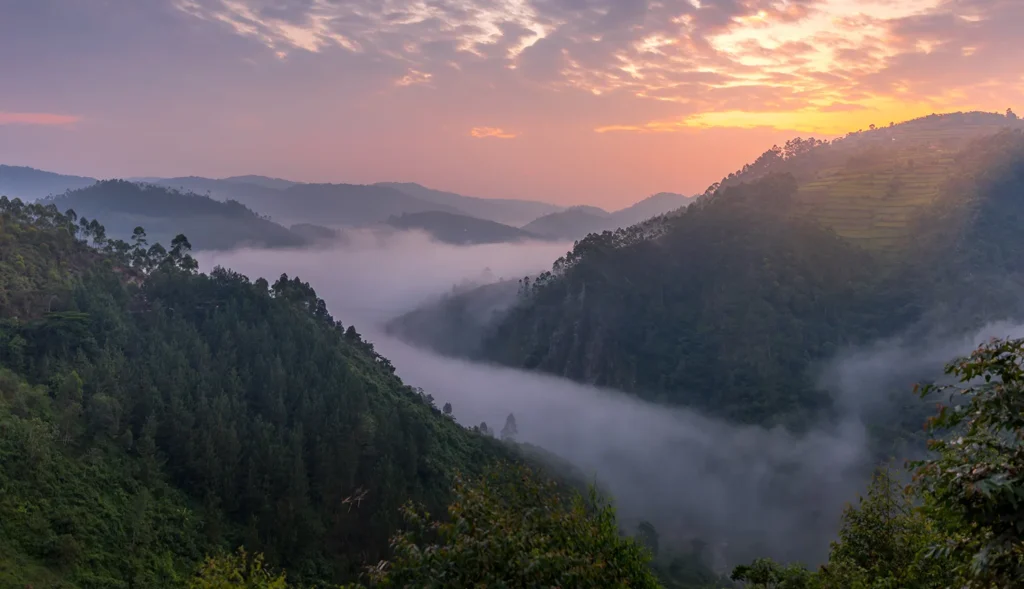
Buhoma is in Kanungu District, on the northern boundary of Bwindi Impenetrable National Park in south-western Uganda. The forest rises steeply behind the village, and the trekking trailheads start close to the park office.
The Kihihi airstrip lies to the north, and the road to the Ishasha sector of Queen Elizabeth National Park continues north-west through Kihihi. Bwindi’s other sectors – Ruhija in the east and Rushaga and Nkuringo in the south – are reached by long drives around the forest.
Nearby destinations
- Bwindi Impenetrable National Park about 10 km in a straight line
- Kihihi about 25 km in a straight line
- Kisoro about 35 km in a straight line
- Ishasha about 40 km in a straight line
- Mgahinga Gorilla National Park about 45 km in a straight line
Road distances are longer and driving times depend on the route and conditions.
Buhoma (Bwindi northern sector access)
-0.97267, 29.60653 · Visitor access point
Open in Google Maps Protected areas cover a large area; the marker shows a park locator or visitor access point, not a single address.
Why Visit
Why Visit Buhoma?
Bwindi’s original trekking sector
Buhoma has several habituated gorilla families and well-established trekking routes.
Lodges at the forest edge
Many lodges are within walking distance or a short drive of the briefing point.
The easy link from Ishasha
Buhoma is the natural next stop after Queen Elizabeth National Park’s southern sector.
Activities beyond gorillas
Waterfall trails, community walks and Batwa experiences fill a second day.
Experiences
Things to Do in Buhoma
Gorilla trekking from Buhoma
Treks start from the Buhoma briefing point; rangers lead small groups to one of the sector’s habituated families.
Waterfall trail
A guided forest walk along streams to waterfalls, good for birds, primates and ferns.
Buhoma community walk
A village walk with local guides covering farming, crafts and daily life near the park.
Cross-forest hike to Nkuringo
A long guided hike through the forest to the southern side of Bwindi, with luggage transferred by road.
Birding at the forest edge
Early mornings around Buhoma are rewarding for forest and edge species.
Buhoma
Wildlife and Natural Attractions
Buhoma shares the wildlife of Bwindi: mountain gorillas, forest monkeys such as black-and-white colobus and L’Hoest’s monkeys, a wealth of birds and butterflies, and the dense montane forest itself. The lower altitude of the northern sector means slightly warmer conditions than Ruhija in the east.
Streams and waterfalls cut through the forest near the village, and the views from lodges over the canopy are part of the experience.
When to Go
Best Time to Visit Buhoma
Gorilla trekking from Buhoma runs throughout the year. The drier months usually bring firmer trails and easier road transfers from Ishasha or Kihihi; the wetter months bring mud and showers but also lush forest and fewer visitors in some weeks.
-
Drier months
Usually June to August and December to February
Firmer trails and reliable road access. Book Buhoma permits early.
-
Wetter months
Usually March to May and September to November
Muddy trails and frequent showers; treks continue.
Month by month
January Usually drier
Usually one of the drier months, with cool mornings and generally firmer forest trails.
A comfortable time to trek; combine with Ishasha for an easy route.
February Usually drier
Typically fairly dry, although showers remain possible in the forest, often in the afternoon.
A comfortable time to trek; combine with Ishasha for an easy route.
March Changeable / transition
The first rains usually begin; showers become more frequent and slopes muddier as the month goes on.
Expect changing weather; carry rain gear on every trek.
April Usually wetter
Often among the wettest months, with muddy trails and slippery steep sections.
Hire a porter and pack gaiters; road transfers may take longer.
May Usually wetter
Rain usually continues, often easing towards the end of the month.
Hire a porter and pack gaiters; road transfers may take longer.
June Usually drier
The mid-year drier season usually begins and trail conditions tend to improve.
A comfortable time to trek; combine with Ishasha for an easy route.
July Usually drier
Generally dry and a popular month; nights at altitude can be cold.
A comfortable time to trek; combine with Ishasha for an easy route.
August Usually drier
Usually dry with occasional showers; a busy month for permits and lodges.
A comfortable time to trek; combine with Ishasha for an easy route.
September Changeable / transition
Showers tend to increase later in the month as the second rains approach.
Expect changing weather; carry rain gear on every trek.
October Usually wetter
The second rainy season is usually under way, with regular showers.
Hire a porter and pack gaiters; road transfers may take longer.
November Usually wetter
Often wet, with heavy afternoon rain on some days and very green landscapes.
Hire a porter and pack gaiters; road transfers may take longer.
December Changeable / transition
Rain usually eases through the month as drier conditions return.
Expect changing weather; carry rain gear on every trek.
Typical seasonal patterns for South-western highlands, based on long-term climate – not a weather forecast. Rain is possible in any month and conditions vary from year to year; check a current forecast shortly before you travel.
Getting There
How to Get to Buhoma
Most travelers reach Buhoma by road from the Ishasha sector of Queen Elizabeth National Park, through Kihihi, or fly to Kihihi airstrip and continue by road to their lodge. The nearest airstrips are typically around an hour or more away by road, depending on conditions.
From Kampala, the overland journey takes a full day or more, so Buhoma is usually reached as part of a longer route.
- From Ishasha
- A popular road link via Kihihi, often a few hours’ drive.
- By light aircraft
- Fly to Kihihi, then continue by road to Buhoma.
- From Kampala
- A full day or more by road; usually broken with other stops.
Accommodation
Where to Stay in Buhoma
Looking for Accommodation in Buhoma?
Our safari specialists can help you choose suitable accommodation for your itinerary.
Practical Tips
Useful Travel Information
- Sector permits
- Your gorilla permit must be for the Buhoma sector if you stay here; permits are not transferable between sectors on the day.
- Arrival time
- Arrive the day before your trek; briefings start early in the morning.
- Fitness and porters
- Treks can be steep; porters are available at the briefing point.
- Clothing
- Waterproof boots, long sleeves, a rain jacket and gloves are recommended.
Explore More
Explore Nearby and Related Destinations
Frequently Asked Questions
Buhoma FAQs
Buhoma is the northern gorilla trekking sector of Bwindi Impenetrable National Park, with a park office, trailheads and lodges at the forest edge.
Yes. Buhoma is one of Bwindi’s four trekking sectors, together with Ruhija, Rushaga and Nkuringo. Permits are issued for a specific sector.
By road from the Ishasha sector of Queen Elizabeth National Park via Kihihi, or by flying to Kihihi airstrip and continuing by road.
Waterfall walks, community and Batwa experiences, birding and the long cross-forest hike to Nkuringo.
Several lodges are close to the forest edge in Buhoma. Any accommodation connected to Buhoma is shown on this page; the main Bwindi page lists properties across all sectors.
Safaris in Uganda
Ready-Made Journeys
Plan a Custom Safari to Buhoma
We can help tailor a Uganda safari around the destinations and experiences that interest you.
Start Planning
Plan Your Uganda Safari
Tell us your travel dates and interests, and our safari specialists will prepare a private Uganda itinerary that includes Buhoma, with suitable accommodation and realistic travel times.
View Uganda Safaris Explore Nearby Destinations View Accommodations Ask for a Quote
