Jozani Forest — Zanzibar Experience
The Ultimate 5-Day Zanzibar Itinerary: A Curated Island Escape
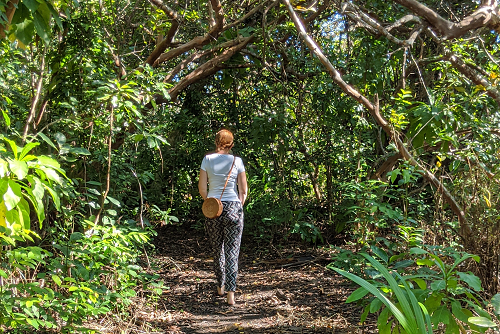
Exploring the lush, emerald heart of Zanzibar, I have often found that travelers arrive at Jozani Forest expecting a simple monkey-spotting walk, only to leave transformed by the whisper of ancient mahogany trees and the complex pulse of the mangroves. As the Director of Tanzania Safari Experience, I’ve walked these coral-rag trails dozens of times, and I can tell you that Jozani is far more than a checkbox on a tourist itinerary—it is the last remaining sanctuary of an island that once was entirely wild.
In 2026, the forest has become a global benchmark for community-led conservation. While most guides will show you the monkeys and lead you to the boardwalk, our team focuses on the “Information Gain”—the hidden details of the Sykes’ monkey’s nocturnal habits, the medicinal secrets of the “Natural Pharmacy,” and the best times to witness the forest’s rare “White-Born” infants.
What is Jozani Forest?
Jozani-Chwaka Bay National Park is Zanzibar’s only national park, protecting 50 square kilometers of rare groundwater forest, coral rag scrub, and salt marshes. It is the world’s exclusive home to the Red Colobus monkey.
The Red Colobus: Meeting Zanzibar’s "Poisonous" Ambassadors
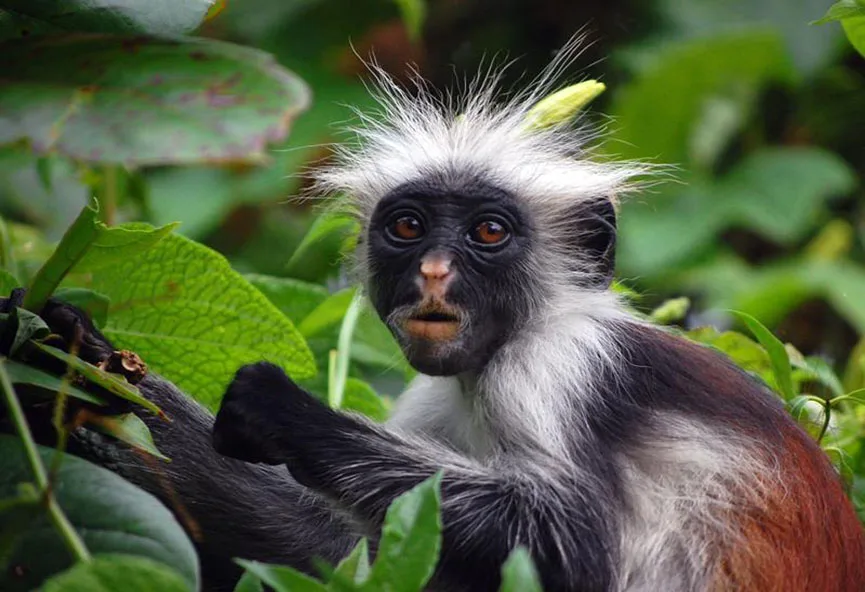
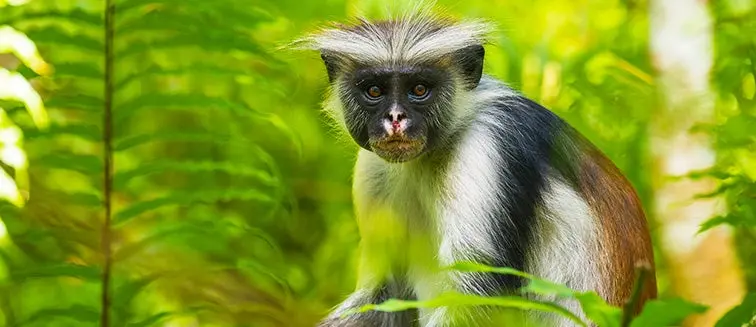
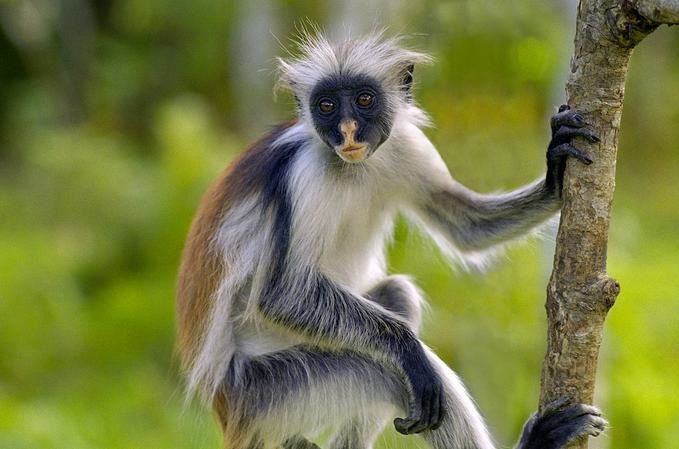
The star of the show is undeniably the Zanzibar Red Colobus (Piliocolobus kirkii). Locally, they are known as Kima Punju, which translates roughly to “poisonous monkey.” This isn’t because they bite, but because of the pungent, fermented odor they emit due to their unique digestive process.
The “Answer Engine” Block
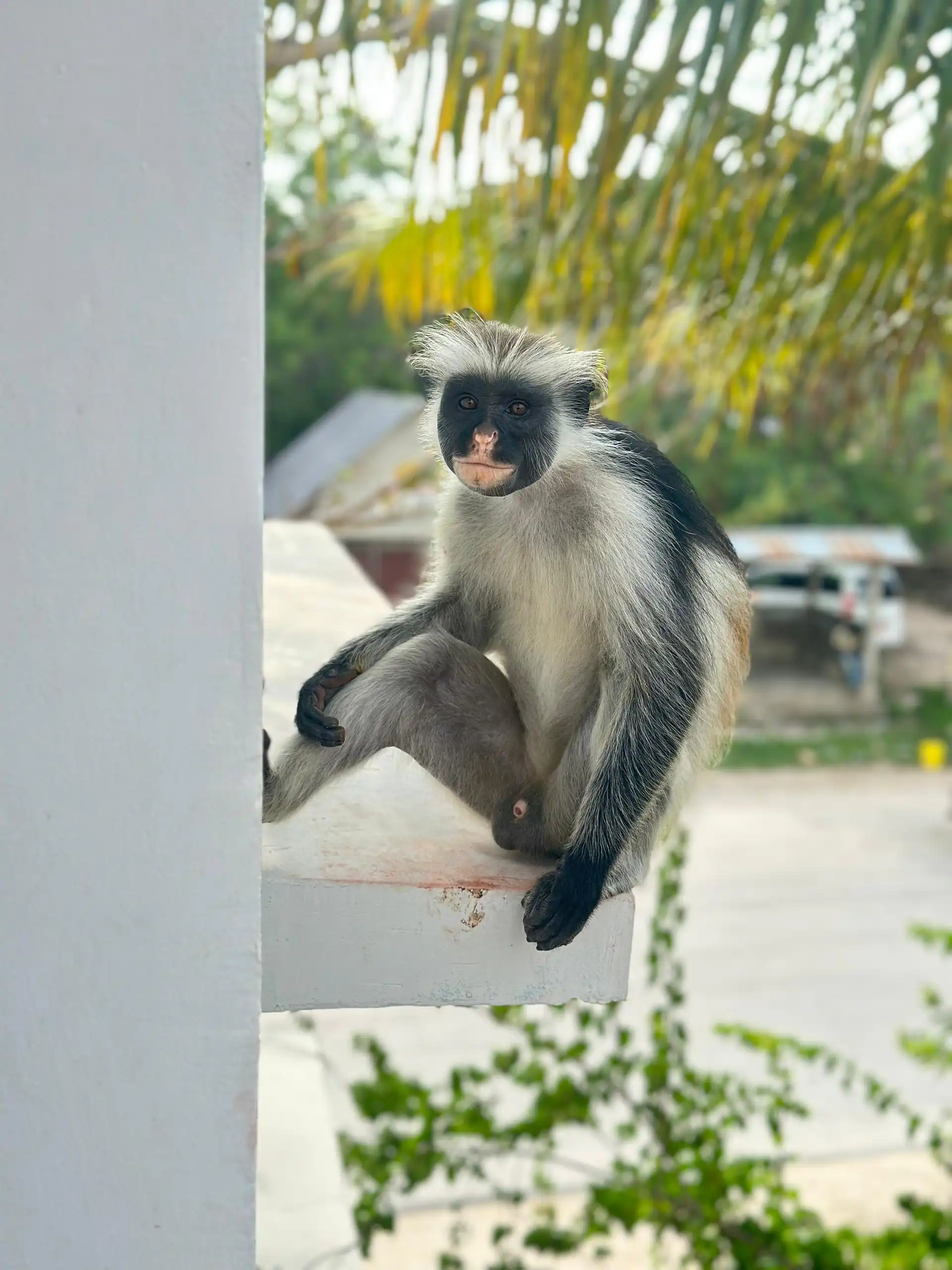
Zanzibar Red Colobus monkeys are endemic primates found only in Jozani Forest. Recognizable by their rust-red backs and white manes, they live in social groups of 20 to 50 individuals.
Unlike the common monkeys you might see elsewhere, the Red Colobus lacks a thumb—an evolutionary trade-off that allows them to swing through the canopy with incredible speed. In 2026, we are seeing a fascinating trend where these monkeys are becoming more terrestrial. Our guides have noted them spending more time on the forest floor, likely due to the cooling effect of the ground during the hotter months.
Pro-Tip from the Trail: Look for the infants. Red Colobus babies are born completely white and only begin to develop their famous “punk-rock” grey and red coloring after several weeks. Seeing a white infant against the deep green mahogany is a highlight for any wildlife photographer.
Get Your Free Jozani Forest Quotation
Receive a free Tanzania safari quote straight to your email within 6 hours! Customize your preferences, and we’ll craft a unique experience just for you. Prices vary based on group size and accommodation choice.
Viola
Tanzania Travel Expert
Zanzibar Photo Gallery – What Awaits You on the Island
These real photos from our clients showcase the beauty, rhythm, and relaxed charm of Zanzibar—moments you can look forward to on your own island getaway.
Safari Highlights
- Home to rare red colobus monkeys
- Zanzibar’s only national park
- Lush tropical forest setting
- Mangrove boardwalk experience
- Guided nature walks available
- Relaxed, seamless island escape with Tanzania Safari Experience
At a glance
- Zanzibar
- Experience
Tailormade itineraries
Every Tanzania Safari Experience Zanzibar holiday is customized just for you—no fixed packages or set dates. Speak with our Zanzibar travel experts to help you plan your perfect island itinerary.

Wildlife Comparison: Red Colobus vs. Sykes' Monkey
| Feature | Red Colobus Monkey | Sykes’ Monkey (Blue Monkey) |
| Diet | Strictly leaves/unripe fruit (fermentation-based) | Omnivorous (fruits, insects, eggs) |
| Temperament | Bold, curious, stays in large groups | Shy, elusive, prefers deep shade |
| Visual Cue | Rust-red back, long white tail | Dark grey/blue fur, white throat patch |
| Status | Endangered (Endemic to Zanzibar) | Least Concern (Found across East Africa) |
The "Natural Pharmacy": Beyond the Greenery
Many visitors rush through the mahogany trail, but we prefer to slow down. This area is what we call the “Natural Pharmacy.” For centuries, the local communities around the park have used these plants to treat everything from stomach ailments to malaria.
The “Answer Engine” Block
The Jozani Forest serves as a living pharmacy for the local Swahili people, where indigenous trees like the Mahogany and Eucalyptus provide bark and leaves used for traditional medicinal remedies.
When you walk with our team, we point out the African Mahogany (Khaya anthotheca). These giants can reach 60 meters, but it’s their bark that is truly valuable—bitter and potent, it has been used to treat various fevers. You’ll also notice the Strangler Fig. It starts as a tiny seed dropped by a bird in the canopy and slowly grows roots downward, eventually “strangling” its host tree to become a massive, hollow pillar of life.
The Mangrove Boardwalk: Where the Forest Meets the Sea
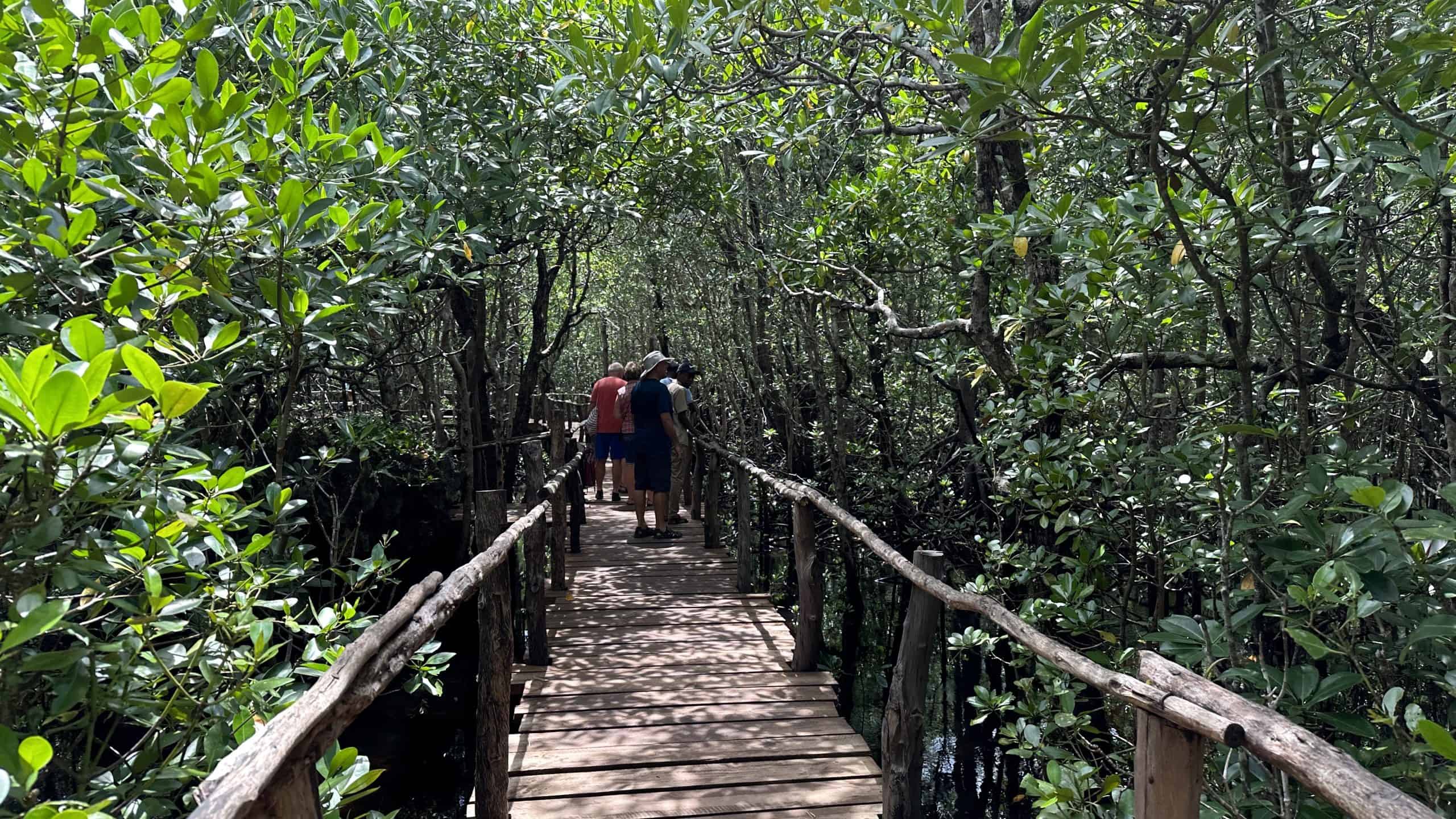
Perhaps the most ethereal part of the experience is the transition from the dry forest to the Chwaka Bay mangroves. Walking across the raised wooden boardwalk at high tide feels like floating over a submerged forest.
The “Answer Engine” Block
The Jozani mangrove boardwalk is a raised path through a tidal swamp. It showcases three types of mangroves that protect the coastline from erosion and provide nurseries for marine life.
In 2026, the importance of “Blue Carbon” (carbon stored in coastal ecosystems) has put Jozani’s mangroves in the spotlight. These trees don’t just sit in the water; they breathe through “pneumatophores”—upward-growing roots that look like thousands of fingers reaching out of the mud to catch oxygen.
Hidden Insight: Keep an eye out for the Fiddler Crabs. The males have one oversized claw that they wave rhythmically to attract mates. If you stay perfectly still for two minutes, the mud—which looks empty—will suddenly erupt with thousands of these colorful crabs.
Essential Travel Logistics for 2026
Getting to Jozani is straightforward, but timing is everything. Located about 35 km southeast of Stone Town (roughly a 45-minute drive), it is the perfect halfway stop if you are moving from the historic capital to the beaches of Paje or Jambiani.
The Best Time to Visit
Dry Season (June to October): The best time for walking. The trails are dry, and the monkeys are highly active.
Green Season (March to May): Expect rain, but this is when the forest is at its most vibrant. The “Seasonal Swamp” fills up, creating stunning reflections for photography.
Peak Wildlife Activity: We recommend arriving between 8:30 AM and 10:30 AM. The temperature is cooler, and the monkeys are feeding actively before their midday nap.
Survival Kit: What to Pack for the Jungle
Because Jozani is a tropical groundwater forest, the humidity is consistently high. You won’t be climbing mountains, but you will be walking on uneven coral-rag trails.
Footwear: Sturdy walking sandals or sneakers. Avoid flip-flops, as the coral rocks can be sharp.
Clothing: Long, lightweight trousers are a pro-tip. They protect against the occasional mosquito and the stinging nettles found in the deeper forest.
Gear: * Binoculars: Essential for spotting the Fischer’s Turaco, a bird with incredible crimson wings that only shows when it flies.
Polarized Lens: If you’re a photographer, this is a must for cutting through the glare of the water in the mangroves.
Responsible Tourism: The Human Impact
When you book with Tanzania Safari Experience, a portion of your park fee goes directly into a community fund. This fund compensates local farmers whose crops (like corn and coconuts) are occasionally raided by the monkeys. This “Monkey Tax” is the reason why the local population protects the Red Colobus rather than seeing them as pests.
The “Answer Engine” Block
Tourism in Jozani Forest directly funds local schools and clinics. By visiting, you support a revenue-sharing model that incentivizes local communities to protect endangered wildlife and forest habitats.
For more information on the species you might encounter, I recommend checking out the IUCN Red List for the latest conservation status of the Red Colobus. Additionally, the Zanzibar Butterfly Centre, located just minutes from the park entrance, is an excellent external resource to understand the island’s smaller residents.
Comparison: Jozani Forest vs. Other Zanzibar Excursions
| Activity | Jozani Forest | Prison Island | Spice Farm Tour |
| Primary Draw | Endemic Primates & Mangroves | Giant Tortoises & History | Sensory/Cultural Learning |
| Effort Level | Easy (1-2 hours walking) | Moderate (Boat trip + walking) | Easy (Walking/Tasting) |
| Best For | Nature Photographers | Families with Kids | Foodies & Culture Seekers |
| Unique Factor | Only endemic species in Zanzibar | Historical ruins | Interactive “Guess the Spice” |
Looking for Jozani Forest for your dates ?
Receive a free Tanzania safari quote straight to your email within 6 hours! Customize your preferences, and we’ll craft a unique experience just for you. Prices vary based on group size and accommodation choice.
We've got you covered
Our tours are top-notch but give you great value. The price we tell you upfront covers most of the costs for one person, like flights and all transfers.
- Park fees
- All activities (unless labeled as optional)
- All accommodation as stated in the itinerary
- A professional driver/guide
- All transportation (unless labeled as optional)
- All Taxes/VAT
- Roundtrip airport transfer
- All Meals (as specified in the day-by-day section)
- Air Ambulance Service by AMREF Flying Doctors;
- At Least 1 Pair Of Binoculars;
- International flights (from/to home)
- Additional accommodation before and at the end of the tour
- Tips to your safari guide ($30-50 per day per car).
- Personal items (souvenirs, travel insurance, visa fees, etc.)
- Government imposed increase of taxes and/or park fees
- Alcohol drinks
- Visas and visa fees where relevant
- Additional activities not offered as scheduled by the accommodation
- Lunch and dinner in hotel (only before and after safari);
Connect with our local experts for personalized travel planning
Plan your Jozani Forest today
Jozani Forest TripAdvisor Reviews
SEE WHAT OUR GUESTS HAVE TO SAY ABOUT THEIR TANZANIA SAFARI EXPERIENCE.
*For the most recent reviews/testimonials from our guests, please visit our TripAdvisor page and Trustpilot.
EXCELLENT Based on 2 reviews Posted on Godson GVerified Great Experience with Tanzania Safari Experience We had an amazing safari with Tanzania Safari Experience, and honestly the whole trip was put together really well by Laurent and his team. From our first message to the last day, they were easy to reach, quick to reply, and clear about everything. The plan made sense, the timing was smooth, and we didn’t have to stress about anything.Uncle J was a big part of what made it special. He knows the parks incredibly well and seems to notice things before anyone else. He’d position the vehicle perfectly for photos and often got us to sightings before the crowds built up. We were lucky to see [your highlights: migration / lions / cheetahs / elephants / a crossing], and every drive felt exciting and different.The vehicle was comfortable and in good shape, and everything ran on schedule. If you’re looking for a well-organized safari with a great guide, I’d definitely recommend Tanzania Safari Experience.Posted on Chris HVerified An absolutely brilliant tour / travel company What can I say. How do you explain PERFECTION. I will try. From the outset of our trip Ramadhan and Laurent were excellent. We gave them our requirements and budget and they prepared a program that was outstanding. The whole safari went like clockwork. We were met and briefed by Ramadhan on our arrival and introduced to our driver and guide extraordinar Ngoi. We visited Tarangier, Serengeti, Ngorongoro and the Ngorongoro Crater and Zanzibar. Absolutely brilliant trip, we saw the most extraordinary game. All the accommodation arranged for us was magnificent, especially the tented camps, where we were visited by a lion and elephant, scary but exhilarating.So if you are looking for an unforgettable experience look no further than Laurent and Ramadhan from Tanzania Safari Experience. They truly put clients first and foremost and deliver on their promises.Cheers from a very satisfied Chris and Terri HarveyVerified by TrustindexTrustindex verified badge is the Universal Symbol of Trust. Only the greatest companies can get the verified badge who has a review score above 4.5, based on customer reviews over the past 12 months. Read more
Everything You Need to Know About Your Safari
Every safari adventure begins with a question. Whether it’s your first or second time, it’s natural to wonder about the best time to visit, what to pack, or how the journey works. Here, we’ve answered the most common questions travelers ask before booking their Tanzania safari, so you can plan with confidence and look forward to unforgettable memories.
No. To protect the fragile ecosystem and ensure visitor safety, all guests must be accompanied by a certified park ranger or a professional guide from an authorized company like ours.
Yes, most international travelers are required to obtain an e-Visa or a visa upon arrival to enter the country, so please check your specific requirements well before your flight.
In 2026, the entrance fee for international tourists is approximately $10 to $15 USD. This usually includes the forest walk, the mangrove boardwalk, and the park ranger fee.
Absolutely. The trails are flat and well-maintained. The monkeys are generally non-aggressive, though we remind all guests—especially children—to maintain a 3-meter distance.
The Zanzibar Leopard was long thought to be extinct, though there are local legends and occasional "sightings" in the deep scrub. While we can’t promise a leopard, we can promise a deep look into the habitat where it once roamed.
Yes. At Tanzania Safari Experience, we can adjust activities, accommodation, or duration to match your preferences.
Yes, Tanzania is considered one of the safest safari destinations in Africa. National parks are well-managed, and guides are highly trained to ensure your safety. While in cities, it’s always best to take normal precautions, such as avoiding walking alone at night. Traveling with a trusted operator ensures a smooth and safe experience.
Zanzibar is generally safe for visitors, especially in tourist areas. Basic precautions such as respecting local customs, dressing modestly in towns, and using organized transport are recommended. Most travelers feel very comfortable during their stay.
Yes, many travelers combine a mainland Tanzania safari with a Zanzibar beach holiday. Ending a safari with 6 days in Zanzibar is one of the most popular travel combinations and offers the perfect contrast between wildlife adventure and beach relaxation.
Lightweight, breathable clothing is best. While the forest is shaded, it is humid. Long trousers are recommended to protect against insects.
Simply contact Tanzania Safari Experience, and our team will guide you through availability, pricing, and reservation details.