


Paje Beach isn’t just a destination; it’s a rhythm. While most travelers flock to the manicured shores of Nungwi, those who crave raw energy, world-class kitesurfing, and a authentic village pulse find their way to this stretch of white sand on Zanzibar’s southeast coast.
At Tanzania Safari Experience, we’ve spent years navigating the changing tides of the archipelago. We know that Paje is polarizing—it is windy, it is tidal, and it is unapologetically vibrant. This guide is designed to move beyond the postcards and give you the ground-level reality of life in Paje in 2026.
Why Paje Beach is Zanzibar’s Hub of Energy
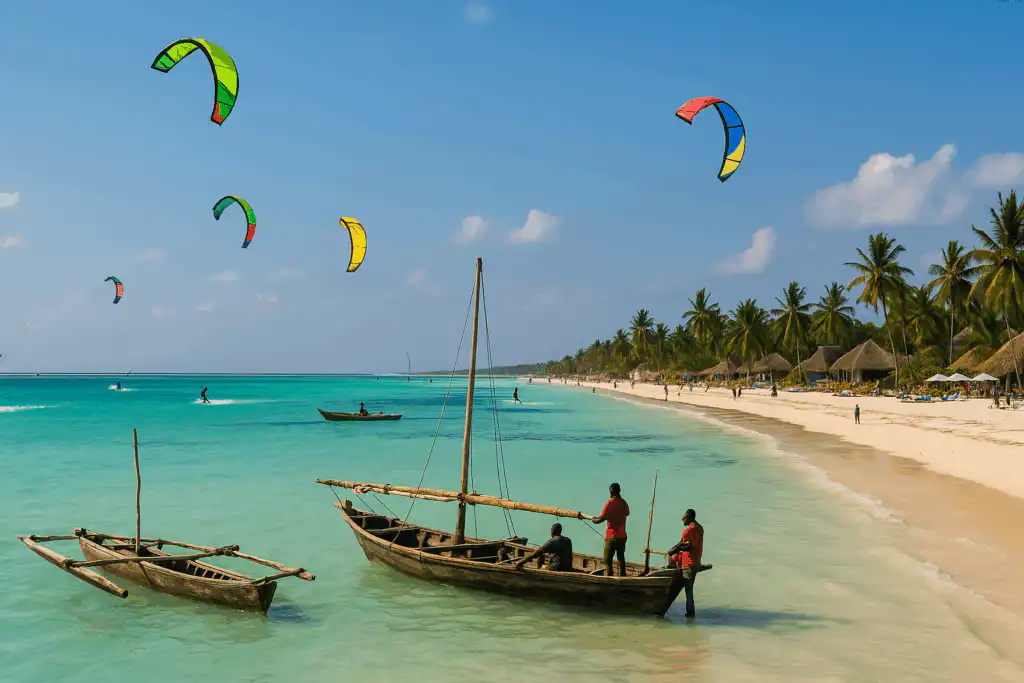
Paje Beach is the ultimate blend of adventure and relaxation, defined by its shallow turquoise lagoons, consistent trade winds for kitesurfing, and a bohemian social scene that thrives year-round.
The Local Secret: Most guides tell you to visit at low tide for the views. I recommend being on the beach exactly 20 minutes after the tide begins to turn. The way the water rushes back over the sand ripples creates a mirror effect that is unparalleled for photography.
The Geography of the Southeast Coast
Unlike the north, Paje is defined by a massive lagoon protected by a barrier reef about 2 kilometers offshore. At low tide, the ocean retreats so far that the landscape transforms into a lunar-like expanse of white sand and seaweed farms. At high tide, it becomes a playground for water sports.
RELATED ARTICLE: Tanzania Safaris for Solo Female Travelers
The Ultimate Paje Beach Activity Guide
Paje offers a diverse range of activities, from high-octane kitesurfing in the lagoon to serene sunrise walks and immersive cultural visits to local seaweed cooperatives.
1. Kitesurfing: The Crown Jewel
Paje is globally recognized as a premier kitesurfing destination. The “Kaskazi” (north) and “Kusi” (south) winds provide reliable conditions for nearly nine months of the year.
-
Best Months: June to September and December to February.
-
Pro-Tip: If you are a beginner, head to the “Flat Water” spots near the reef during mid-tide. The water is chest-deep and crystal clear, making it much easier to recover your board than in the choppy shore break.
2. Seaweed Farming: A Cultural Journey
One of the most unique sights in Paje is the “seaweed mamas.” At low tide, local women tend to their underwater gardens.
-
Insight: Visit the Paje Seaweed Center. It’s a social enterprise where you can see how seaweed is transformed into high-end soaps and oils. Try the seaweed smoothie—it’s surprisingly refreshing and packed with minerals.
3. The Nightlife Pulse
Paje is the undisputed nightlife capital of the island.
-
Sunday Night: Must-go to Mustapha’s Place.
-
Friday Night: B4 or Vuvuzela for beach parties that last until sunrise.
Comparing the Tides: What to Expect
Understanding the tidal cycle is crucial for enjoying Paje. Unlike the “swimmable all day” beaches of the North, Paje requires a bit of timing.
| Feature | Low Tide | High Tide |
| Swimming | Difficult; water is very shallow/far out | Perfect; deep enough for laps near shore |
| Walking | Incredible; you can walk to the reef | Limited to the upper sandy bank |
| Visuals | Sandbars, seaweed farms, tide pools | Deep turquoise, white-capped waves |
| Activity | Exploring tide pools, reef walking | Kitesurfing, swimming, boat trips |
Where to Eat: From Street Food to Fine Dining
The culinary scene in Paje is a mix of traditional Swahili spice and international fusion, catering to the “digital nomad” and “backpacker-luxury” crowds.
-
Mr. Kahawa: My personal favorite for a morning brew. Their deck overlooks the lagoon, and their “Buddha Bowls” are the best healthy fuel for a day on the water.
-
Luwari Beach Bar: For the most authentic Swahili fish curry. Ask for the “catch of the day”—it’s usually snapper or kingfish caught just a few hours prior.
-
The Rock Restaurant (Nearby): While located in Michamvi (15 mins away), it’s a Paje staple. Local Insight: Don’t just go for dinner; go for a sundowner drink. The view is better when the sun is still up, and it’s much cheaper than a full meal.
Accommodation: Where to Stay in Paje
Paje offers everything from $20-a-night hostels to $800-a-night private villas. Choosing the right spot depends on your tolerance for wind and noise.
Luxury: Zanzibar White Sand Luxury Villas & Spa
If you want total privacy and Relais & Châteaux standards, this is it. Each villa has its own pool and a massive plot of land. It’s located slightly south of the main village hub, offering peace and quiet.
Boutique & Social: B4 Boutique / Mr. Kahawa Loft
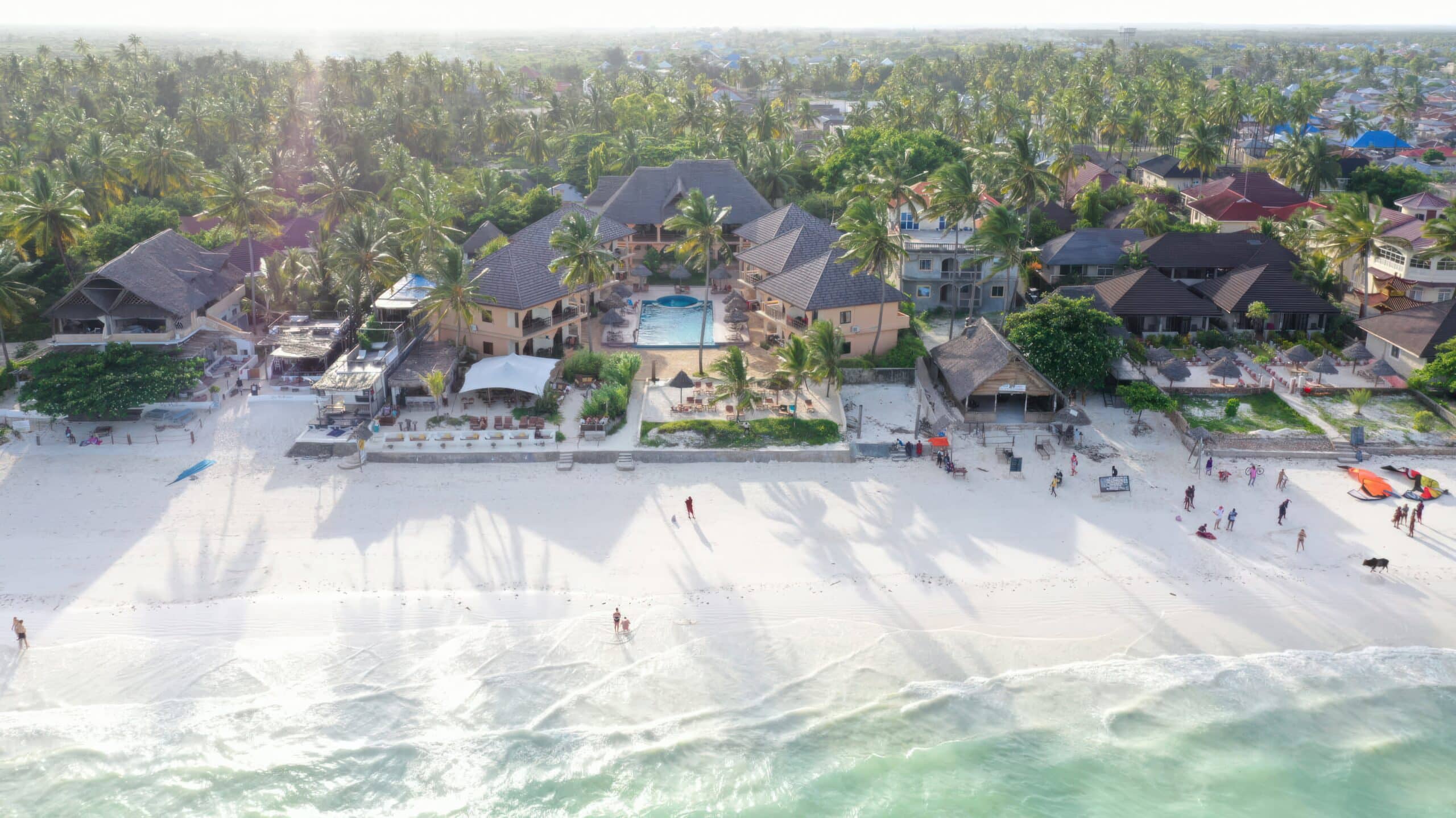
Perfect for those who want to be in the heart of the action. You’ll be steps away from the best bars and the kitesurfing schools.
Budget: New Teddy’s on the Beach
A classic Paje institution. It has a great pool, a relaxed “barefoot” vibe, and is perfect for solo travelers looking to meet people.
RELATED ARTICLE: THE 5 BEST Heritage Hotels in Zanzibar Island
Practical Logistics: Getting Around and Staying Safe
Paje is easily accessible from Stone Town or the airport (ZNZ), typically a 60 to 90-minute drive.
Transportation
-
Private Taxi: Usually costs between $35 – $50.
-
Dala-Dala: For the adventurous. Route 309 or 340 will get you there for a few thousand Shillings, but be prepared for a crowded, bumpy ride.
-
Scooter Rental: I highly recommend renting a scooter to explore the nearby Michamvi Peninsula and Jambiani. It costs about $25/day. Ensure you have a Zanzibar driving permit (your rental agency can arrange this for about $10).
Paje vs. Jambiani: The Great Debate
Travelers often wonder if they should stay in Paje or its neighbor, Jambiani.
-
Paje is for the social butterfly. It’s louder, faster, has more shops, and the “action” is always on your doorstep.
-
Jambiani is for the soul-seeker. It’s quieter, more spread out, and feels more like a traditional village.
Our Team’s Recommendation: Stay in Paje for the convenience and activities, but take a 10-minute bike ride to Jambiani for a quiet lunch at Blue Reef Sport & Fishing Lodge.
Seasonal Weather Guide for Paje
Zanzibar’s weather is dictated by the monsoon winds, which significantly impact visibility for diving and the quality of the beach.
-
The Dry Season (June – October): The best time to visit. Cool breezes, low humidity, and perfect kite conditions.
-
The Short Rains (November – December): Brief afternoon showers. Still very pleasant and less crowded.
-
The Hot Season (January – March): Expect high humidity and soaring temperatures. Great for diving as the sea is calm.
-
The Long Rains (April – May): Many hotels in Paje close during this time. It can rain for days at a time.
Essential Travel Tips for Paje
To make the most of your trip, keep these expert tips in mind:
-
Cash is King: While more places are accepting cards, the ATMs in Paje are notoriously temperamental. Always carry enough Tanzanian Shillings (TZS) for small purchases.
-
Reef Shoes are Non-Negotiable: If you plan on walking out to the reef at low tide, watch out for sea urchins. They are everywhere in the grass patches.
-
Dress Code: While Paje is a “bikini-friendly” beach zone, remember that Zanzibar is a conservative Muslim society. When walking through Paje village, please cover your shoulders and knees out of respect for the local community.
Day Trips from Paje Beach
While the beach is the main draw, Paje is a great base for exploring the southern half of the island.
Jozani Chwaka Bay National Park
Only 20 minutes away, this is the only place in the world to see the Red Colobus Monkey.
-
Expert Tip: Go early (8:30 AM) to avoid the tour bus crowds and see the monkeys when they are most active.
Mtende Beach
A 30-minute drive south leads you to one of the most dramatic “hidden” beaches on the island. It’s tucked between two massive coral cliffs and is virtually empty compared to Paje.
Planning Your Paje Itinerary
For a 3-day stay in Paje, we suggest this balance of rest and play:
-
Day 1: Arrive, lunch at Mr. Kahawa, afternoon kitesurfing lesson (or watching), and dinner at any beach BBQ.
-
Day 2: Early morning bike ride to Jambiani, Seaweed Center tour in the afternoon, and sunset drinks at Anantara.
-
Day 3: Morning trip to Jozani Forest, afternoon relaxing by the pool, and a late-night party at Vuvuzela.
Sustainability in Paje
The rapid growth of Paje has put pressure on the local environment. We encourage all visitors to:
-
Avoid single-use plastics (tap water isn’t drinkable, but most hotels offer refills).
-
Support local artisans over mass-produced souvenirs.
-
Never touch or step on the coral reef.
Frequently Asked Questions (FAQ)
Is Paje Beach safe at night?
Paje is generally very safe, but like any tourist hub, petty theft can occur. Stick to the main beach paths, avoid walking alone in unlit village areas late at night, and use a licensed taxi for longer distances.
Can you swim in Paje at low tide?
Not really. At low tide, the water is only ankle to knee-deep for hundreds of meters. For proper swimming, you must wait for high tide or walk out a significant distance toward the reef (with reef shoes!).
Is Paje better than Nungwi?
It depends on your vibe. Nungwi is better for traditional swimming and sunset cruises. Paje is better for water sports, a younger social scene, and a more “authentic” island feel.
How much does a kitesurfing lesson cost?
A 3-hour beginner discovery lesson typically starts around $100 – $150. Full certification courses (9-12 hours) range from $400 – $600.
Are there ATMs in Paje?
Yes, there are now a few ATMs in Paje near the main road junction. However, they often run out of cash or don’t accept certain international cards, so bring a backup supply of USD or TZS.
The Final Verdict
Paje Beach is the heartbeat of Zanzibar’s southeast coast. It isn’t a place for those who want a static, resort-only vacation. It is a place for the curious, the active, and those who want to feel the energy of the Indian Ocean. From the soaring kites to the rhythmic work of the seaweed farmers, Paje offers a depth of experience that stays with you long after the sand has been washed from your shoes.
For more information on planning your island escape, check out our guide to the Best Time to Visit Zanzibar or explore our Tanzania Safari and Zanzibar Packages. For further travel advisories, consult the Official Zanzibar Tourism Board or the Tanzania National Parks website.
At Tanzania Safari Experience, we pride ourselves on creating itineraries that bridge the gap between luxury and authenticity. Whether you’re here to conquer the winds or simply watch the tide roll in, we ensure your Zanzibari journey is seamless and unforgettable.