
What month is the wildebeest migration?
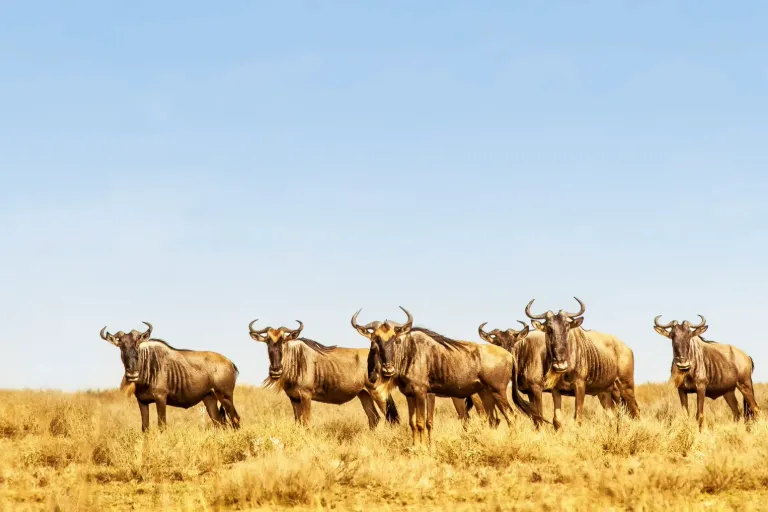
The Great Migration is not a single event but a 1,200-mile circular odyssey that never truly stops. If you are asking what month is the wildebeest migration, the answer depends entirely on which “chapter” of the story you want to witness—from the explosive life of the calving season to the life-or-death drama of the river crossings.
At Tanzania Safari Experience, we have tracked these herds for decades. We know that while the animals follow the rain, not the calendar, there are specific windows that offer the highest probability of seeing the spectacle you’ve dreamed of.
The Short Answer: When to See the Migration
The Great Migration occurs year-round. However, for the most dramatic river crossings, August and September are the best months. For the calving season, where 8,000 babies are born daily, February is the peak month.
A Month-by-Month Guide to the Greatest Show on Earth
To plan your journey, you must understand where the herds are likely to be during your specific travel dates. 2026 is shaping up to be a classic year for rainfall, meaning the traditional cycles are holding strong.
January to March: The Calving Season
During these months, the herds settle on the short-grass plains of the Southern Serengeti and the Ndutu region. This is a time of abundance and high-stakes predator action.
The Answer Engine: Best for New Life
From January to March, the migration is concentrated in the Southern Serengeti and Ndutu. February is the peak calving month, attracting immense predator activity as 500,000 calves are born.
-
The Experience: Imagine standing in a sea of over a million animals. The grass is emerald green, and the air is filled with the calls of newborns.
-
Pro-Tip: Most travelers head to the central Serengeti, but the real magic happens in the Ndutu Conservation Area. Because this area allows off-road driving, our team can take you right to the heart of a “kill” or a birth, providing a front-row seat you won’t get in the main park.
-
What to Pack: Light layers and high-quality binoculars. The southern plains are wide open, and the “action” often happens just a few hundred yards away.
RELATED ARTICLE: Is Kenya or Tanzania better for Great Migration?
April to May: The Trek Begins
As the southern plains dry out, the herds move North and West. This is the “Green Season,” characterized by dramatic afternoon thunderstorms and lush landscapes.
The Answer Engine: Best for Solitude
In April and May, the herds move through the Central Serengeti (Seronera) toward the Western Corridor. This is the quietest time for tourism, offering lush scenery and lower lodge rates.
-
The Experience: This is for the traveler who hates crowds. You may find yourself the only vehicle watching a column of wildebeest several miles long.
-
Pro-Tip: Focus on the Moru Kopjes. These ancient rock formations are not only beautiful but are the best place to spot the elusive Black Rhino, who often watch the migration pass by from their rocky perches.
June to July: The Western Corridor & Grumeti River
The herds push into the Western Serengeti. This is where they encounter their first major water obstacle: the Grumeti River.
The Answer Engine: The First Crossings
June and July see the migration enter the Western Corridor. The herds face the crocodile-infested Grumeti River, offering a dramatic, less-crowded alternative to the more famous Mara River crossings later.
The Great River Debate: Grumeti vs. Mara
While both rivers offer incredible drama, the “vibe” of the safari is completely different. Use this comparison to decide which trek fits your style.
| Feature | Grumeti River (June/July) | Mara River (Aug/Sept) |
| Crowd Level | Low to Moderate: A private, exclusive feel. | High: Expect many vehicles at the main crossing points. |
| Drama Scale | Intense but localized: Smaller herds, but more intimate sightings. | Epic & Thundering: Massive, chaotic “mega-herds” in the thousands. |
| Crocodile Action | Giant Nile Crocs: Known for some of the largest, oldest crocodiles in the park. | Numbers Game: More frequent “snaps” due to the sheer volume of animals. |
| Accessibility | Remote: Requires staying in specific Western Corridor camps. | Accessible: Multiple lodge options in the North and nearby Mara. |
| Expert Take | Best for photographers seeking “clean” shots without other cars. | Best for those who want the “National Geographic” bucket-list moment. |
Pro-Tip for 2026
If you are visiting during the Mara River season (August/September), we recommend heading to the riverbanks as early as 6:30 AM. While the crossings often happen in the heat of midday, securing a prime “hidden” viewing spot before the midday rush from the larger lodges is key to getting those unobstructed photos.
August to September: The Iconic Mara River Crossings
This is the “Holy Grail” of safari. The herds reach the Northern Serengeti and begin crossing the Mara River into Kenya’s Masai Mara.
The Answer Engine: Peak Drama
August and September are the best months for the Mara River crossings. This is the peak of the dry season, and herds cross back and forth daily in a desperate search for grass.
-
The Experience: Total tension. You might sit by the river for four hours in silence, only for one brave zebra to plunge in, triggering a chaotic, dust-filled stampede of ten thousand animals.
-
Pro-Tip: Don’t just watch the river. Our guides often head to the Lamai Wedge. This triangular piece of land between the river and the Kenya border often holds massive “mega-herds” that stay put for weeks, providing incredible photography opportunities away from the main river-crossing traffic.
October to December: The Return Journey
As the “short rains” begin in the south, the herds sense the moisture and begin their rapid trek back down the eastern side of the Serengeti.
The Answer Engine: The Fast Trek
From October to December, the migration moves south through the Eastern Serengeti (Lobo and Namiri Plains). By late December, the herds arrive back in the Southern Serengeti to start the cycle again.
Essential Travel Advice
If you are planning your trip for 2026, there are three things you should know that you won’t find in a standard guidebook:
-
The Zebra Factor: Don’t just watch the wildebeest. Zebras are actually the “intellectuals” of the migration. They have better memories and often lead the way to water. If you see zebras moving toward the river, get your camera ready—the wildebeest will follow.
-
The Sound of the Migration: Most people talk about the sight, but the sound is what haunts you. It is a constant, low-frequency hum of thousands of animals grunting. It sounds like a distant stadium crowd that never stops cheering.
-
The “Double Crossing” Myth: People think the animals cross into Kenya and stay there. In reality, they cross back and forth across the Mara River multiple times a week based on where the rain falls. You can often see better crossings from the Tanzanian side (Kogatende) than from the Kenyan side.
Local Insight: “Many guests ask for the ‘exact’ date of the river crossing. Nature doesn’t work on a schedule. We once waited three days for a crossing that never happened, only to drive five minutes down the road and find 50,000 animals crossing at a point no one had used in years. Flexibility is the key to a Tier-1 experience.” — Lead Guide, Tanzania Safari Experience
Frequently Asked Questions
Can I see the migration in December?
Yes. In December, the herds are typically moving through the Eastern Serengeti and arriving in the Southern plains (Ndutu) to prepare for the calving season. It is a beautiful, “underrated” time to visit.
Is the migration only in the Serengeti?
The migration takes place within the Serengeti ecosystem, which includes the Serengeti National Park, the Ngorongoro Conservation Area, and the Grumeti Reserve in Tanzania, as well as the Masai Mara in Kenya.
Which is better: Calving or River Crossings?
This is a personal preference. Calving (Feb) offers more “cute” moments and high-speed predator hunts. River crossings (Aug/Sept) offer more raw drama and life-or-death tension.
Do I need to book a year in advance?
For the peak river crossing months (July–September), yes. The best-located mobile camps, which move with the herds, often sell out 10–12 months in advance.
Is it safe to see the migration with children?
Absolutely. We specialize in family safaris. However, we recommend children be at least 6 years old to truly enjoy the longer game drives required to find the herds.
Final Verdict
The Great Migration is a living, breathing entity. While August and September are the most famous months for a reason, every month offers a unique perspective on this survival story.
At Tanzania Safari Experience, we don’t just “find” the herds; we understand their rhythm. We use mobile camps that move seasonally, ensuring you are always exactly where you need to be. Whether you want the thundering hooves of the Mara River or the quiet, golden light of the Ndutu calving season, we ensure your journey is as authentic as the wild itself.
