


Standard camp
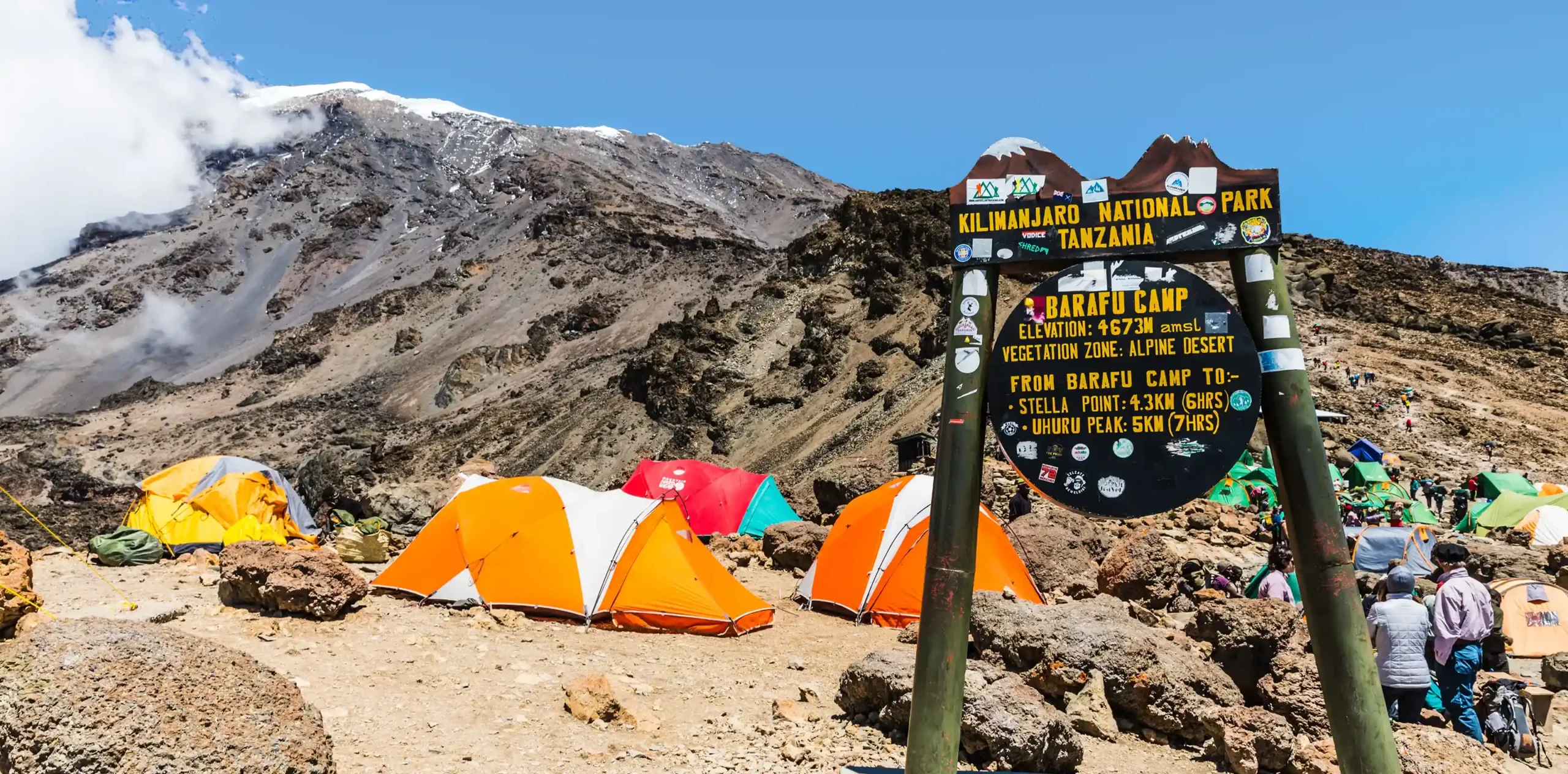
Barafu Camp
Also known as Barafu Hut, Barafu Base Camp
- Approximate altitude
- About 4,640–4,673 m (15,223–15,331 ft)
- Vegetation zone
- Alpine desert
- Accommodation
- Tented camping
- Side of the mountain
- South-east
Overview
Barafu Camp is the high camp and summit base for the Machame, Lemosho, Shira and Umbwe routes. Climbers usually arrive around midday, rest and eat early, then set off for the summit around midnight.
Barafu means "ice" in Swahili – a fitting name for an exposed, rocky ridge where nights are bitterly cold.

Location and trail
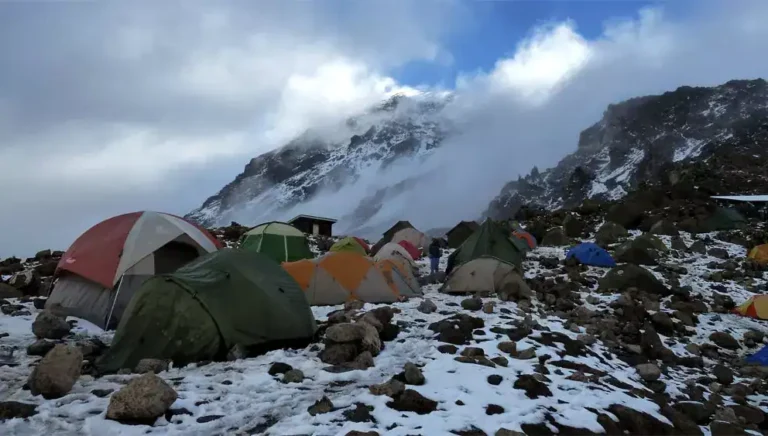
The camp is strung along a rocky ridge on Kibo's south-eastern side at roughly 4,640–4,673 m, in the alpine desert. There is little vegetation; the ground is rock and scree, with tents pitched on terraced platforms.
The summit route climbs steeply from here to Stella Point on the crater rim (about 5,750 m) and then along the rim to Uhuru Peak.
What to expect
A stark, windswept place with views of Mawenzi Peak to the east. The terrain around the tents is uneven and rocky, so take care moving around, especially at night.
Time here is short: rest, a carbohydrate-rich early dinner, then preparation for a long, cold summit night of typically 6–8 hours up and several hours back down.
Facilities
Climbers sleep in tents that the trekking crew carries and pitches. Like other Kilimanjaro campsites, the site has a ranger post where climbers register, and basic long-drop toilets; most operators also bring a private toilet tent. There is no electricity: bring power banks for phones and headlamps. Mobile signal is unreliable on the mountain and should never be relied on. There is no reliable water source at the camp itself, so water is carried up by the crew from lower down and must be treated before drinking.
How to prepare
Expect freezing nights and strong wind. A warm sleeping bag rated for well below freezing, insulated jacket, thermal layers, windproof outer shell, warm gloves or mittens, and spare headlamp batteries (kept warm) are essential. Rest, eat and drink as much as you comfortably can. Lay out summit clothing before resting, keep water bottles insulated (or upside down) to slow freezing, and pack snacks you can eat with gloves on.
Seasonal conditions
Very cold and windy year-round; snow is possible, especially in the rainy seasons.
Altitude and safety
This is a high-altitude site where altitude illness is a real risk. Severe headache, confusion, loss of coordination, persistent vomiting or breathlessness at rest are warning signs that require immediate descent under your guide's direction. No itinerary removes this risk; follow your guide's decisions. Watch your footing on the rocky ridge, particularly in the dark.
Barafu Camp on the elevation profile
- 1,800 m Machame Gate
- 2,933 m Machame Camp
- 3,870 m Shira 2 Camp
- 3,938 m Barranco Camp
- 3,998 m Karanga Camp
- 4,657 m Barafu Camp
- 5,895 m Uhuru Peak
- 3,084 m Mweka Camp
- 1,640 m Mweka Gate
Elevations are approximate midpoints where published figures differ.
FAQ
Barafu Camp questions
About 4,640–4,673 m (about 15,200–15,330 ft), depending on the source.
Usually around midnight, so that climbers reach the crater rim around sunrise. Your guide sets the exact time.
No. Water is carried up by the crew from Karanga and treated before use.
More Kilimanjaro camps
-
Standard camp
Karanga Camp
3,960–4,035 m (12,992–13,238 ft)
Machame Route · Lemosho Route · Shira Route · Umbwe Route
-
Standard camp
Mti Mkubwa (Big Tree) Camp
2,650–2,820 m (8,694–9,252 ft)
Lemosho Route · Northern Circuit Route

All Kilimanjaro camps and huts Mount Kilimanjaro guide
Approximate information, cross-checked against published sources (reviewed November 2026). Conditions, facilities and park rules change: our team confirms the details for your climb.
