



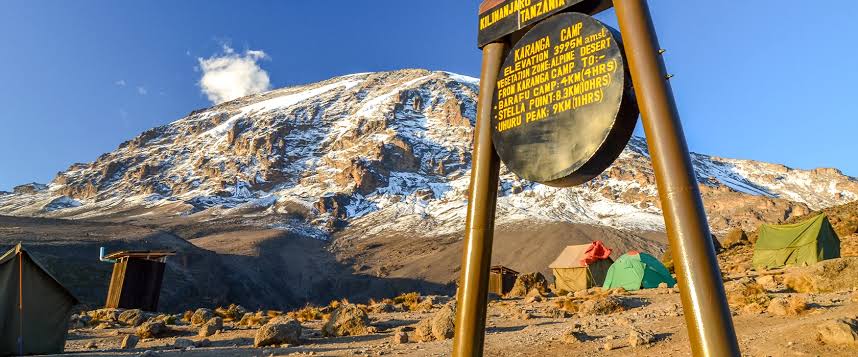
Standard camp
Karanga Camp
Also known as Karanga Valley Camp
- Approximate altitude
- About 3,960–4,035 m (12,992–13,238 ft)
- Vegetation zone
- Alpine desert
- Accommodation
- Tented camping
- Side of the mountain
- South
Overview
Karanga Camp is the overnight stop that turns a 6-day southern itinerary into a 7-day one. Spending a night here between Barranco and Barafu gives the body an extra night at a similar altitude before the summit push.
It is also known as the last camp with a nearby water source before the high camp at Barafu.
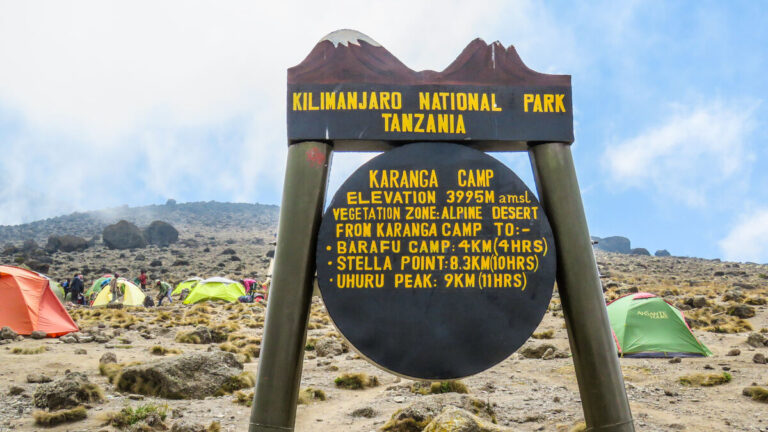

Location and trail
The camp sits on a ridge above the Karanga Valley at roughly 3,960–4,035 m, on the southern side of Kibo. The trail from Barranco climbs the Barranco Wall, then rolls up and down across ridges and valleys before a steep climb out of the Karanga Valley to the camp.
The next stage climbs to Barafu Camp, the base for summit night.
What to expect
An open, rocky site at the edge of the alpine desert with views of Kibo's southern glaciers above and the plains far below. The walk from Barranco is relatively short, leaving time to rest and adjust.
Nights are cold and windy.
Facilities
Climbers sleep in tents that the trekking crew carries and pitches. Like other Kilimanjaro campsites, the site has a ranger post where climbers register, and basic long-drop toilets; most operators also bring a private toilet tent. There is no electricity: bring power banks for phones and headlamps. Mobile signal is unreliable on the mountain and should never be relied on. The crew collects water from the Karanga Valley stream – the last reliable source before Barafu – and treats it.
How to prepare
Nights can drop below freezing. Bring a four-season sleeping bag (comfort rating around -10 °C or lower), a warm hat, gloves, an insulated jacket and thermal base layers. Sun protection matters by day: sunglasses, sunscreen and a brimmed hat. Keep drinking 3–4 litres a day unless advised otherwise.
Seasonal conditions
Cold nights year-round; cloud often rises from the valley in the afternoon.
Altitude and safety
At this elevation many climbers notice altitude: headache, breathlessness on exertion, poor sleep or nausea. Guides check climbers regularly. Report symptoms honestly; worsening symptoms mean descending, which is the most effective treatment for altitude illness.
Karanga Camp on the elevation profile
- 1,800 m Machame Gate
- 2,933 m Machame Camp
- 3,870 m Shira 2 Camp
- 3,938 m Barranco Camp
- 3,998 m Karanga Camp
- 4,657 m Barafu Camp
- 5,895 m Uhuru Peak
- 3,084 m Mweka Camp
- 1,640 m Mweka Gate
Elevations are approximate midpoints where published figures differ.
FAQ
Karanga Camp questions
An extra night between Barranco and Barafu gives more time to acclimatize before summit night, which is why many climbers choose 7-day rather than 6-day itineraries.
Yes, the crew collects it from the Karanga Valley stream and treats it. It is the last reliable source before Barafu.
About 3,960–4,035 m (about 13,000–13,250 ft), depending on the source.
More Kilimanjaro camps
-
Standard camp
Barranco Camp
3,900–3,976 m (12,795–13,045 ft)
Machame Route · Lemosho Route · Shira Route · Umbwe Route
-
Standard camp
Barafu Camp
4,640–4,673 m (15,223–15,331 ft)
Machame Route · Lemosho Route · Shira Route · Umbwe Route
-
Standard camp
Mti Mkubwa (Big Tree) Camp
2,650–2,820 m (8,694–9,252 ft)
Lemosho Route · Northern Circuit Route
All Kilimanjaro camps and huts Mount Kilimanjaro guide
Approximate information, cross-checked against published sources (reviewed November 2026). Conditions, facilities and park rules change: our team confirms the details for your climb.
