
Kibale National Park

Uganda Safari Destinations

National Park · Western Uganda

Kibale National Park

Kibale National Park is East Africa’s leading destination for chimpanzee trekking, a moist tropical forest near Fort Portal that is home to 13 primate species.

Region
Western Uganda
Known for
Chimpanzee trekking
Primates
13 species
Nearest town
Fort Portal

Destination Overview

About Kibale National Park

Kibale National Park protects a large block of moist tropical forest in western Uganda, south-east of the town of Fort Portal. The forest has an unusually high density of primates, with 13 species recorded, and several chimpanzee communities that have been studied and habituated over many years.

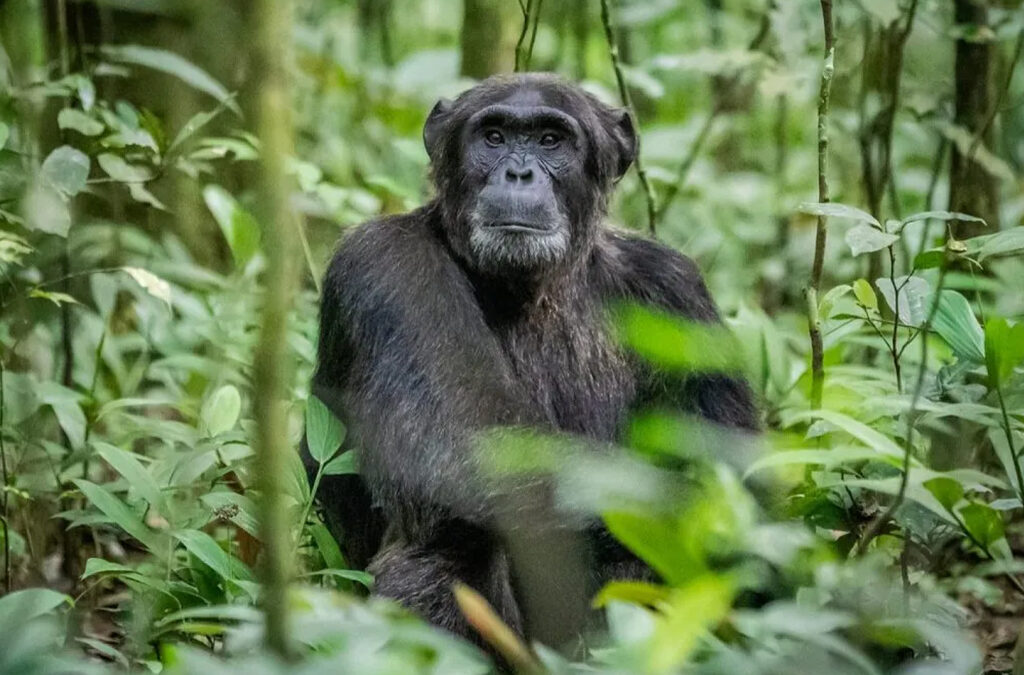
That long history is why Kibale is the first choice for chimpanzee trekking in Uganda. Groups walk with rangers from the visitor centre into the forest, listen for calls and follow the chimpanzees as they feed and move through the trees. When the community is found, visitors spend a set time with them.

Kibale fits naturally into a western Uganda circuit. It lies between Murchison Falls in the north and Queen Elizabeth National Park in the south, and the crater lakes, tea estates and wetlands around Fort Portal add a few relaxed hours to the stay.

Location

Where Is Kibale National Park Located?

Kibale lies in western Uganda, in the region around Fort Portal, with the Rwenzori Mountains to the west. The park’s northern part is close to Fort Portal, and the main chimpanzee trekking area and visitor centre are in the central section, off the road between Fort Portal and Kamwenge.

The forest is at roughly 1,100 to 1,600 metres, so it is warm by day and pleasant in the evenings. Bigodi Wetland Sanctuary, a community-run swamp walk, lies just outside the park near the visitor centre. The Ndali–Kasenda crater lakes are a short drive to the north-west.

Nearby destinations

Road distances are longer and driving times depend on the route and conditions.

Kibale National Park (park locator)

0.5, 30.4 · Park locator (approximate centre of the protected area)

Why Visit

Why Visit Kibale National Park?

  • Chimpanzee trekking

    Habituated chimpanzee communities and experienced rangers give Kibale a strong reputation for chimpanzee encounters in their forest habitat.

  • Thirteen primate species

    Red colobus, black-and-white colobus, L’Hoest’s and red-tailed monkeys and grey-cheeked mangabeys are among the primates you may see along the way.

  • Bigodi Wetland

    A guided walk through a community-run wetland sanctuary adds birds, monkeys and a local perspective to a forest visit.

  • On the western circuit

    Kibale sits between Murchison Falls and Queen Elizabeth, with crater lakes and tea country around Fort Portal.

Experiences

Things to Do in Kibale National Park

  1. Chimpanzee trekking

    Morning or afternoon treks led by rangers from the visitor centre. Once the chimpanzees are located, visitors spend about an hour with them.

  2. Chimpanzee habituation experience

    A longer day in the forest with researchers and rangers following a community that is being habituated. Places are very limited.

  3. Bigodi Wetland Sanctuary walk

    A community-run guided walk on boardwalks and paths through the swamp, good for birds and primates.

  4. Forest nature walks

    Guided walks focused on plants, birds and smaller primates, including night walks where offered.

  5. Crater lakes and Fort Portal

    Short drives to crater lake viewpoints, tea estates and the town of Fort Portal.

Kibale National Park

Wildlife and Natural Attractions

Kibale is above all a primate forest. Besides chimpanzees, it holds red colobus, black-and-white colobus, L’Hoest’s monkeys, red-tailed monkeys, blue monkeys, grey-cheeked mangabeys and olive baboons, with nocturnal primates such as galagos and pottos. Forest elephants live in the park but are seldom seen on the trails.

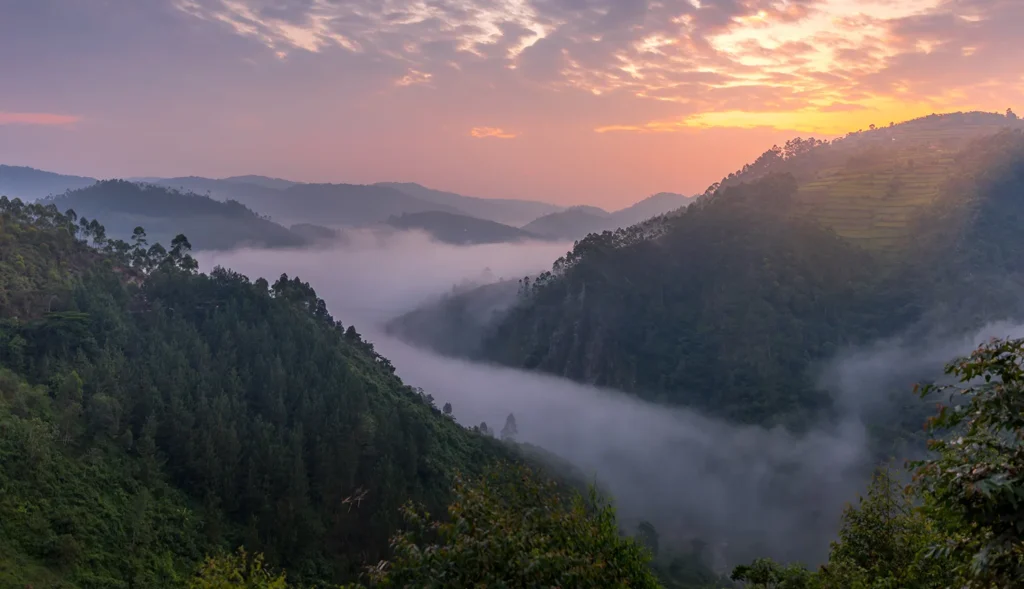
The forest is also rich in birds and butterflies. The surrounding landscape of crater lakes, tea plantations and the Rwenzori foothills makes the area one of the most scenic parts of western Uganda.

When to Go

Best Time to Visit Kibale National Park

Chimpanzee trekking in Kibale runs throughout the year. The drier months usually make forest trails easier underfoot, while the wetter months bring more mud but plenty of fruiting trees, which can keep chimpanzees feeding in one area. Rain can fall at any time in the forest.

  • Drier months

    Usually June to August and December to February

    Trails are generally firmer and conditions comfortable. Permits are in higher demand.

  • Wetter months

    Usually March to May and September to November

    More frequent showers and muddier trails. Treks continue, and the forest is lush.

Month by month

January Usually drier

Usually dry and warm; grass is shorter and game viewing is generally good.

Comfortable trekking conditions; book chimpanzee permits early for these months.

February Usually drier

Typically dry and among the warmest months on the Rift Valley floor.

Comfortable trekking conditions; book chimpanzee permits early for these months.

March Changeable / transition

Rains usually start to build, with afternoon storms becoming more frequent.

Showers are likely; a morning trek gives you time to dry off before evening.

April Usually wetter

Often one of the wettest months; some tracks become muddy and slow.

Treks continue; waterproof boots and a light rain jacket are essential.

May Usually wetter

Showers usually continue, easing in many years by the end of the month.

Treks continue; waterproof boots and a light rain jacket are essential.

June Usually drier

The drier mid-year season usually begins; roads and trails improve.

Comfortable trekking conditions; book chimpanzee permits early for these months.

July Usually drier

Generally dry and pleasant, a popular time for game drives and primate treks.

Comfortable trekking conditions; book chimpanzee permits early for these months.

August Usually drier

Usually fairly dry, with occasional showers late in the month.

Comfortable trekking conditions; book chimpanzee permits early for these months.

September Changeable / transition

Rain tends to increase as the second rainy season approaches.

Showers are likely; a morning trek gives you time to dry off before evening.

October Usually wetter

Usually wet, with frequent showers and green landscapes.

Treks continue; waterproof boots and a light rain jacket are essential.

November Usually wetter

Often rainy; birdlife is excellent and the parks are quieter.

Treks continue; waterproof boots and a light rain jacket are essential.

December Changeable / transition

Rain usually eases, and drier conditions return later in the month.

Showers are likely; a morning trek gives you time to dry off before evening.

Typical seasonal patterns for Western Uganda and the Albertine Rift floor, based on long-term climate – not a weather forecast. Rain is possible in any month and conditions vary from year to year; check a current forecast shortly before you travel.

Getting There

How to Get to Kibale National Park

Kibale is usually reached by road from Kampala in about five to six hours via Mubende and Fort Portal. From Queen Elizabeth National Park the drive is about two to three hours, and from Murchison Falls a long half-day or more, depending on the route.

Light-aircraft flights serve Kasese, from where Kibale is a drive of roughly two hours. Most lodges are near the visitor centre or around the crater lakes north of the park.

From Kampala
About five to six hours by road via Mubende and Fort Portal.
From Queen Elizabeth National Park
About two to three hours by road.
By light aircraft
Flights to Kasese, then a road transfer of about two hours.

Accommodation

Where to Stay in Kibale National Park

Rates and availability for your dates are confirmed by our safari specialists.

Practical Tips

Useful Travel Information

Permits
A chimpanzee trekking permit from the Uganda Wildlife Authority is required for each visitor, for a specific date and session. Book early in busy months.
Age limit
A minimum age applies to chimpanzee trekking (12 years at the time of writing).
What to wear
Long trousers tucked into socks, a long-sleeved shirt, waterproof boots and a light rain jacket.
On the trek
Keep the distance set by your ranger, do not eat near the chimpanzees, and stay with the group.
Health
Chimpanzees can catch human illnesses; visitors who are unwell should not trek.

Frequently Asked Questions

Kibale National Park FAQs

Safaris in Uganda

Ready-Made Journeys

Plan a Custom Safari to Kibale National Park

We can help tailor a Uganda safari around the destinations and experiences that interest you.

Request a Custom Uganda Safari

Start Planning

Plan Your Uganda Safari

Tell us your travel dates and interests, and our safari specialists will prepare a private Uganda itinerary that includes Kibale National Park, with suitable accommodation and realistic travel times.