Serengeti Wildebeest Migration
Trip Overview
Watch dust rise, hooves thunder, and nature’s greatest migration unfold across golden Serengeti plains.
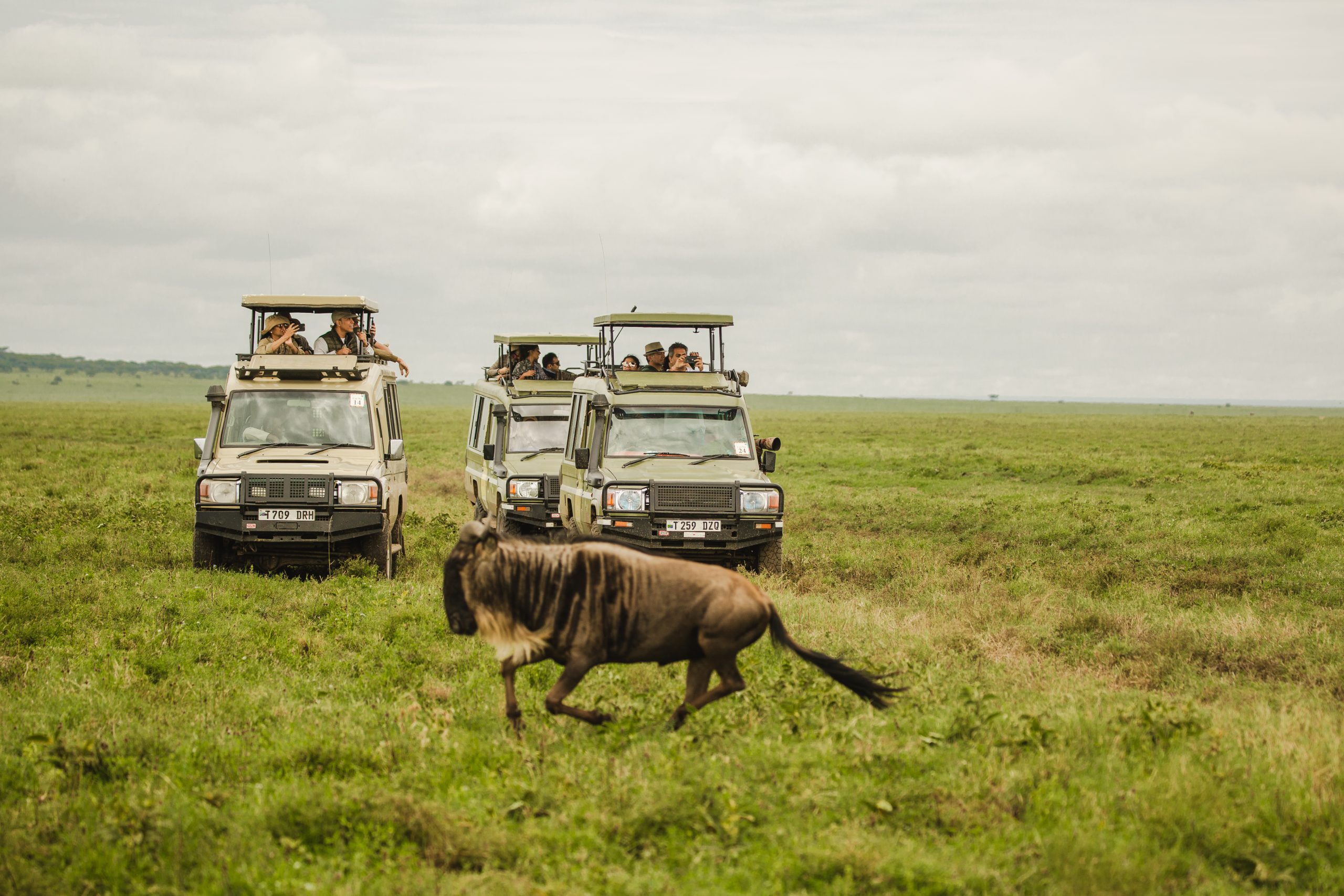
The Great Migration is not just a trip; it is a primal rhythm of the earth that you can feel vibrating through the floor of a safari vehicle. At Tanzania Safari Experience, we don’t just book tours; we coordinate front-row seats to the greatest wildlife show on the planet.
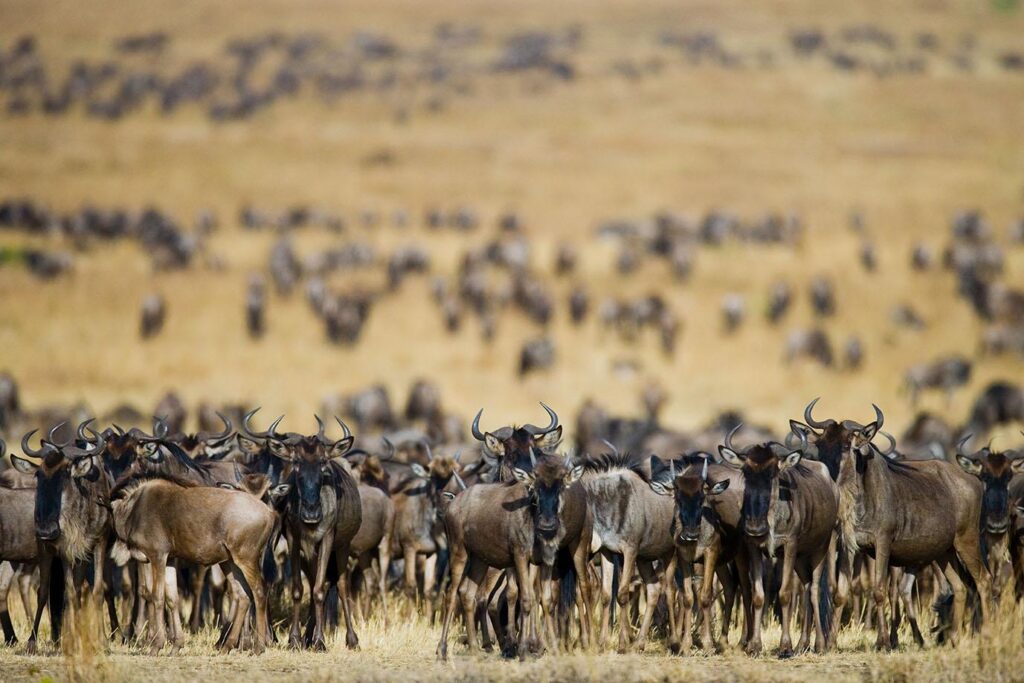
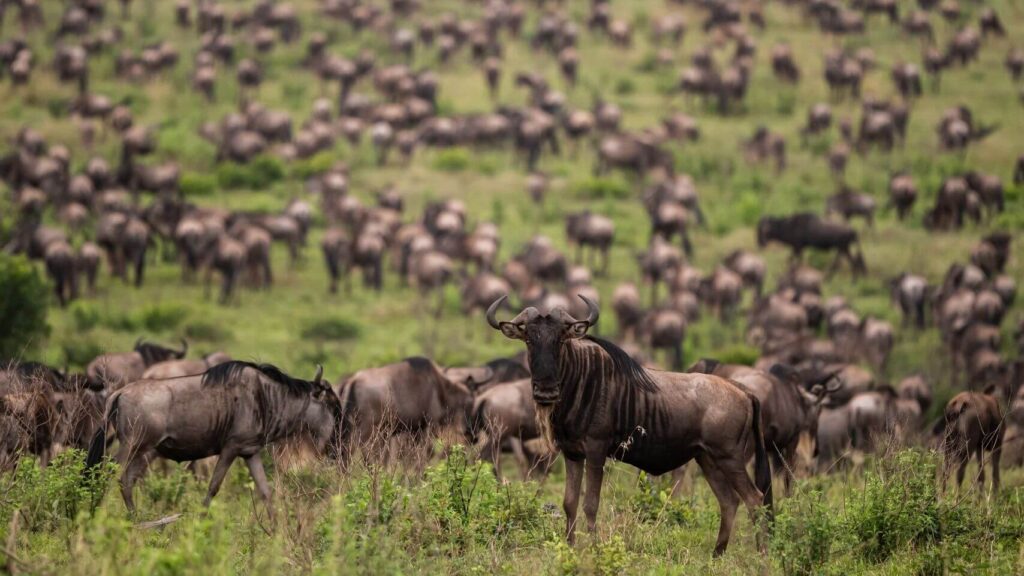
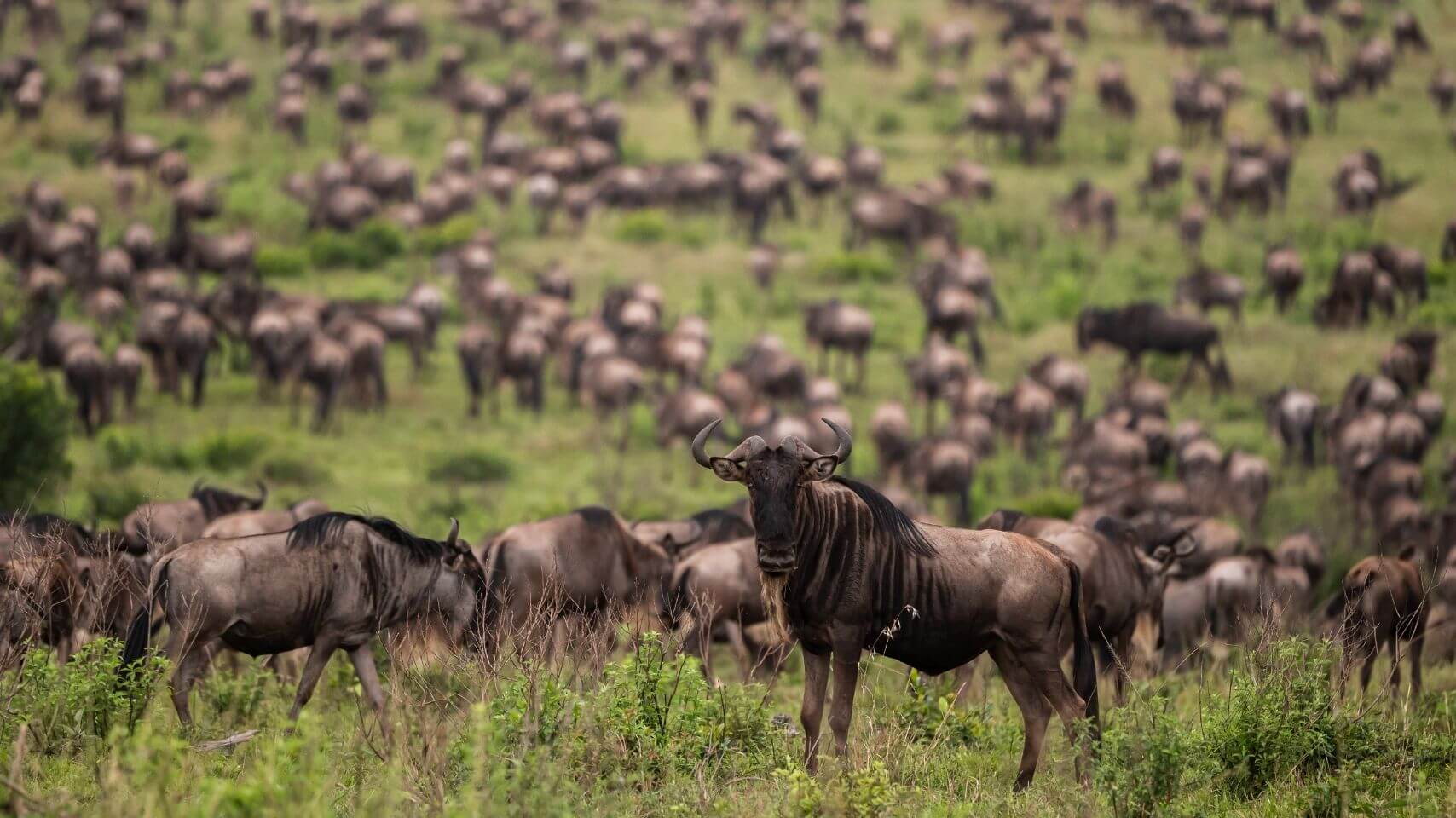
The Serengeti Wildebeest Migration is a year-round movement of 1.5 million wildebeest and 200,000 zebras through the Serengeti ecosystem. Successful safari packages sync your location with the herds’ seasonal grazing patterns.
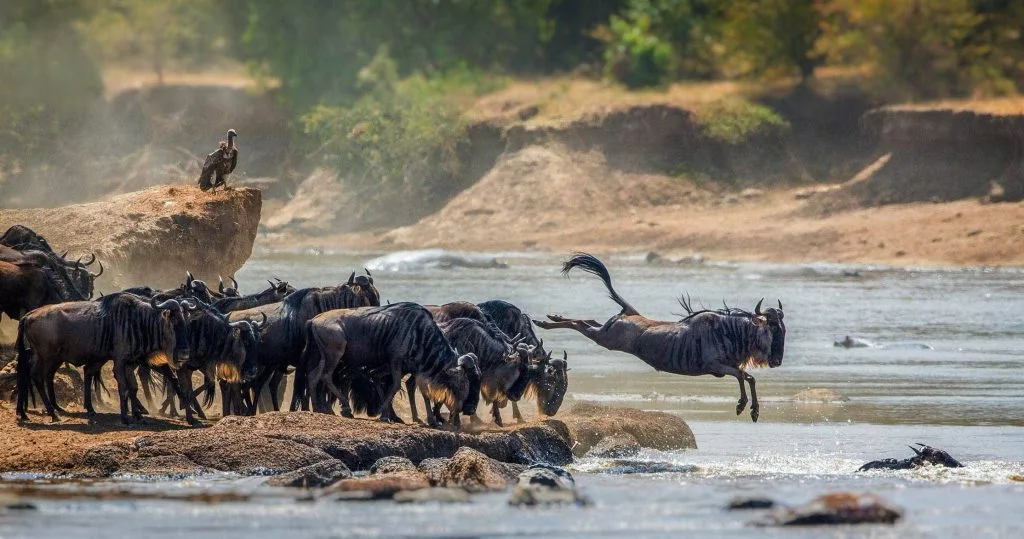
The Serengeti is not a place you “visit”—it is a place you feel. From the thundering hooves at a river crossing to the silent, golden sunrise over a flat-topped acacia tree, it changes your perspective on the natural world.
Choosing the right Serengeti Wildebeest Migration Safari Package is the difference between seeing the migration and being part of it. At Tanzania Safari Experience, our deep roots in this land allow us to bypass the tourist traps and take you straight to the heart of the action. Whether it’s finding a private corner of the Ndutu plains or timing a river crossing perfectly, we ensure your journey is as authentic as the wild itself.
Serengeti Wildebeest Migration Safari Package
8 Days Tanzania Classic Safari Itinerary
- Ideal for a luxury migration experience
Starting From
$2,800 – $3,800
8 Days Serengeti Wildebeest Migration Safari
- See the Great Migration Up Close
Starting From
$3,800 – $4,800
5 Days Ndutu Migration Safari Calving Season
- Witness Thousands of Newborn Wildebeest
Starting From
$2,500 – $3,200
3 Days Ndutu Migration Safari Calving Season
- Peak Season for Big Cats & Hunting Scenes
Starting From
$1,800 – $2,400
Serengeti Wildebeest Migration Photo Gallery
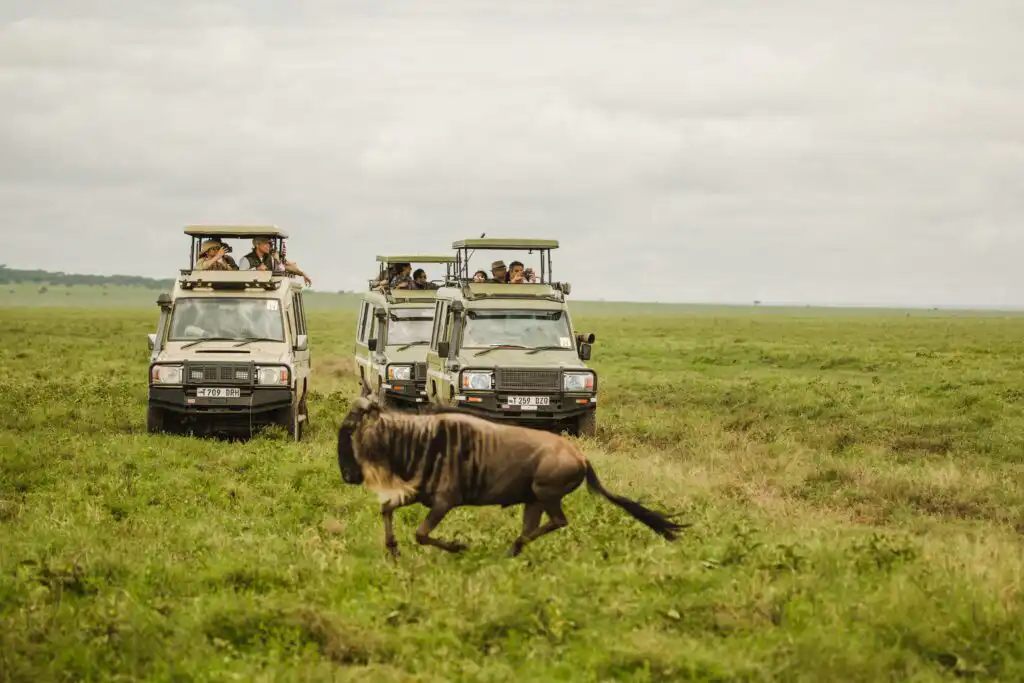
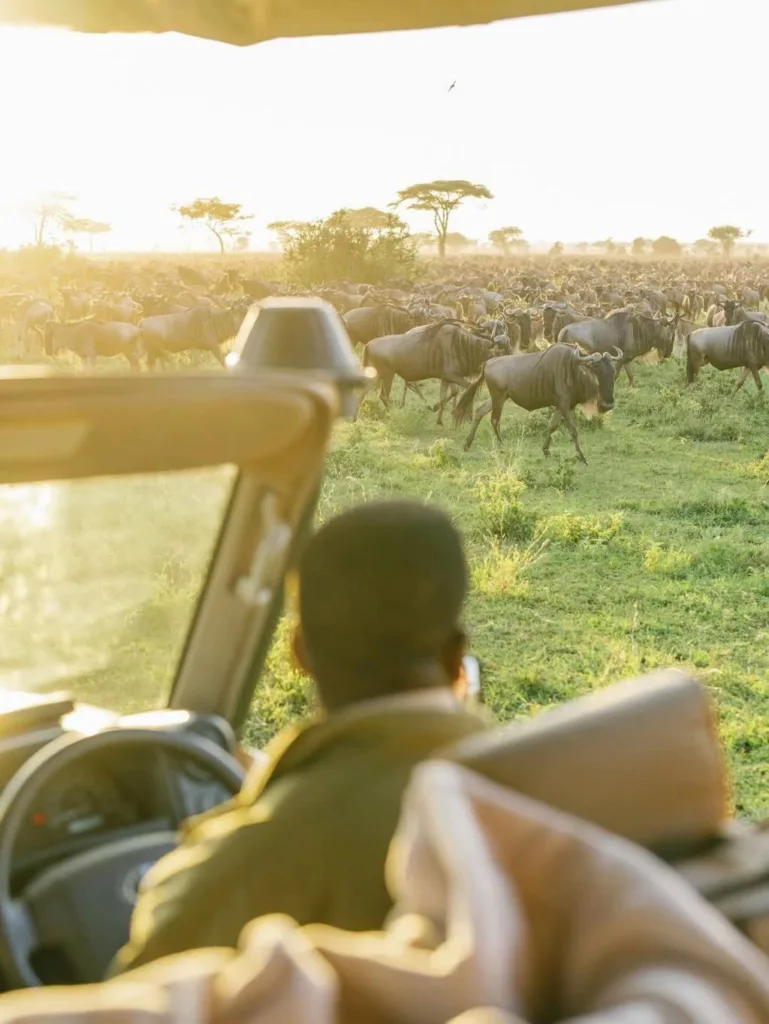
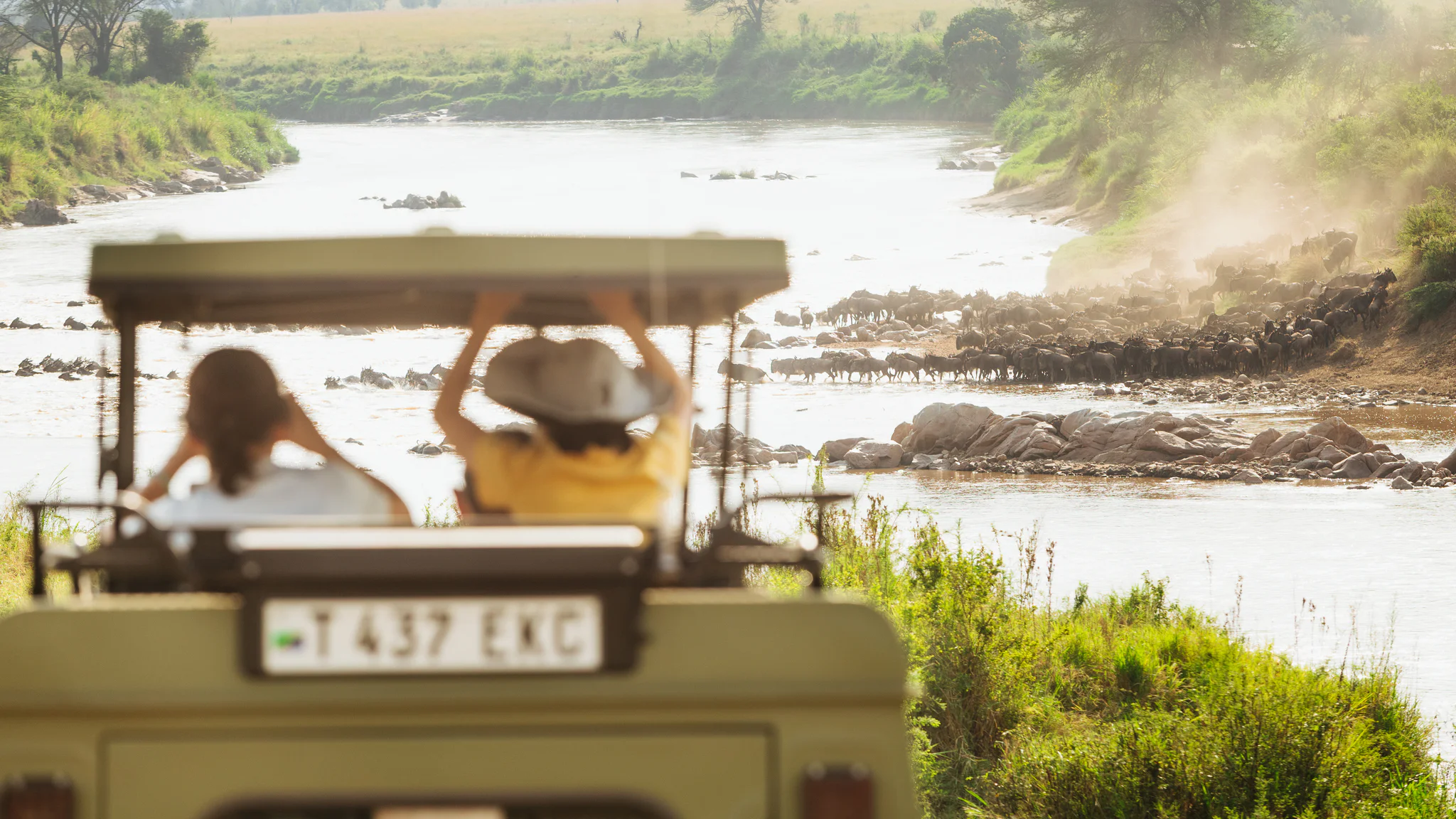
Below are stunning photos captured during the Serengeti Wildebeest Migration, showcasing the breathtaking moments of millions of wildebeest and zebras on their epic journey across the plains.
Expert recommendation
The wildebeest migration is not a single event—it is a continuous movement across the Serengeti. Many safari companies push July and August because of the famous river crossings, but that is only one chapter of the story.
From our experience at Tanzania Safari Experience, we recommend choosing your safari based on what you want to witness. If you are drawn to dramatic river crossings, then the northern Serengeti is ideal during those months. But if you want intense predator action and the incredible sight of thousands of newborn wildebeest, the calving season in Ndutu (January to March) offers a completely different and often more rewarding experience.
The key is not just when you travel—but positioning you in the right place at the right time. That’s where a well-planned safari makes all the difference.
Laurent Karume
Tanzania Safari Specialist
Serengeti Wildebeest Migration Highlights
- Witness dramatic river crossings
- Track herds with expert guides
- Explore central and northern Serengeti
- See predators in action
- Follow migration through seasonal routes
At a glance
- Tanzania
- Safari
Tailormade itineraries
Every Tanzania Safari Experience adventure is customized just for you—no fixed tours or set dates. Speak with our Tanzania Safari experts to help you plan your perfect Tanzania Safari itinerary.
Comparing Safari Package Tiers
Choosing a package depends on your tolerance for “roughing it” versus your desire for a hot shower and a glass of South African Shiraz at sunset.
| Feature | Mobile Tented Camp (Mid-Range) | Luxury Permanent Lodge | Fly-In Safari (Premium) |
| Proximity | Moves with the herds | Fixed location; requires driving | Best for covering North/South gaps |
| Vibe | Authentic, “Out of Africa” | High-end amenities, spas | Maximum time on game drives |
| Budget | $500–$800 per night | $900–$1,500+ per night | $1,200+ per night |
| Best For | Hardcore photographers | Couples and Honeymooners | Time-poor travelers |
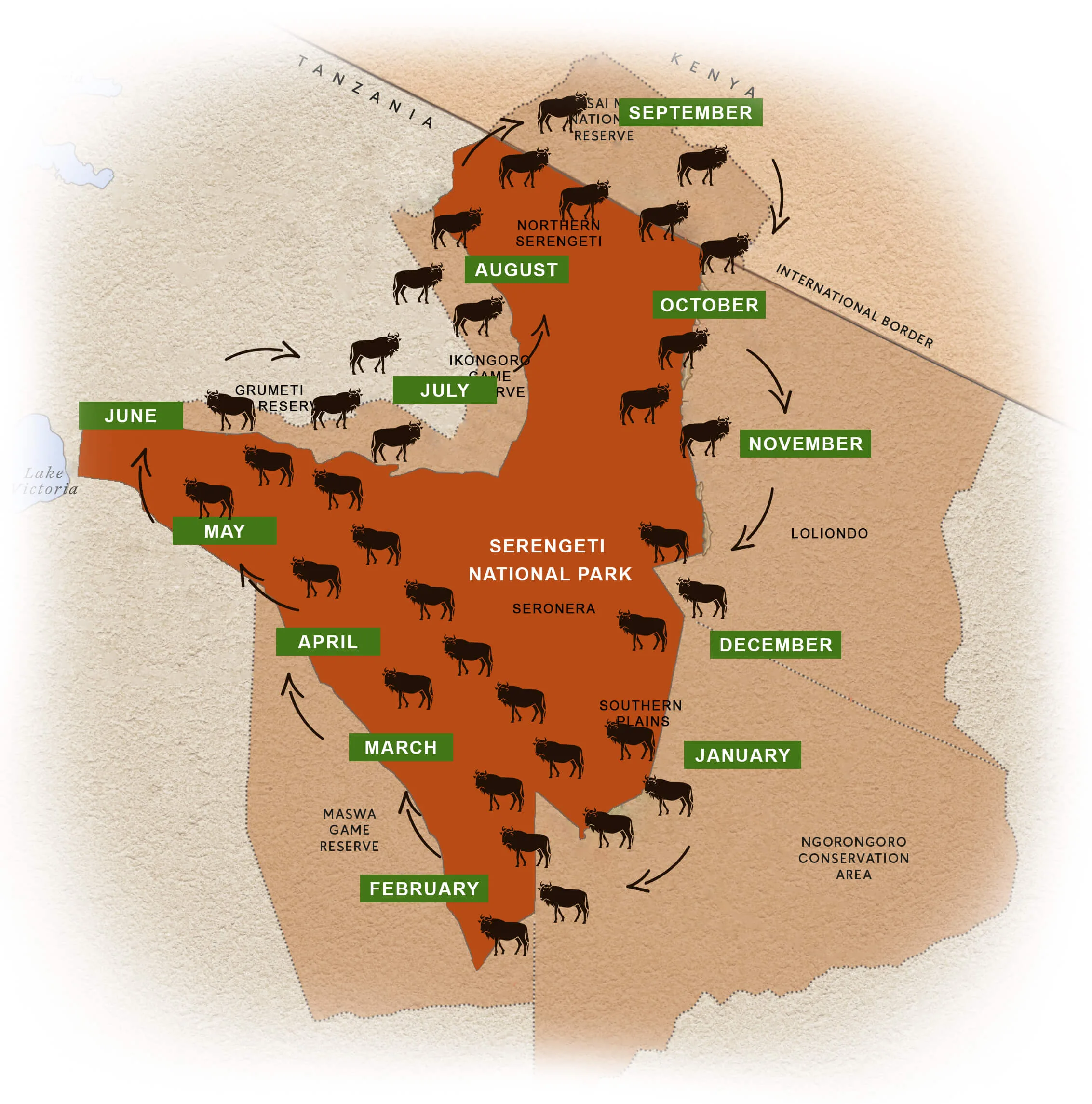
🗺 Serengeti Wildebeest Migration Map & Routes
A Serengeti wildebeest migration map helps explain how this epic journey unfolds. The migration follows a clockwise pattern across Tanzania and Kenya, moving with the rains.
Southern Serengeti (Dec – Mar): The herds gather in the short-grass plains for calving.
Central Serengeti (Apr – Jun): Columns of wildebeest move northwards.
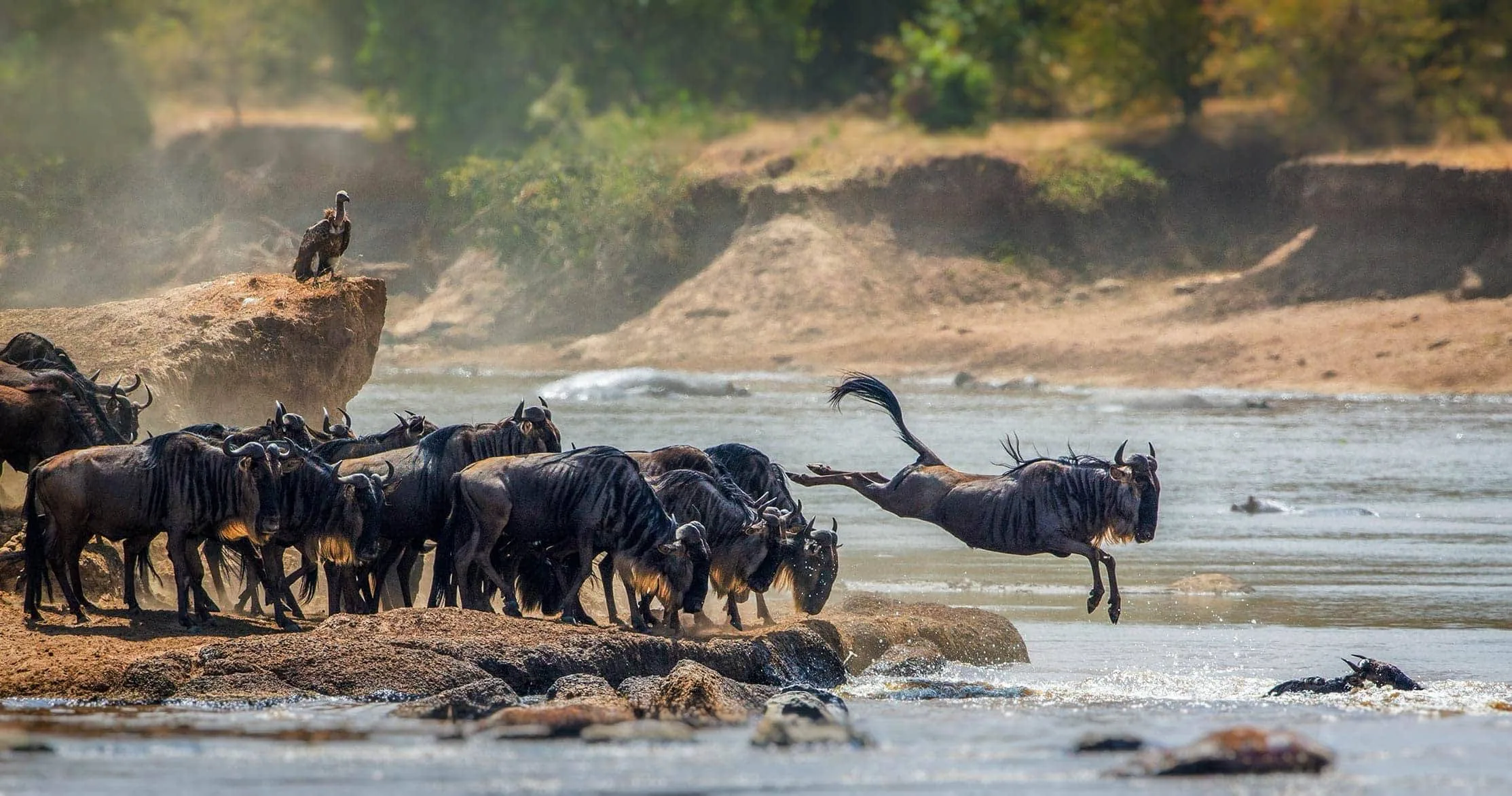
Western Corridor (May – Jul): Herds cross the Grumeti River, facing crocodiles.
Northern Serengeti & Maasai Mara (Jul – Oct): The dramatic Mara River crossings take place.
Return to Serengeti (Nov): The herds move south again as the cycle restarts.
Serengeti National Park Areas Explained
The Serengeti National Park is vast and diverse, divided into different areas that each offer unique safari experiences. Knowing the main regions of the Serengeti helps travelers plan the perfect Tanzania safari itinerary.
We've got you covered
Our tours are top-notch but give you great value. The price we tell you upfront covers most of the costs for one person, like flights and all transfers.
- Park fees
- All activities (unless labeled as optional)
- All accommodation as stated in the itinerary
- A professional driver/guide
- All transportation (unless labeled as optional)
- All Taxes/VAT
- Roundtrip airport transfer
- All Meals (as specified in the day-by-day section)
- Air Ambulance Service by AMREF Flying Doctors;
- At Least 1 Pair Of Binoculars;
- International flights (from/to home)
- Additional accommodation before and at the end of the tour
- Tips to your safari guide ($30-50 per day per car).
- Personal items (souvenirs, travel insurance, visa fees, etc.)
- Government imposed increase of taxes and/or park fees
- Alcohol drinks
- Visas and visa fees where relevant
- Additional activities not offered as scheduled by the accommodation
- Lunch and dinner in hotel (only before and after safari);
Connect with our local experts for personalized travel planning
Plan your Serengeti Wildebeest Migration Safari today
Everything You Need to Know About Your Safari
Every safari adventure begins with a question. Whether it’s your first or second time, it’s natural to wonder about the best time to visit, what to pack, or how the journey works. Here, we’ve answered the most common questions travelers ask before booking their Tanzania safari, so you can plan with confidence and look forward to unforgettable memories.
The Serengeti Wildebeest Migration is the world’s largest land migration, where over 1.5 million wildebeest, along with zebras and gazelles, move across Tanzania’s Serengeti and Kenya’s Maasai Mara in search of fresh grazing and water.
The migration is a year-round event, but its highlights vary: calving season is from January to March, the dramatic river crossings happen between July and September, and by October–November the herds begin moving back to southern Serengeti.
Wildebeest migrate in search of greener pastures and water. Their movement follows seasonal rainfall patterns, ensuring they have enough food, while also helping balance the Serengeti ecosystem by regenerating grasslands.
The best place depends on the season: southern Serengeti for calving (Jan–Mar), western corridor for river crossings (May–June), and northern Serengeti near the Mara River for dramatic crossings (July–Sep). Expert planning ensures you’re in the right place at the right time.
Around 1.5 to 2 million wildebeest take part in the migration, joined by 200,000 zebras and 400,000 gazelles, making it one of the most extraordinary wildlife spectacles on Earth.
Yes, December is a great time to visit the Serengeti as the herds begin gathering in the southern plains for calving season. It’s also less crowded compared to peak river crossing months, offering an amazing safari experience.
Yes, Tanzania is considered one of the safest safari destinations in Africa. National parks are well-managed, and guides are highly trained to ensure your safety. While in cities, it’s always best to take normal precautions, such as avoiding walking alone at night. Traveling with a trusted operator ensures a smooth and safe experience.