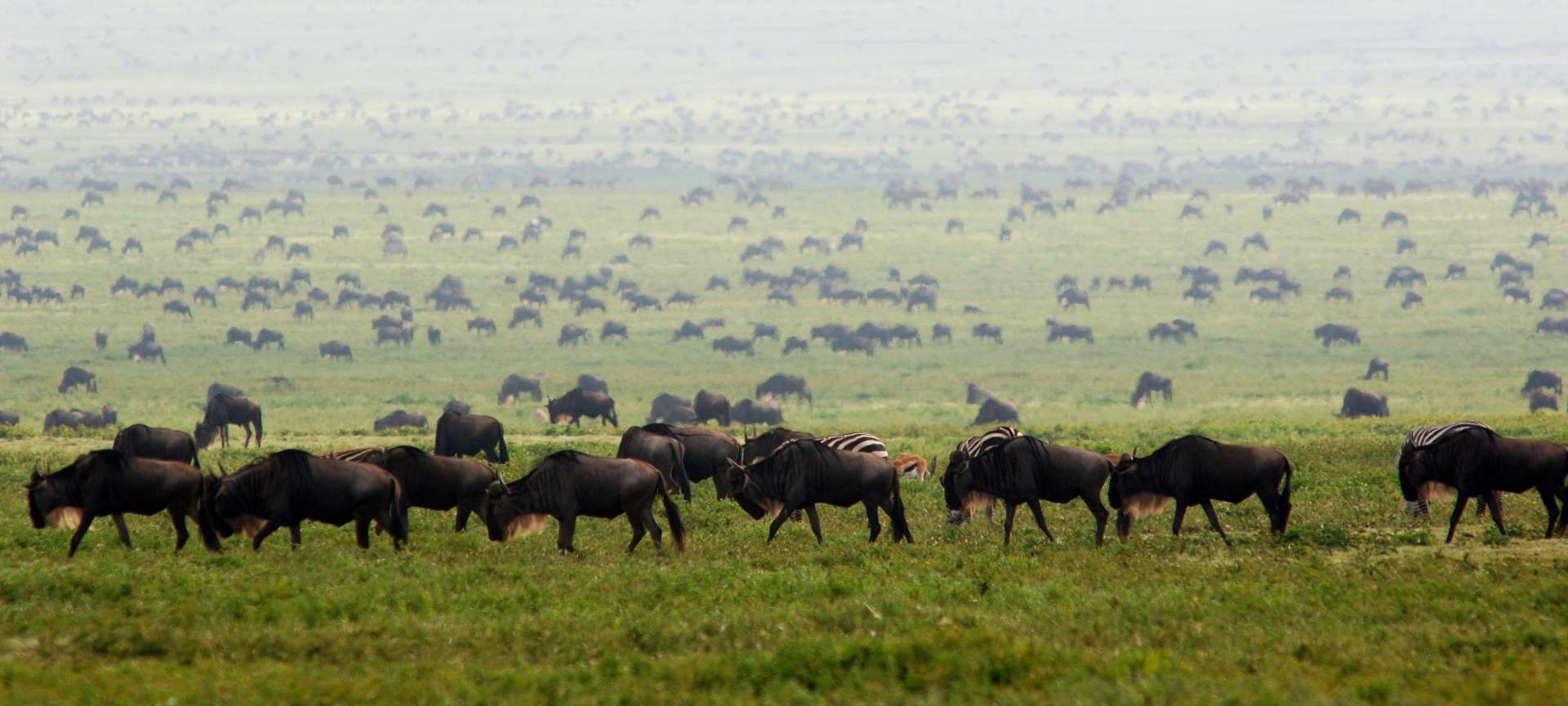
Large wildebeest herds grazing on green Serengeti plains

Travel by Month

May: Green Landscapes and Migration Movements

Rains easing · Herds on the move · Quiet parks

  • Season Long rains easing
  • Crowds Low
  • Prices Low to shoulder

Plan a May safari Read the guide

Overview

Travelling to Africa in May

May marks the end of the long rains in northern Tanzania. Early in the month rain can still be frequent, but showers usually become lighter and less regular as May progresses, and the last week often feels like the start of the dry season. The plains are still green and the parks are very quiet.

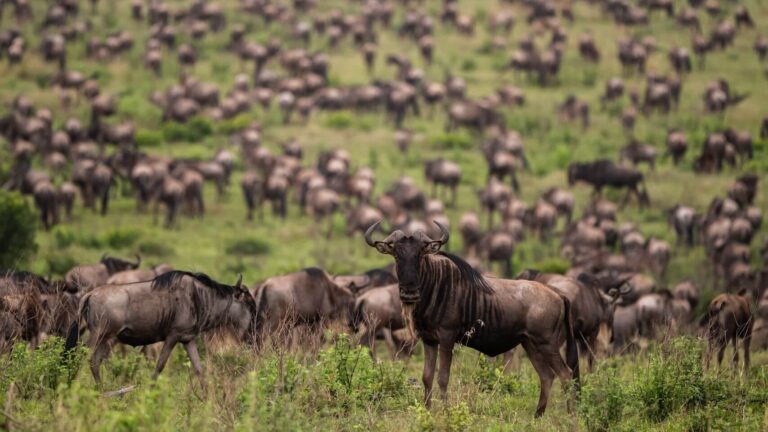
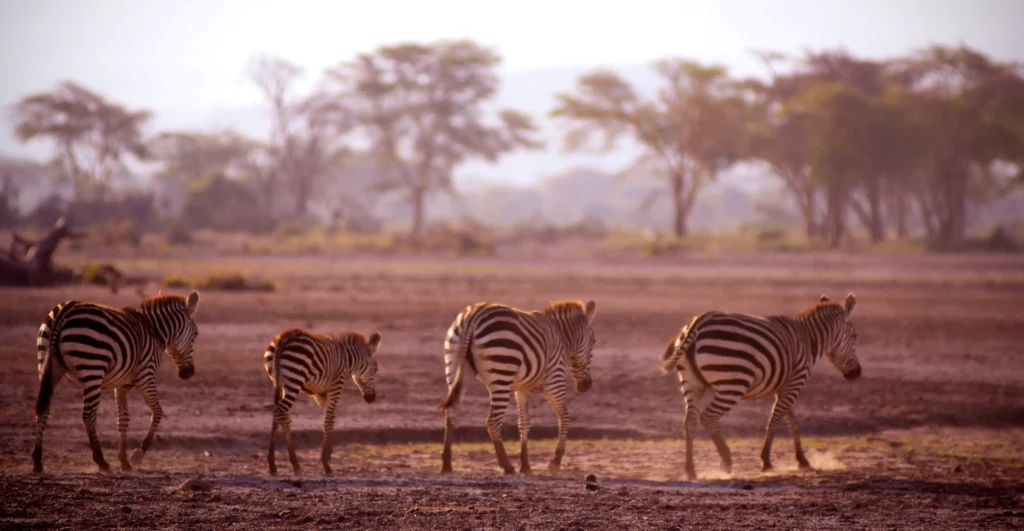
The migration herds are typically on the move through the central Serengeti and into the western corridor. This is when the famous long columns of wildebeest are often seen, and the rut, when males compete for females, usually begins around this time. Their exact route depends on rainfall and grazing, so their location can change from week to week.

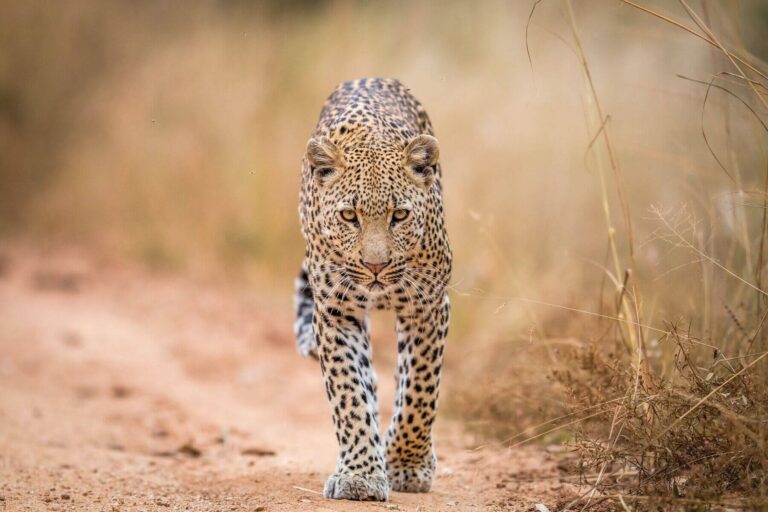
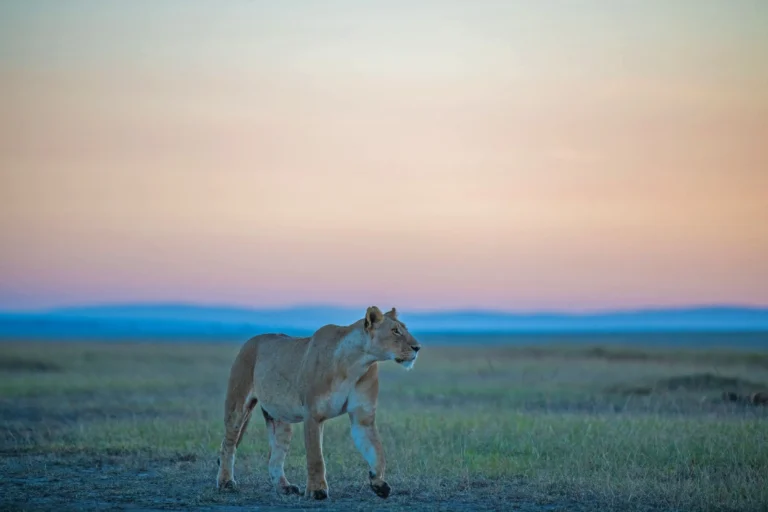
Central Serengeti, around Seronera, has some of Tanzania's best resident predator viewing all year, and in May it is particularly quiet. Ngorongoro Crater, Tarangire and Lake Manyara are green, with good wildlife and very few vehicles.

Rates are generally low, with some lodges moving to shoulder rates towards the end of the month or in early June. A late-May safari often combines low-season rates with improving weather, which makes it one of the best-value times to travel.

May suits travellers who value quiet game drives, photographers who like green landscapes and soft light, and anyone looking for value. Zanzibar is still wet at the start of the month, and Kilimanjaro conditions improve only towards the end of May.


Climate

Weather Across Africa in May

Long-term monthly averages for safari areas and islands. Weather in any single year can differ.

  • Serengeti (Seronera)Tanzania

    20°C

    Low 15°High 27°

    68 mmLow rain

    Rain on about 16 days

    About Serengeti (Seronera)
  • NdutuTanzania

    19°C

    Low 14°High 26°

    66 mmLow rain

    Rain on about 15 days

  • Ngorongoro Crater floorTanzania

    18°C

    Low 14°High 23°

    93 mmSome rain

    Rain on about 17 days

    Values are for the crater floor. Lodges on the rim (about 2,300 m) are several degrees colder, especially at night.

    About Ngorongoro Crater floor
  • TarangireTanzania

    21°C

    Low 16°High 28°

    60 mmLow rain

    Rain on about 13 days

    About Tarangire
  • Lake ManyaraTanzania

    23°C

    Low 19°High 29°

    68 mmLow rain

    Rain on about 15 days

    About Lake Manyara
  • ArushaTanzania

    19°C

    Low 15°High 25°

    97 mmSome rain

    Rain on about 18 days

  • Nyerere National ParkTanzania

    25°C

    Low 21°High 30°

    89 mmSome rain

    Rain on about 14 days

    About Nyerere National Park
  • Ruaha National ParkTanzania

    24°C

    Low 17°High 31°

    17 mmDry

    Rain on about 4 days

  • Mikumi National ParkTanzania

    22°C

    Low 19°High 27°

    92 mmSome rain

    Rain on about 16 days

    About Mikumi National Park
  • Moshi (Kilimanjaro gateway)Tanzania

    23°C

    Low 18°High 29°

    96 mmSome rain

    Rain on about 18 days

    Moshi lies at about 840 m. Conditions on Mount Kilimanjaro are very different: see the mountain note below the cards.

    About Moshi (Kilimanjaro gateway)
  • Maasai MaraKenya

    20°C

    Low 15°High 26°

    101 mmSome rain

    Rain on about 20 days

    About Maasai Mara
  • AmboseliKenya

    22°C

    Low 17°High 29°

    79 mmSome rain

    Rain on about 18 days

  • SamburuKenya

    25°C

    Low 19°High 32°

    64 mmLow rain

    Rain on about 15 days

  • Lake NakuruKenya

    19°C

    Low 15°High 25°

    146 mmSome rain

    Rain on about 24 days

  • Tsavo (Voi)Kenya

    23°C

    Low 19°High 29°

    100 mmSome rain

    Rain on about 19 days

    About Tsavo (Voi)
  • Bwindi (Buhoma)Uganda

    21°C

    Low 16°High 26°

    115 mmSome rain

    Rain on about 21 days

    Bwindi spans roughly 1,160–2,600 m; southern sectors such as Rushaga and Nkuringo are higher and cooler than Buhoma.

    About Bwindi (Buhoma)
  • Queen Elizabeth NP (Mweya)Uganda

    24°C

    Low 20°High 29°

    114 mmSome rain

    Rain on about 24 days

    About Queen Elizabeth NP (Mweya)
  • Murchison Falls (Paraa)Uganda

    26°C

    Low 23°High 31°

    136 mmSome rain

    Rain on about 23 days

    Northern Uganda has one long wet season (about April–October) rather than the two seasons of the south-west.

    About Murchison Falls (Paraa)
  • Kibale (Kanyanchu)Uganda

    21°C

    Low 17°High 26°

    126 mmSome rain

    Rain on about 25 days

    About Kibale (Kanyanchu)
  • Volcanoes NP (Kinigi)Rwanda

    15°C

    Low 12°High 20°

    139 mmSome rain

    Rain on about 22 days

    Gorilla treks climb well above the Kinigi park headquarters; expect cooler, wetter conditions on the slopes.

  • AkageraRwanda

    19°C

    Low 15°High 25°

    116 mmSome rain

    Rain on about 21 days

  • Nyungwe (Uwinka)Rwanda

    15°C

    Low 11°High 19°

    113 mmSome rain

    Rain on about 20 days

  • Zanzibar (Stone Town)Tanzania

    27°C

    Low 26°High 28°

    182 mmRainy

    Rain on about 21 days

    About Zanzibar (Stone Town)
  • Pemba (Chake Chake)Tanzania

    27°C

    Low 27°High 28°

    202 mmRainy

    Rain on about 23 days

  • Mafia Island (Utende)Tanzania

    27°C

    Low 27°High 28°

    125 mmSome rain

    Rain on about 17 days

  • Kruger (Skukuza)South Africa

    21°C

    Low 15°High 29°

    16 mmDry

    Rain on about 3 days

  • Okavango Delta (Maun)Botswana

    21°C

    Low 13°High 30°

    4 mmDry

    Rain on about 1 day

    Maun is the gateway town; the Delta floods peak in the dry months (about June–August) with water from the Angolan highlands, not from local rain.

  • Chobe (Kasane)Botswana

    21°C

    Low 14°High 30°

    3 mmDry

    Rain on about 1 day

  • Victoria FallsZimbabwe

    21°C

    Low 13°High 29°

    3 mmDry

    Rain on about 1 day

    The falls carry most water around April–May, after the rains; spray can hide the view at peak flow.

  • Etosha (Okaukuejo)Namibia

    21°C

    Low 13°High 30°

    1 mmDry

    Rain on about 0 day

About this climate data

Averages for 1991–2020 calculated from NASA POWER daily data (MERRA-2 temperatures and bias-corrected rainfall) for each location’s coordinates, checked on November 26, 2026. Temperatures are adjusted to each site’s elevation; a rainy day is a day with at least 1 mm of rain. Model data smooths local effects: mountain slopes, the coast and the islands can receive more rain than shown, and the number of rainy days can be overstated where light showers are common. Bars use the same scale for every location (temperature 0–40 °C, rainfall 0–300 mm). Rain labels: under 25 mm dry, 25–74 mm low rain, 75–149 mm some rain, 150–224 mm rainy, 225 mm or more very rainy.

Best time to go

What May Is Like

May is the end of the long rains. Early May can still be wet, but late May often brings drier days, green landscapes and some of the year's best value.

  • May Rains easing

    Herds move through the central and western Serengeti in long columns, with quiet parks and low rates.

    • Migration columns
    • Value
    • Quiet parks
    Wildlife
    Crowds
  • December – March Green season

    Calving season. Migration herds graze the southern Serengeti and Ndutu short-grass plains; most calves are born from late January to early March, with predators close by.

    • Calving
    • Predator action
    • Green plains
    Wildlife
    Crowds
  • June – October High season

    Dry season. Short grass and shrinking water concentrate wildlife. The herds move through the western corridor to the northern Serengeti and the Mara River.

    • River crossings
    • Big Five
    • Classic safari
    Wildlife
    Crowds
  • November – December Shoulder season

    Short rains. Showers return and the plains turn green again. Migratory birds arrive and the herds start moving back towards the south.

    • Fresh greenery
    • Birding
    • Shoulder value
    Wildlife
    Crowds

Season cards describe northern Tanzania. Wildlife and crowd bars are our editorial assessment (1 to 5), not measurements.

Elsewhere in Africa in May

Uganda and Rwanda are also finishing their long rains, and conditions for gorilla trekking improve towards June. Kenya's parks are green and quiet. In southern Africa May is the start of the dry season: Botswana and Kruger are pleasant and green, with the Okavango floods starting to arrive, and Victoria Falls is at or near peak flow.

Seasons & prices

Safari Costs in May

Climate season
Long rains easing
Pricing season
Low to shoulder
Crowd level
Low
Wildlife viewing
Very good
Availability
Some seasonal closures. Some seasonal camps reopen during May or at the start of June; permanent lodges are open throughout
Booking advice
2–3 months ahead is usually enough; book earlier if you want late-May dates at a specific camp.

Most lodges keep low-season rates for May, and some switch to shoulder rates in late May or from 1 June. Seasonal camps may still be closed early in the month. Park fees do not change with the season.

What affects the price of your safari

  • Accommodation Usually the largest seasonal variation. Each lodge and camp sets its own season dates and rates. In May: Low or shoulder rates; check reopening dates of seasonal camps.
  • National park fees Set by the park authorities (TANAPA, the Ngorongoro Conservation Area Authority, Kenya Wildlife Service and county reserves). They depend on the park, your residency and the tariff in force when you travel.
  • Safari vehicle Depends on the number of days, the route and the group size.
  • Professional guide Depends on the itinerary and any specialist guiding you request.
  • Domestic flights Scheduled bush flights vary with dates, routes and seat availability.
  • Activities Balloon flights, walking safaris, boat trips and cultural visits are priced separately.
  • Gorilla trekking permits Charged at the official tariff of the Uganda Wildlife Authority or the Rwanda Development Board in force on the trekking date.

We do not publish estimated totals: every quotation is calculated from the actual rates and fees for your dates, group and route.

Request a Personalized Safari Quote
Relative accommodation price level, northern Tanzania Illustrative only – not a price. Actual rates depend on each lodge and your dates.
  1. Jan
  2. Feb
  3. Mar
  4. Apr
  5. May
  6. Jun
  7. Jul
  8. Aug
  9. Sep
  10. Oct
  11. Nov
  12. Dec

LowPeak

Reasons to go

Why Visit in May

  1. Migration on the move

    Long columns of wildebeest travel through the central and western Serengeti.

  2. Excellent value

    Low-season rates, especially attractive in late May.
  3. Quiet parks

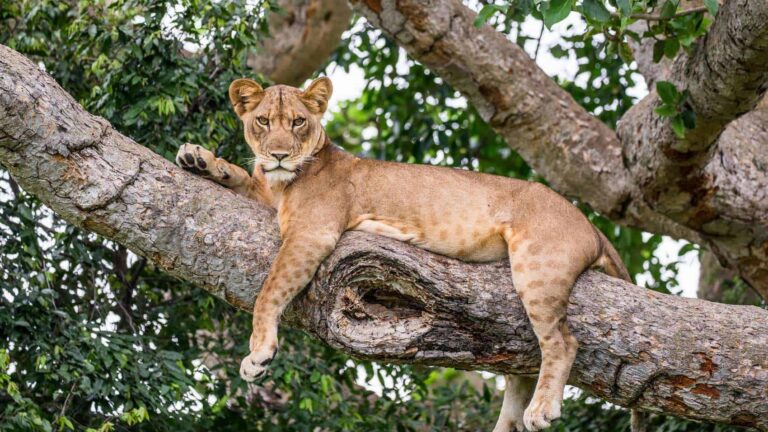
    Few vehicles at sightings, even in central Serengeti.

  4. Green photography

    Lush plains with improving weather towards the end of the month.

Highlights

Wildlife Highlights in May

  • Herds in motion

    Herds in motion

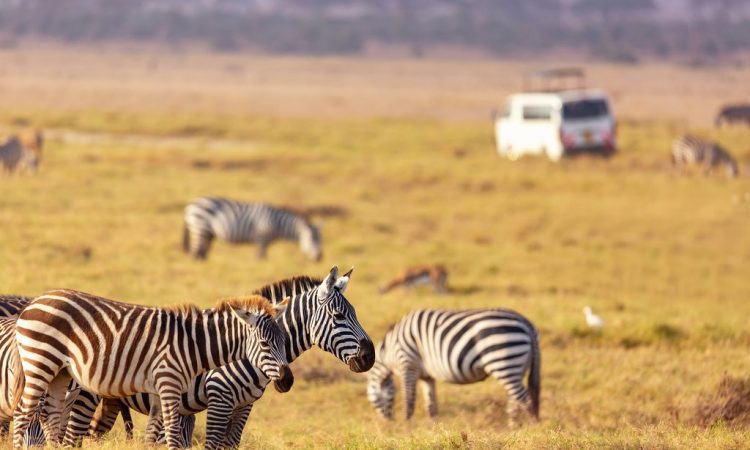
    The migration travels in long lines through the central Serengeti.

  • Seronera predators

    Seronera predators

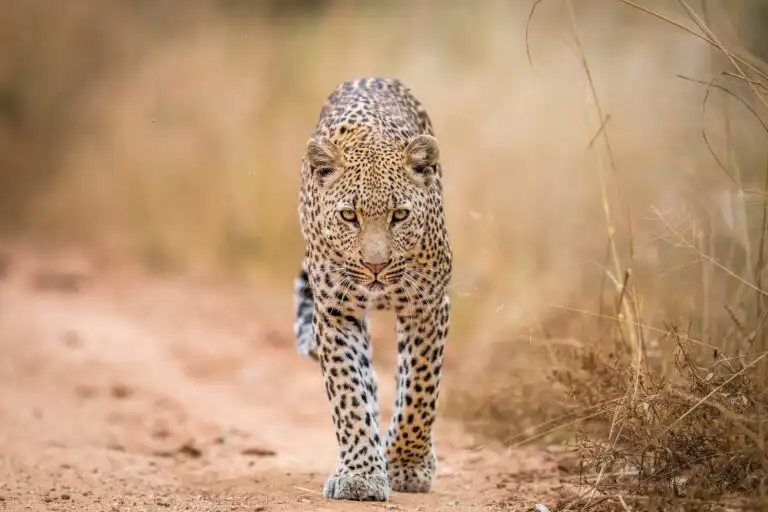
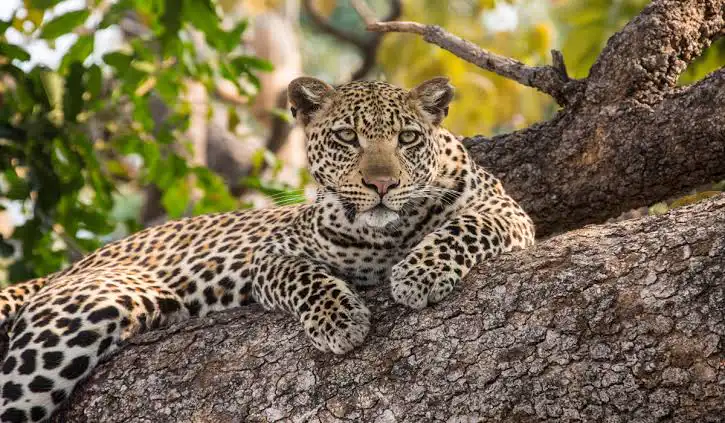
    Central Serengeti is known for leopard, lion and cheetah sightings year-round.

  • Quiet Ngorongoro

    Quiet Ngorongoro

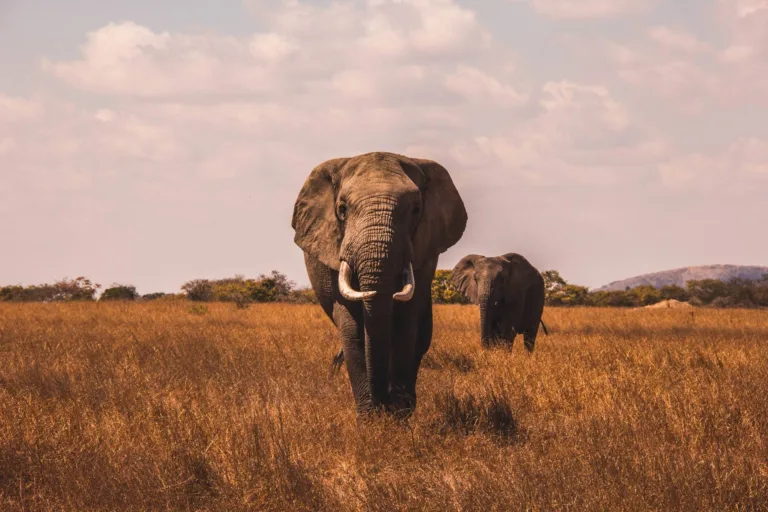
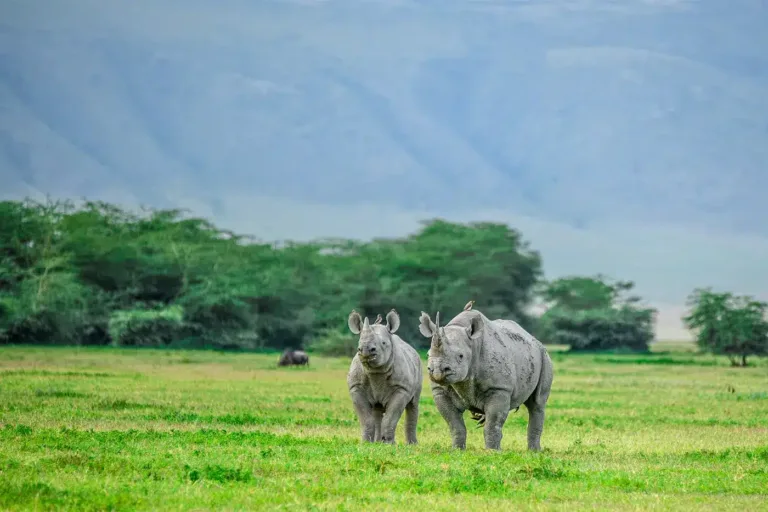
    The crater remains reliable for wildlife, with few vehicles in May.
The Great Migration

The Migration in May

Central Serengeti and the western corridor

The migration follows rain and grazing, so its timing and location change from year to year. Calving, river crossings and specific sightings cannot be guaranteed on any date.

About the Great Wildebeest Migration
Where the herds usually are
Central Serengeti and the western corridor
Other possible areas
Moru Kopjes, Seronera and the plains towards Grumeti
Movement
Herds move north-west in long columns as the southern plains dry out.
Calving
Calves born in February travel with the herds. The rut (mating season) usually begins.
Predators
Resident predators in central Serengeti are joined by those following the herds.
River crossings
Grumeti River crossings are possible later, usually from about June.
Where to stay
Central Serengeti (Seronera) and the western corridor
Suggested length
3 nights in the Serengeti within a 6–8 day safari

Where to go

Best Destinations in May

View All Destinations

Curated journeys

Safaris for May

Published itineraries that suit travel in May. Every trip can be adjusted to your dates and budget.
Request a Personalized Safari Quote

Money matters

Plan Your Budget

Convert a budget between travellers’ currencies while you plan. This does not change the currency used elsewhere on the website.

Budget tool

Currency converter

Enable JavaScript to use the converter.

Indicative conversion using reference exchange rates that are refreshed periodically, not in real time. Your bank or card provider will use its own rate, and safari prices are always confirmed in your quotation.

Activities

What to Do in May

  • Wildlife game drives

    Green, quiet parks; central Serengeti is excellent for resident predators.

    Very good
  • Great Wildebeest Migration safaris

    Herds move through central and western Serengeti; locations change quickly.
    Good
  • Gorilla trekking

    Wet early in the month, improving towards June.
    Possible with limitations
  • Chimpanzee trekking

    Wet trails early in the month.

    Possible with limitations
  • Kilimanjaro climbing

    Still wet early in May; better towards the end of the month.

    Possible with limitations
  • Zanzibar beach holidays

    Rain is still frequent early in May, easing later.

    Possible with limitations
  • Walking safaris

    Some camps restart walking towards the end of the month.

    Possible with limitations
  • Balloon safaris

    Flights operate; occasional weather cancellations.

    Good
  • Birdwatching

    Resident birds in breeding colours; most migrants have left.

    Very good
  • Wildlife photography

    Green landscapes and soft light.

    Very good
  • Cultural experiences

    Visits run normally.

    Very good
  • Boat safaris

    Nyerere camps reopen during May or June; check dates.

    Possible with limitations

Travel information

Practical Tips for May

What to pack in May

  • Light waterproof jacket for early-May showers
  • Breathable layers for warm afternoons
  • Fleece for cool mornings
  • Waterproof camera cover
  • Shoes that cope with mud
  • Binoculars
  • Insect repellent
  • Sunscreen and hat for brighter late-May days
Road conditions
Improving through the month; some tracks remain muddy early in May.
Accommodation
Some seasonal camps reopen late in May or in early June.
Early or late May
Early May is wetter and cheaper; late May often brings drier weather while low rates continue.
Temperatures
Pleasant days, cooler nights; cold on the Ngorongoro rim.
Recommended length
6–8 days for the northern circuit.
Seasonal limitation
Zanzibar and Kilimanjaro are better from June.

Questions

May Safari FAQs

Start Planning Your May Safari

Share your dates, group and interests. A safari specialist will reply with a tailored itinerary and a quotation based on real rates.

Request a Personalized Safari Quote